
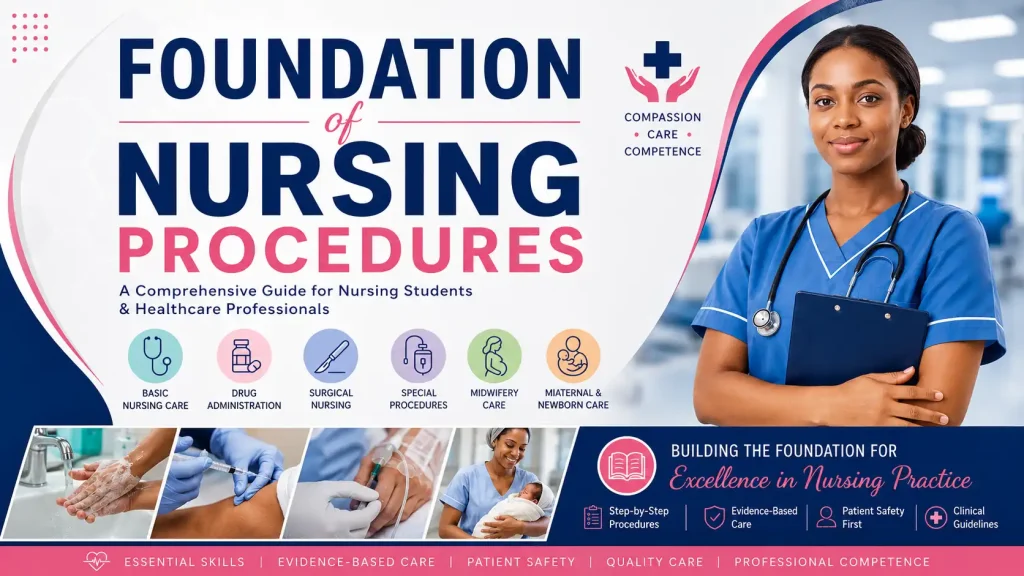
The Foundation of Nursing is the cornerstone of safe, effective, and compassionate patient care. Every nursing student must first master the essential nursing procedures before progressing to specialized areas of practice. These skills ensure that patients receive quality healthcare while reducing complications, preventing infections, and promoting recovery.
This Foundation of Nursing Procedures is for nursing students, tutors, and healthcare professionals. It covers the essential nursing procedures commonly taught in nursing schools and practised in hospitals
Whether you are preparing for examinations, clinical placements, OSCEs, or professional practice, these nursing procedures will strengthen your clinical competence and confidence.
Table of Contents
introduction
- History of Nursing
- Ethical Principle
- code of conduct
- nursing standard(quality of a good nurses)
- General Rules and Principles of Nursing Procedures
- Patient’s Rights
- work ethics
- hospital economy
- infection prevention and control
Chapter 1: Basic Nursing Procedures
- Hand Washing
- Bed Making
- Admission of a Patient
- Bed Bath
- Oral Care
- Hair Care
- Eye Care
- Ear Care
- Nail Care
- Pressure Area Care
- Positioning of Patients
- Vital Signs Monitoring
- Oxygen Therapy
- Urine Testing
- Specimen Collection
- Infection Prevention and Control
Chapter 2: Drug Administration
Medication administration is one of the most important responsibilities of a nurse. Understanding the correct route, dosage, preparation, and monitoring of medications promotes patient safety and prevents medication errors.
Topics Covered
- Oral Medication Administration
- Topical Medication Administration
- Intramuscular Injection
- Subcutaneous Injection
- Intradermal Injection
- Intravenous Injection
- Eye Medication Administration
- Ear Medication Administration
- Nasal Medication Administration
- Drug Administration Through Inhalation
- Administering Rectal Medication
- Administering Vaginal Medication
- Intravenous Infusion
- Blood Transfusion
- Monitoring Fluid Balance
Chapter 3: Surgical Nursing Care
Surgical nursing focuses on preparing patients before surgery, providing care during recovery, preventing complications, and promoting wound healing.
Topics Covered
- Pre-operative Care of Patients
- Post-operative Care
- Dressing of Wounds
- Removal of Sutures and Clips
- Shortening and Removal of Drains
- Care of Wounds with Drainage
- Underwater Seal Drainage
- Colostomy (Stoma) Care
- Traction
- Bandaging
- Orthopaedic Splints
Chapter 4: Special Nursing Procedures
These advanced procedures require careful preparation, aseptic technique, patient monitoring, and appropriate documentation.
Topics Covered
- Catheterization
- Irrigation of the Bladder
- Application of a Penile Sheath
- Nursing Care of Patients with Urinary Retention
- Gastric Lavage
- Administration of Enemata
- Vulval Toilet (Swabbing)
- Rectal Lavage (Rectal Washout)
- Lumbar Puncture
- Gastrostomy Feeding
- Tracheostomy Care
- Paracentesis Abdominis
- Last Offices
Midwifery Procedures
Maternal and newborn care forms an important part of nursing education. Midwifery procedures prepare nurses to provide quality care during pregnancy, labour, delivery, and the postnatal period.
Chapter 5: Antenatal Care
Antenatal care promotes the health of both mother and baby by identifying pregnancy complications early and providing preventive care.
Topics Covered
- Antenatal Assessment
- Physical Examination of the Pregnant Mother
Chapter 6: Normal Labour
Safe management of labour requires continuous assessment, timely interventions, and skilled delivery techniques.
Topics Covered
- Admission of a Mother in Labour
- Vaginal Examination During Labour
- Internal Pelvic Assessment
- Management of the First Stage of Labour
- Management of the Second Stage of Labour
- Episiotomy
- Active Management of the Third Stage of Labour (AMTSL)
- Examination of the Placenta
Chapter 7: Puerperium
Postnatal care focuses on monitoring the mother’s recovery while promoting newborn health.
Topics Covered
- Postpartum Care
- Care of the Perineum
Chapter 8: Care of the Normal Newborn
Newborn care ensures healthy adaptation to life outside the womb while preventing complications.
Topics Covered
- Examination of the Newborn
- Daily Cord Care
- Bathing the Baby
- Breastfeeding
- Young Child Clinic
- Weighing the Baby
- Childhood Immunization
- Care of the Sick Newborn
- Neonatal Resuscitation
- Admission and Management in the Special Care Unit
- Care of a Baby in an Incubator
- Care of a Baby Receiving Phototherapy
- Admission of a Baby Born Before Arrival
- Neonatal Seizures
Chapter 9: Complications of Pregnancy, Labour and Puerperium
Understanding obstetric emergencies enables nurses and midwives to recognize complications early and provide timely interventions.
Pregnancy Complications
- Amniocentesis
- Management of Multiple Pregnancy
- Antepartum Haemorrhage (APH)
- postpartum haemorrhage
- Management of Severe Pre-eclampsia and Eclampsia
- Manual Vacuum Aspiration (MVA)
- Pre-operative Care for Caesarean Section
Labour Complications
- Induction and Augmentation of Labour
- Management of Cord Prolapse
- Obstructed Labour
- Shoulder Dystocia
- Breech Delivery
- Occipito-Posterior Position
- Face Presentation
Puerperium Complications
- Post-operative Care Following Caesarean Section
Why Learn Foundation of Nursing Procedures?
Mastering these nursing procedures enables students and healthcare professionals to:
- Deliver safe, evidence-based patient care.
- Develop confidence during clinical placements.
- Perform nursing procedures accurately.
- Prevent infections and complications.
- Prepare for OSCEs, practical examinations, and licensing exams.
- Build a strong foundation for advanced nursing practice.
Who Should Use This Guide?
This nursing procedures guide is ideal for:
- Student Nurses
- Enrolled Nurses
- Registered Nurses
- Midwifery Students
- Nursing Tutors
- Clinical Instructors
- Healthcare Professionals preparing for competency assessments
Frequently Asked Questions (FAQs)
What is the foundation of nursing?
The foundation of nursing refers to the essential principles, knowledge, skills, and clinical procedures that every nurse must learn before practising independently.
Why are nursing procedures important?
Nursing procedures promote patient safety, reduce complications, improve treatment outcomes, and ensure standardised, evidence-based care.
Are these procedures suitable for OSCE preparation?
Yes. These procedures are commonly assessed during OSCEs, clinical practical examinations, and nursing competency assessments.
Can practicing nurses use this guide?
Absolutely. It serves as a valuable reference for refreshing clinical skills and maintaining best practices in patient care.
Explore More Nursing Notes
Continue your learning with our comprehensive nursing resources, including:
- Nursing Procedures
- Drug Administration
- Infection Prevention and Control
- Surgical Nursing
- Medical Nursing
- Pediatric Nursing
- Obstetric and Midwifery Nursing
- Community Health Nursing
- Nursing Care Plans
- Pharmacology Notes
- Nursing MCQs and Revision Questions