
The Code of Conduct for Nurses is a set of principles that guide nurses in their daily duties, including how they conduct themselves, communicate, and observe nursing ethics. The
The Code of Conduct for Nurses is important because it guides nurses on what to do and how to do it, promotes safe patient care, honesty, confidentiality, accountability, and respect for human dignity. It also helps nurses make correct decisions in difficult situations.
In this note, you will learn the Code of Conduct for Nurses, what it means, its importance, the main principles, and the challenges
Table of Contents
What is the code of conduct for nurses?
The code of conduct for nurses is a set of ethical principles, rules, and professional guidelines that direct nurses on how to behave while providing healthcare services.
What they are to do toward patients, families, colleagues, employers, and society. In simple terms, the code of conduct tells nurses what is right, professional, and acceptable in nursing practice. This includes areas such as infection prevention and effective communication
Importance of the Code of Conduct in Nursing
1. Promotes Patient Safety
Following professional nursing standards helps reduce medical errors and protects patients from harm. Nurses who follow proper procedures provide safer and more effective care.
2. Builds Trust Between Nurses and Patients
Patients trust nurses with private information and personal care. Ethical nursing practice helps maintain that trust and improves the nurse-patient relationship.
3. Encourages Professionalism
The nursing code of conduct promotes discipline, accountability, honesty, and responsibility among healthcare workers
4. Protects Patient Rights
Patients have the right to dignity, privacy, informed consent, and respectful treatment. Nurses must respect these rights at all times
5. Improves Teamwork in Healthcare
Professional behaviour in nursing encourages good communication and cooperation between nurses, doctors and other health care professionals.
Main Principles of the Code of Conduct for Nurses
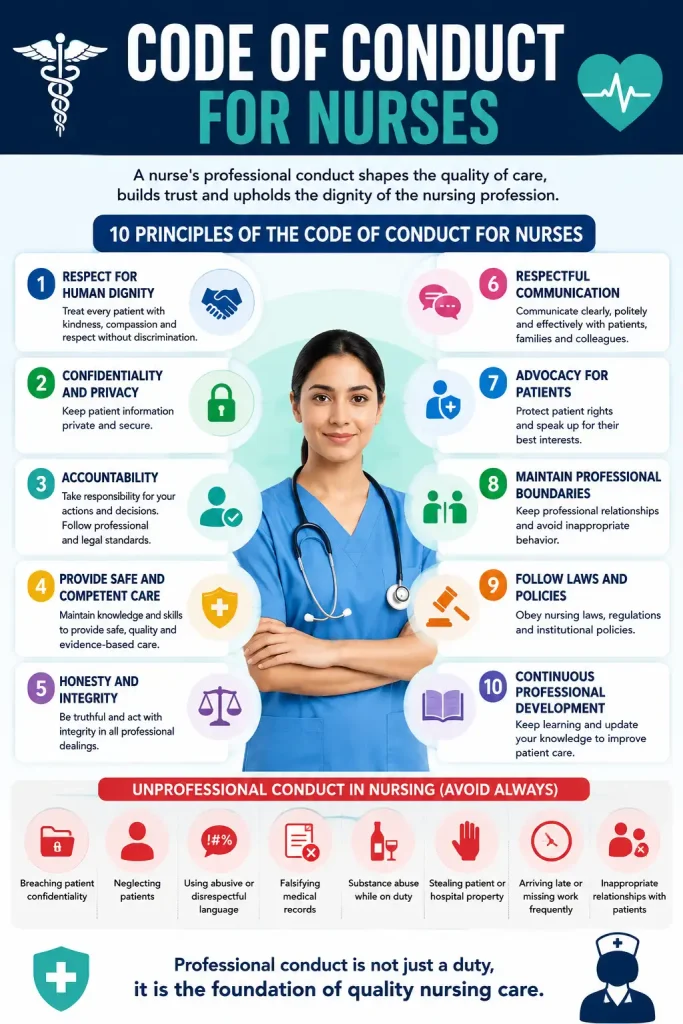
1. Respect for Human Dignity
Every patient should be treated with kindness, compassion, and respect, regardless of age, religion, race, gender, social status, or medical condition. Nurses should avoid discrimination and provide equal care to all patients. Respecting patient dignity is one of the most important nursing ethics principles
Example
A nurse should treat both wealthy and poor patients equally without favouritism. A Muslim doctor treats a Christian patient, not considering religion
2. Confidentiality and Privacy
Patient information and medical records must be kept confidential. Patient details should not be shared with unauthorised people. Confidentiality in nursing helps patients feel safe when discussing personal health problems
Example
A nurse should not discuss a patient’s condition publicly or post patient information on social media. like WhatsApp even to a patient’s relative without the patient’s permission
3. Accountability in Nursing Practice
They must accept responsibility for mistakes and work within their level of competence. Professional accountability means nurses should always follow hospital policies, nursing procedures, and legal guidelines
Example
A nurse should report medication errors immediately instead of hiding them, like a reaction to cefaclor or other medication like chlorpheniramine
4. Providing Safe and Competent Care
Continuous learning and regular clinical training help nurses maintain competence and deliver evidence-based patient care
5. Honesty and Integrity
Nurses should always be truthful and act with integrity. They must avoid falsifying patient records, giving false information, or behaving dishonestly. Integrity in nursing promotes trust and professionalism in healthcare settings
Example:
A nurse should accurately record patient observations and treatments given in the patient’s chart
6. Respectful Communication
Good communication is essential in nursing practice. Nurses should speak politely to patients’ relatives and healthcare workers. Effective communication in healthcare improves patient satisfaction and reduces misunderstandings
7. Advocacy for Patients
Patient advocacy means protecting the interests, rights, and well-being of patients. Nurses should speak up if they notice unsafe practices or poor patient care. A professional nurse should always prioritise the patient’s best interests
Example
A nurse should report neglect, abuse or unsafe hospital conditions affecting patients, like CBC machines giving faulty results. Faulty sterilisation machine payment before treatment
8. Maintaining Professional Boundaries
Maintaining professional boundaries prevents emotional exploitation, favouritism, and conflicts of interest between nurses and patients
Unprofessional conduct
- Accepting inappropriate gifts, like money
- Engaging in romantic relationships with patients eg giving love gifts
- Using abusive language
- Harassing patients or coworkers
- Neglecting Patients
- Ignoring patient needs, delaying care, or failing to monitor patients properly
- Falsifying Medical Records
- Recording incorrect information or documenting procedures and medications that were not performed.
Professional Conduct in Nursing
- Professional nursing behaviour includes
- Arriving at work on time
- Wearing a proper nursing uniform
- Respecting hospital policies
- Maintaining patient confidentiality
- Working collaboratively with healthcare teams
- Showing empathy and compassion
- Practising ethical decision-making
- Keeping accurate patient records
These behaviours help maintain high standards in nursing practice
Ethical Challenges Nurses May Face
- Nurses may sometimes face difficult ethical situations at work. Common nursing ethics dilemmas include
- End-of-life care decisions, a cancer patient refuses to disclose the condition to a partner or families
- Patient refusal of treatment despite explanation, e.g., a patient with HB of 1.8 refuses a blood transfusion because of a religious belief
- Shortage of medical resources, such as an infusion pump, syringes, medicines, etc
- Maintaining confidentiality, especially in highly infectious patients like Ebola, covid 19
- Cultural and religious conflicts, e.g., Jehovah’s Witnesses, do not believe in blood transfusions.
- Reporting medical errors
- The nursing code of ethics helps nurses make professional and ethical decisions during such situations
How can nurses maintain the professional code of Conduct
- Following nursing policies and guidelines
- Attending continuing medical education programs
- Practising effective communication skills
- Respecting patient rights
- Maintaining emotional control at work
- Seeking guidance from senior nurses when unsure
- Staying updated with modern nursing standards
- Continuous professional development helps nurses provide safe and quality patient care
Frequently Asked Questions (FAQs)
What is the code of conduct for nurses?
The code of conduct for nurses is a set of professional and ethical guidelines that directs nurses on how to behave while caring for patients and working in healthcare settings.
What are the main principles of the nursing code of conduct?
The main principles include confidentiality, respect for patient dignity, accountability, honesty, professional communication, and safe patient care.
What happens when a nurse breaks the code of conduct?
A nurse may face disciplinary action, suspension, termination of employment, or loss of nursing license depending on the severity of the misconduct.
What is considered unprofessional conduct in nursing?
patient neglect, rude behaviour, falsifying records, substance abuse while on duty, and breaching patient confidentiality.
What is the role of ethics in nursing?
Ethics helps nurses make fair, professional, and patient-centred decisions in healthcare situations.
Conclusion
The code of conduct for nurses is essential in promoting ethical nursing practice, patient safety, professionalism, and quality healthcare services. Nurses are expected to respect patient dignity. maintain confidentiality, communicate professionally, and provide safe and competent care at all times
Following professional nursing standards not only protects patients but also improves the reputation and integrity of the nursing profession. Every nurse should understand and apply the nursing code of ethics in daily practice to ensure compassionate, respectful, and effective