
14 patient rights in nursing and health care practices
These 14 patient rights not only apply in nursing but in other health sectors unless restricted by the age or the patient’s conditions. Patient rights in nursing and health care do protect both the health worker, for example, nurses, doctors etc event the protcet the hospital. The rights also protect the patient from uncomfortable procedures
Table of Contents
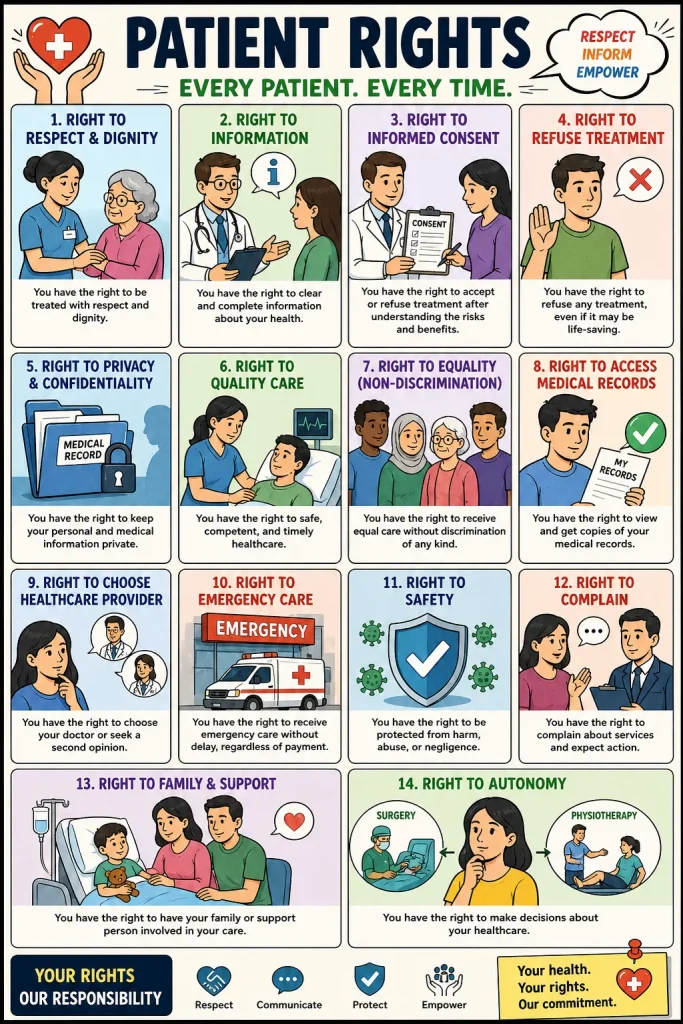
What are patients’ rights?
Patients’ rights are legal and ethical principles that protect the patient during the time of receiving medical care services. These rights help the patient to get the right services with respect and dignity, which also leads to patient satisfaction
List of patients’ rights 14 patient rights in nursing and health care practcticse
Right to information
The patient has the right to know what is wrong with him or her, from the diagnosis to treatment. When a patient knows about his or her sickness, they will cope well, depending on how the patient has received the information
Example
A patient with hiv or any other illness must know the cause, diagnosis, danger signs, and how to prevent it from spreading, like tuberculosis, and the prognosis. This not only protects the patient but the community as well. if inform the tuberculosis patient to put on masks and take medication, this will reduce the spread of TB infections
Right to consent
The patient must agree to the procedure before a health worker performs. after understanding the risk and the process of the procedure. A nurse or a doctor should not work on a patient without the patient’s consent, as it can lead to lawsuits.
Example
Patient consents before admission, operation, or treatment. Consent is done after explaining, and the patient has understood
Right to privacy and confidentiality
Patient has a right to be handled in a close place, i.e., in a close room or separated by a screen, and any information the patient gives must remain between you and the patient. But in a situation of a very infectious disease like Ebola, the patient information is released to protect the people at this stage is exceptional
Example
A nurse should not disclose a patient’s condition to anybody without the patient’s permission, e.g., a nurse refuses to disclose hiv stutus of a woman to a man married to her, or a patient refuses to disclose the cancer result to a family member. All in fear of the consequences or persecution reasons
Rights to refuse treatment
The patient has the right to refuse treatment or operation regardless of the benefit. This could be because of religius belive like Jehovah’s Witnesses
Example
A patient refuses oral medication, opting for injection. The patient can also refuse a blood transfusion because of religious beliefs
Right to Choose Healthcare Provider
The patient has the right to choose the health care provider, which gives the power to the patient over their health, not the health worker.
The patient can choose the doctor to administer him pain killer instaed of a nurse
Right to Respect and Dignity
Every patient must be treated with respect without demeaning their status, colour, or condition. This gives patients a head up and confidence to come for service, and pride to the healthcare professionals
A nurse communicates politely with the elderly, mentally ill, and the lamb patient, listening to their concerns.
The Right to Quality Care
Every patient has the right to receive safe, comprehensive, and timely treatment. This right ensures that healthcare is not just a standard procedure, but a personalised one that respects the patient’s condition
The Right to Equality and Non-Discrimination
This right mandates that healthcare is a universal human entitlement, where every patient, regardless of wealth, race, or belief, receives the same medical services.
A Muslim doctor should not refuse to work on a Christian patient because of religious differences
The Right to Emergency Care
This mandate ensures that the preservation of life always takes precedence over administrative or financial concerns, requiring immediate, life-saving stabilisation for any patient in a crisis, regardless of their ability to pay.
Right to Autonomy
Right to Complain
Right to Family Support
Right to Safety
Right to Access Medical Records
Importance of Patient Rights in Healthcare
- protect the patient from an armful procedure, for example, the right to safety
- protect the hospital in cases where the patient takes the hospital to court
- It protects the health worker, for example, the right to consent.
- Built trust between the patient and the health worker because they work in harmony, not against each other in their interests
- prevent medical negligence and abuse
- improve patient satisfaction and recovery
- improve customer care
- provide a good reputation for the hospital and the health workers
Role of Nurses in Protecting Patient Rights
- health education on patient rights
- advocay for patients rights
- Putting the patient’s rights in the notice for people who can read to see
- respect the patient’s decision
- observe privacy
Frequently Asked Questions (FAQs) on Patient Rights
What are patient rights in healthcare?
Patient rights are the basic rules and protections that ensure patients receive respectful, safe, and ethical healthcare services without discrimination.
Why are patient rights important?
They protect patients from abuse, improve quality of care, promote trust between patients and healthcare providers, and ensure informed decision-making.
What is informed consent?
Informed consent is the patient’s right to receive full information about a treatment or procedure before agreeing to it, including risks, benefits, and alternatives.
Do patients have the right to refuse treatment?
Yes. A competent patient has the right to refuse any treatment, even if it is recommended by a healthcare professional.
What should a patient do if their rights are violated?
They can report to the hospital administration, patient rights office, or relevant health regulatory authority.