
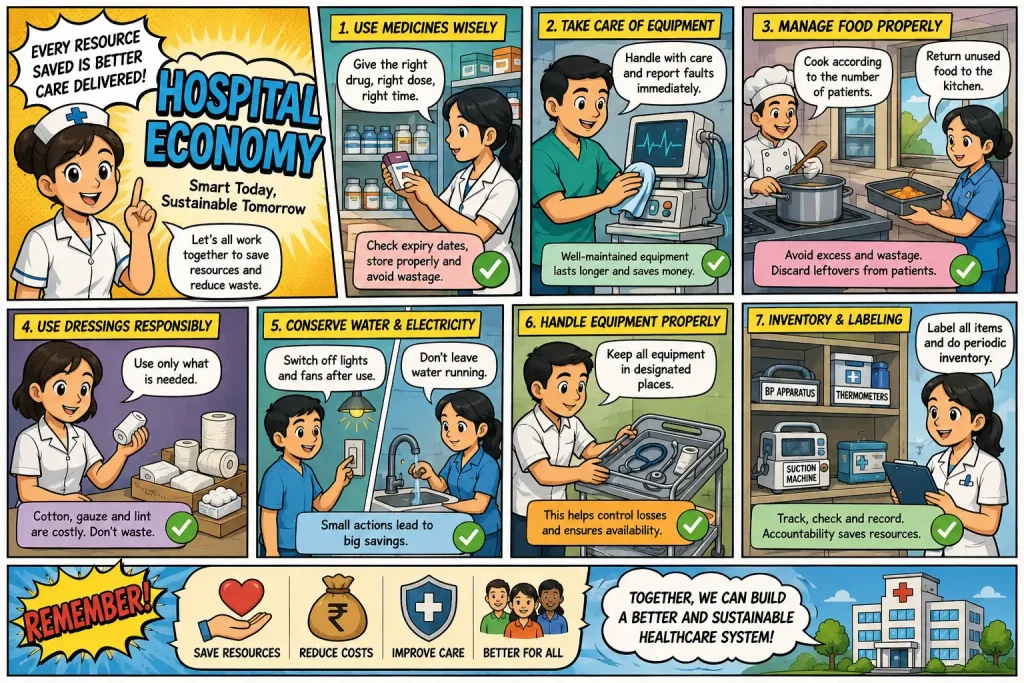
Hospital economy is one of the most important aspects of healthcare management and business administration. Every hospital, clinic, or healthcare institution operates using limited financial resources, medical supplies, equipment, and workforce. Proper management of these resources helps healthcare facilities reduce unnecessary expenses while still providing safe, effective, and high-quality patient care.
In modern healthcare systems, hospitals are not only centers for treatment but also large organisations that require proper financial planning and operational efficiency. Poor management of hospital resources may lead to wastage, shortages of essential supplies, reduced quality of care, and financial losses. Therefore, hospital economy combines healthcare service delivery with business management principles to ensure sustainability and efficiency.
This article explains the meaning of hospital economy, its importance, principles, and how effective resource management contributes to healthcare business success.
Table of Contents
What Is Hospital Economy?
Hospital economy refers to the careful and efficient use of hospital resources in order to minimize operational costs without affecting the quality of healthcare services provided to patients. It involves proper utilization of medicines, equipment, food supplies, water, electricity, dressing materials, and workforce.
In healthcare business management, hospital economy focuses on:
- Cost reduction
- Efficient resource allocation
- Prevention of wastage
- Maintenance of quality services
- Financial sustainability
- Accountability among healthcare workers
A hospital that practices good economic management can provide better patient care while controlling expenses and increasing operational efficiency.
Importance of Hospital Economy in Healthcare Business
1. Reduces Operational Costs
Hospitals spend large amounts of money on medicines, medical equipment, electricity, water, food, and maintenance. Proper economic management helps reduce unnecessary expenditures and prevents financial losses.
Cost-saving measures may include:
- Preventing drug wastage
- Conserving electricity and water
- Proper maintenance of equipment
- Ordering supplies according to patient needs
Reducing operational costs allows hospitals to invest more money in patient care, technology, and staff development.
2. Improves Quality of Patient Care
Effective hospital economy does not mean limiting patient treatment. Instead, it ensures that available resources are used efficiently to improve service delivery.
For example:
- Proper storage of medicines prevents shortages.
- Functional equipment improves diagnosis and treatment.
- Adequate supplies reduce delays in patient care.
When hospital resources are well managed, patients receive safer and more reliable healthcare services.
3. Supports Healthcare Business Sustainability
Hospitals operate similarly to businesses because they require budgeting, planning, inventory control, and financial management. Poor resource management can lead to bankruptcy, closure, or reduced healthcare services.
A financially stable hospital can:
- Purchase modern medical equipment
- Expand healthcare services
- Hire qualified healthcare professionals
- Improve infrastructure
- Increase patient satisfaction
Good hospital economy therefore supports long-term business growth and sustainability.
Principles of Hospital Economy
Proper Use of Medicines
Medicines are among the most expensive hospital resources. Nurses, pharmacists, and doctors should ensure that drugs are prescribed, stored, and administered correctly.
Ways to Prevent Drug Wastage
- Avoid overstocking medicines
- Check expiry dates regularly
- Store drugs under recommended conditions
- Administer medications accurately
- Report damaged or expired drugs immediately
Proper pharmaceutical management helps hospitals reduce losses and maintain patient safety.
Maintenance of Hospital Equipment
Modern hospitals depend heavily on electrical and medical equipment such as:
- Oxygen concentrators
- Suction machines
- Monitors
- Sterilizers
- Laboratory machines
- Refrigerators
Medical equipment is expensive to purchase and repair. Proper maintenance reduces breakdowns and increases equipment lifespan.
Equipment Management Practices
- Report faulty machines immediately
- Perform routine servicing
- Train staff on proper equipment use
- Avoid rough handling
- Keep maintenance records
Efficient equipment management improves hospital productivity and reduces unnecessary repair costs.
Food Management in Hospitals
In hospitals that provide meals to patients, proper food management is essential for reducing wastage and controlling expenses.
Food should be ordered according to:
- Number of admitted patients
- Dietary requirements
- Nutritional needs
Unused food that remains safe can be returned according to hospital policy, while contaminated leftovers should be discarded to prevent infection.
Benefits of Proper Food Management
- Reduces food wastage
- Saves hospital money
- Improves patient nutrition
- Supports infection prevention
Food management is an important part of healthcare business efficiency.
Proper Use of Dressing Materials
Dressing materials such as cotton wool, gauze, bandages, and lint are essential in wound care and surgical procedures. These supplies are expensive and should only be used when necessary.
Methods of Reducing Wastage
- Open sterile packs only when needed
- Use the required amount of materials
- Store dressing supplies properly
- Avoid unnecessary procedures
Efficient use of dressing materials helps hospitals reduce supply costs while maintaining infection control standards.
Water and Electricity Conservation in Hospitals
Utilities such as water and electricity contribute significantly to hospital expenses. Healthcare workers should promote conservation practices to reduce utility bills.
Electricity Conservation Tips
- Switch off lights after use
- Turn off unused electrical equipment
- Report fused bulbs immediately
- Avoid unnecessary appliance use
Water Conservation Tips
- Turn off taps after use
- Report leaking pipes
- Avoid water wastage during cleaning procedures
Conserving utilities lowers operational costs and supports environmentally friendly healthcare systems.
Inventory Control and Equipment Labelling
Inventory management is a major component of hospital business administration. Hospitals must monitor equipment and supplies regularly to prevent losses and theft.
Importance of Inventory Control
- Tracks available resources
- Identifies missing equipment
- Prevents over-purchasing
- Improves budgeting
- Enhances accountability
All hospital equipment should be labelled clearly and stored in designated areas. Periodic inventory checks help hospitals maintain accurate records and plan future purchases effectively.
Role of Nurses in Hospital Economy
Nurses play a major role in maintaining the hospital economy because they directly handle patient care supplies daily.
Responsibilities of Nurses
- Prevent medicine wastage
- Handle equipment carefully
- Use dressing materials responsibly
- Conserve water and electricity
- Report damaged equipment promptly
- Maintain proper documentation
Nurses contribute significantly to healthcare cost control and operational efficiency.
Relationship Between Hospital Economy and Business Management
Hospital economy is closely connected to healthcare business management because both focus on efficient use of resources and financial sustainability.
Healthcare administrators use business principles such as:
- Budgeting
- Cost-benefit analysis
- Resource allocation
- Supply chain management
- Strategic planning
Effective economic management helps hospitals remain competitive while delivering quality healthcare services.
Conclusion
Hospital economy is an essential aspect of healthcare management and business operations. Proper use of medicines, equipment, food, utilities, and hospital supplies helps reduce operational costs while improving patient care quality.
Every healthcare worker has a responsibility to protect hospital resources and prevent unnecessary wastage. Through proper financial planning, inventory management, and resource conservation, hospitals can achieve sustainability, efficiency, and better healthcare outcomes.
A well-managed hospital not only benefits patients but also strengthens the healthcare business by improving productivity, reducing losses, and supporting long-term growth.
Frequently Asked Questions (FAQs)
What is hospital economy?
Hospital economy refers to the efficient use of hospital resources to reduce operational costs without compromising patient care quality.
Why is hospital economy important?
It helps reduce wastage, improve patient care, support financial sustainability, and increase hospital efficiency.
How can nurses promote hospital economy?
Nurses can reduce wastage of medicines, conserve utilities, handle equipment carefully, and maintain proper inventory records.
What is the relationship between hospital economy and business management?
Both focus on efficient resource utilization, cost control, budgeting, and sustainability in healthcare institutions.
How does proper equipment maintenance help hospitals?
It reduces repair costs, increases equipment lifespan, improves efficiency, and prevents interruptions in patient care.