
A bed bath procedure for OSCE (Exam Tips) is a fundamental nursing procedure that plays a vital role in maintaining hygiene, comfort, and dignity in patients who are unable to bathe independently. It is commonly performed in hospitals, long-term care facilities, and home care settings. For nursing students, understanding the bed bath procedure is essential for clinical practice, OSCE examinations, and patient-centred care. Bed Bath Procedure in Nursing is a key to hygiene for patients who cannot help themselves
Table of Contents
Definition of Bed Bath
A bed bath is a nursing intervention carried out to clean the body of a dependent patient while they remain in bed. It helps maintain personal hygiene, supports skin integrity, refreshes and allows continuous assessment of the patient’s physical condition.
Aims and Purposes of a Bed Bath
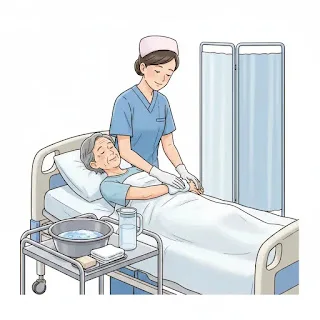
- To keep the patient’s skin clean, fresh, and healthy.
- To stimulate blood circulation through gentle movements.
- to reduce the chances of skin irritation
- to relieve fatigue
- To assess skin condition, joint mobility, and muscle tone
- To provide comfort, relaxation, and a sense of well-being
- to induce sleep
- To prevent skin breakdown and pressure sores.
- to maintain a good nurse-patient relationship
- to prevent the patient from getting contractures
Indications for a Bed Bath
A bed bath is indicated for patients who are unable to perform self-care, including:
- Patients confined to bed due to illness or weakness
- Completely dependent or helpless patients
- Unconscious patient or semi-conscious patient
- critically ill patients
- patients who went for an operation
- Orthopaedic patients (e.g., patients on traction)
- patient on strict bed rest
General instructions to follow when doing a bed bath
- explain the procedure to the patient and the relative to gain cooperation during the procedure
- maintain privacy throughout the procedure
- Inspect the skin and the back thoroughly to detect early signs of pressure sore, look at the colour and if there is any swelling.
- Give special attention to bony prominences and folds
- Temperature of the water must be at room temperature
- Remove soap completely from the skin to avoid drying effects of soap, which may cause white patches
Requirements for a Bed Bath
Trolley – Top Shelf
- Bath basin
- Two jugs (one with warm water and one with cold water)
- Receiver containing nailbrush, nail cutter and a comb
- a receiver containing two pairs of disposable gloves
- a role of toilet paper
- a mouthwash
- a small tray containing a soap in a soap dish, a container containing Vaseline and a spatula.
Bottom Shelf
- Two bath towels
- Clean bed sheet
- One draw mackintosh
- one draw sheet
- a bucket for used water
- a bucket for dirty linen
- two aprons
- a receiver for used toilet paper
- Bucket for used water
- bed pan
Bedside Requirements
- Screen to ensure privacy
- Chairs or bed stripper
- hand washing equipment
Step-by-Step Bed Bath Procedure in Nursing
This procedure can be used to generate a bed bath checklist for nurses’ OSCE steps
- Explain the procedure clearly to the patient or attendant to gain consent and cooperation.
- screen the bed and close the nearby window. This provides privacy and comfort to the patient
- . Bring the trolley to the bedside for easy picking of the requirements
- . Put on an apron, wash your hands and put on gloves with the assisting nurse
- Offer a bedpan or urinal if the patient needs to pass stool or urine before the bath.
- Remove used bed linen, leaving the top sheet and one pillow in place. Maintain the backrest if the patient must sit up.
- Undress the patient gradually, exposing only the area being washed to maintain dignity.
- Wash the face first, followed by the neck, arms, chest, and abdomen. Change water when necessary.
- Clean each leg separately and wash the feet with water over the basin.
- Dry and cut the nail if needed
- Turn the patient into a lateral position to wash the back from the neck to the buttocks. Dry thoroughly, especially skin folds, i.e., in between the buttocks.
- Observe and care for pressure areas such as the sacrum, heels, and elbows.
- Return the patient to a supine position and wash the genital area using a clean flannel. Dry well and discard used water.
- Make the bed using clean sheets.
- Dress the patient and provide oral hygiene care.
- Comb the hair and ensure the patient is comfortable and well-positioned.
- Clear equipment, perform hand hygiene, and report any abnormalities observed.
Important Points to Remember During a Bed Bath
- Handle the patient gently and respectfully at all times
- Ensure each body part is dried properly, especially skin creases
- Continuously assess the patient’s condition throughout the procedure
Frequently Asked Questions (FAQs)
What is a bed bath in nursing?
A bed bath is a hygiene procedure where a nurse cleans a patient in bed when they cannot bathe independently.
Why is bed bath important?
It helps prevent infection, improves comfort, and maintains skin integrity.
Who needs a bed bath?
Bedridden, unconscious, post-operative, and critically ill patients.
What is the main purpose of bed bath?
To maintain hygiene, prevent pressure sores, and promote patient comfort.
Conclusion
The bed bath procedure is more than a hygiene measure—it is a comprehensive nursing activity that promotes comfort, prevents complications, and strengthens nurse-patient interaction. Mastery of this skill is essential for nursing students and healthcare professionals alike.