
In this note, you will learn about shock, the definition, causes, different types, signs and symptoms , explain the pathophysiology, discuss diagnostic investigations, medical and nursing management, complications and prevention
Table of Contents
What is Shock?
Shock is a state of acute circulatory failure characterised by insufficient tissue perfusion and oxygenation to meet the metabolic demands of the body’s cells.
It can also be defined as a condition of inadequate tissue perfusion where the body’s cells do not receive enough blood rich in oxygen to function normally.
A simple definition of shock is a life-threatening medical emergency in which the circulatory system fails to deliver enough oxygen and nutrients to the body’s tissues and organs, resulting in inadequate tissue perfusion and cellular dysfunction.
Causes of Shock.
1. Loss of Circulating Blood Volume (Hypovolemic Causes)
- Hemorrhage
- Severe dehydration
- Burns
- Vomiting and diarrhea
2. Failure of the Heart to Pump Effectively (Cardiogenic Causes)
- Myocardial infarction, excessive blood loss
- Heart failure
- Cardiomyopathy
- Arrhythmias
3. Widespread Vasodilation (Distributive Causes)
- Sepsis
- Anaphylaxis
- Neurogenic causes
4. Obstruction to Blood Flow (Obstructive Causes)
- Pulmonary embolism
- Cardiac tamponade
- Tension pneumothorax
Types of Shock
- Hypovolemic: it occurs when there is a significant loss of blood or body fluids, leading to decreased circulating blood volume.
- Cardiogenic pump failure: This is when the heart is unable to pump effectively, despite adequate blood volume.
- Septic infection: shock caused by a widespread infection leading to systemic inflammatory response.
- Anaphylactic allergic reaction: Anaphylactic shock is a life-threatening allergic reaction that occurs rapidly after exposure to an allergen.
- Neurogenic loss of vascular tone: Neurogenic shock results from loss of sympathetic nervous system control, leading to unopposed parasympathetic activity.
- Obstructive shock(blockage of blood flow): This is when there is a physical blockage of blood flow, preventing adequate circulation.
Signs and Symptoms of Shock
- Cardiovascular: low blood pressure, rapid, weak pulse, decreased cardiac output
- Respiratory: rapid breathing (tachypnea), shortness of breath
- Skin: pale, cold, clammy skin, delayed capillary refill, possible cyanosis
- Neurological: anxiety, restlessness, confusion, reduced consciousness
- Urinary: decreased urine output (oliguria)
- General: weakness, fatigue, possible nausea
Shock is mainly recognised by signs of poor perfusion, especially changes in blood pressure, mental status, skin temperature, and urine output.
Pathophysiology of Shock
Shock is a progressive condition of circulatory failure that leads to inadequate tissue perfusion and cellular hypoxia.
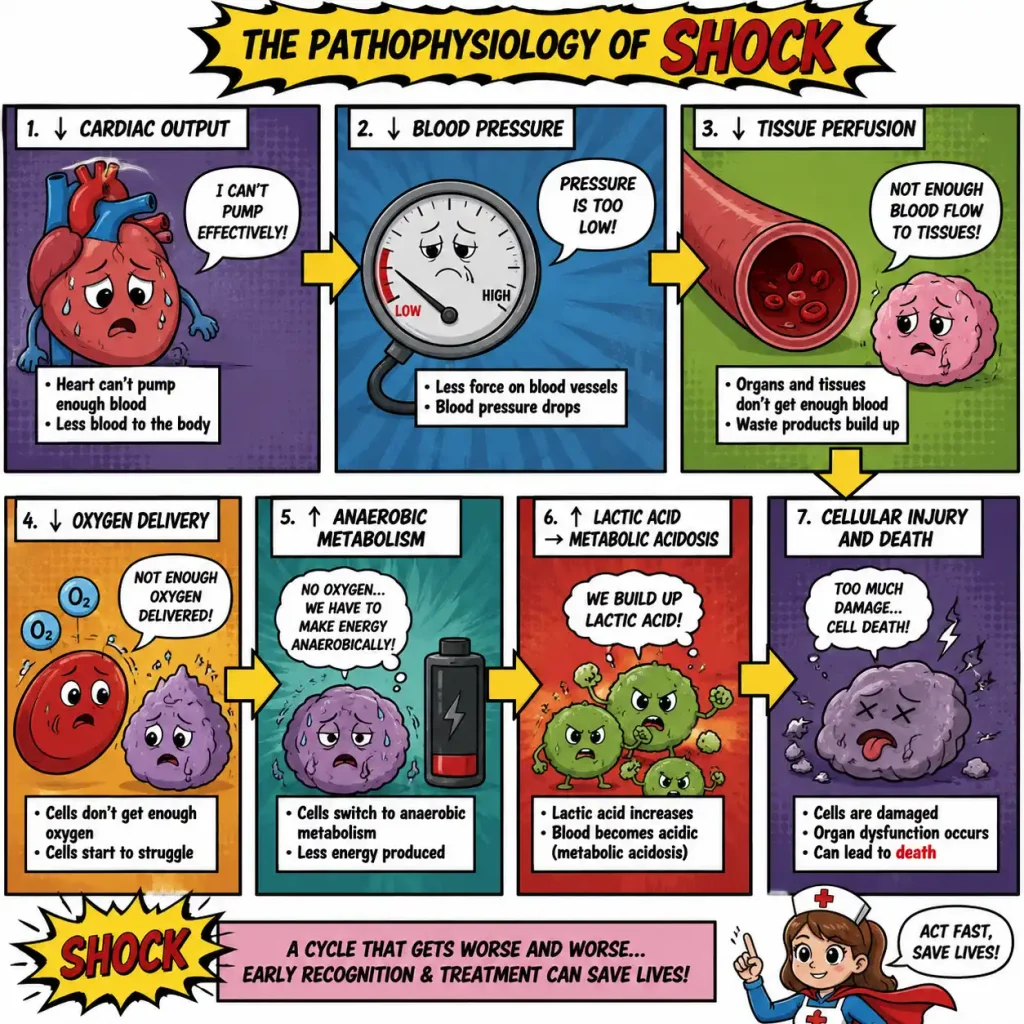
1. Initial Stage (Cellular Hypoperfusion)
- A triggering event (e.g., blood loss, infection, heart failure) reduces oxygen delivery, leading to decreased tissue perfusion. Cells receive less oxygen and shift from aerobic to anaerobic metabolism.
2. Compensatory Stage
The body activates mechanisms to maintain blood flow to vital organs (brain and heart):
Nervous system response
- Sympathetic stimulation by increasing the heart rate and contractility
- Vasoconstriction of peripheral vessels
Hormonal response
- Release of adrenaline and noradrenaline
- Activation of RAAS (retains sodium and water)
- ADH release (increases water retention)
These lead to tachycardia, cool, pale skin, reduced urine output, anxiety/restlessness
Progressive Stage (Decompensated Shock)
- Compensatory mechanisms start to fail, Severe tissue hypoxia develops, Anaerobic metabolism increases → lactic acid buildup (metabolic acidosis).
- Capillary permeability increases, fluid leaks into tissues, and Blood pressure drops significantly. leading to Brain: confusion, decreased consciousness, Kidneys: acute kidney injury, oliguria, Heart: reduced contractility, Lungs: impaired gas exchange
Refractory Stage (Irreversible )
- Severe and prolonged hypoperfusion causes cell and tissue death.
- Widespread organ failure occurs (MODS, Multiple Organ Dysfunction Syndrome).
- Cellular damage becomes irreversible.
- Even with treatment, survival is unlikely.
Diagnostic Investigations
- Vital signs monitoring:
BP (hypotension), heart rate (tachycardia/bradycardia), respiratory rate (tachypnea), and temperature (especially in sepsis). - Blood tests:
CBC (infection, anaemia/blood loss), serum lactate (tissue hypoxia and severity marker), ABG (oxygenation and acid base status, metabolic acidosis), electrolytes and renal function tests (kidney function and imbalances), blood cultures (identify organisms in septic shock). - Cardiac investigations:
ECG (arrhythmias or myocardial infarction), echocardiography (cardiac function and structure assessment). - Imaging studies:
Chest X-ray (pneumonia, pneumothorax, heart failure), CT scan (internal bleeding, pulmonary embolism, organ injury), ultrasound/FAST scan (rapid detection of internal bleeding in trauma). - Hemodynamic monitoring:
Central venous pressure (CVP), arterial line blood pressure monitoring, and cardiac output measurement to assess circulation status. - Oxygenation monitoring:
Pulse oximetry (SpO₂) for continuous monitoring of oxygen saturation.
Medical Management of Shock
- Airway and oxygen therapy: Maintain a patent airway and High flow oxygen or mechanical ventilation if needed
- Fluid resuscitation: Rapid IV crystalloids (e.g., normal saline, Ringer’s lactate), Blood transfusion in hemorrhagic shock
- Vasoactive medications: Vasopressors (e.g., norepinephrine) to maintain blood pressure.Inotropes (e.g., dopamine, dobutamine) to improve cardiac output
- Treat the underlying cause
- Antibiotics for septic shock
- Control bleeding (surgery, pressure, transfusion)
- Antihistamines and epinephrine for anaphylaxis
- Thrombolytics or anticoagulation for thromboembolic causes (as indicated)
- Monitoring and supportive care
- Continuous BP, ECG, SpO₂ monitoring
- Correct electrolyte and acid–base imbalance
- Renal support (dialysis if needed)
Nursing Interventions and Management of Shock
- Assessment and monitoring
- Frequent vital signs monitoring (BP, pulse, RR, temperature, SpO₂)
- Monitor urine output (target ≥ 0.5 mL/kg/hr)
- Observe mental status changes and skin perfusion
- Airway and breathing support
- Position patient to maintain airway (e.g., supine with legs elevated if appropriate)
- Administer oxygen as prescribed
- Assist with ventilation if required
- Circulation support
- Establish and maintain IV access (large-bore cannula)
- Administer IV fluids and medications as prescribed
- Monitor for response to therapy
- Prevent complications
- Prevent hypothermia (keep patient warm)
- Aseptic technique to reduce infection risk
- Prevent pressure ulcers (repositioning)
- Psychological support
- Reassure the patient and family
- Reduce anxiety through clear communication
- Documentation and reporting
- Record all assessments, interventions, and patient responses accurately
- Report deterioration immediately