
meconium asoiration is a neonatal condition codition cause by aspiration of mucoeum.in this note we will learn nursing care plan for meconium aspiration also know as MAS looking at the brief defination,causes ,signs and symptoms,nursing diagnosis and nursing care plan.
causes meconium aspiration
- fetal distress
- prolong labour
- dificult labour
- post term babies
- cord compression
- intrauterine growth restriction
- martanal conditionlike hypertension.
nursing diagnosisi for MAS
Priority Nursing Diagnoses for Meconium Aspiration Syndrome
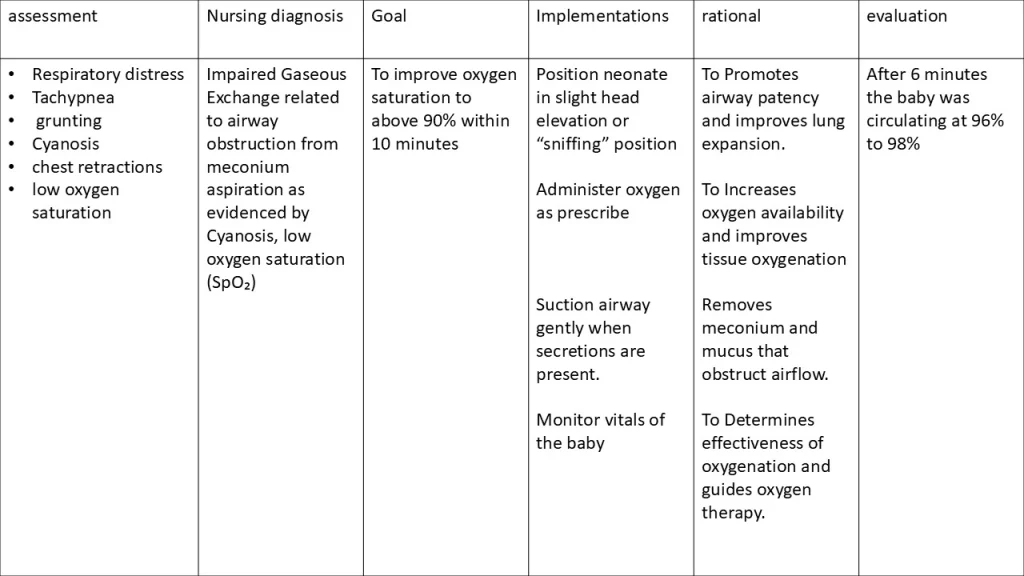
1. Impaired Gasious Exchange
Related to: airway obstruction and inflammation secondary to meconium aspiration
Evidenced by: cyanosis, low oxygen saturation, tachypnea, abnormal blood gases
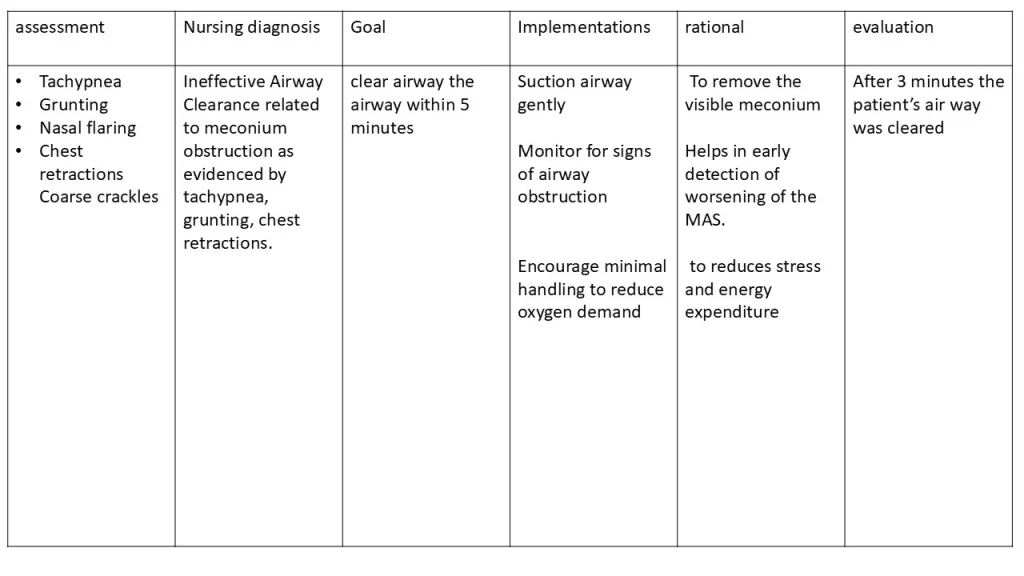
2. Ineffective Airway Clearance
Related to: presence of meconium in the airways and increased secretions
Evidenced by: coarse crackles, grunting, chest retractions, difficulty breathing
3. Ineffective Breathing Pattern
Related to: decreased lung compliance and respiratory distress
Evidenced by: nasal flaring, irregular respirations, tachypnea, use of accessory muscles
4. Risk for Decreased Cardiac Output
Related to: hypoxemia and pulmonary hypertension associated with MAS
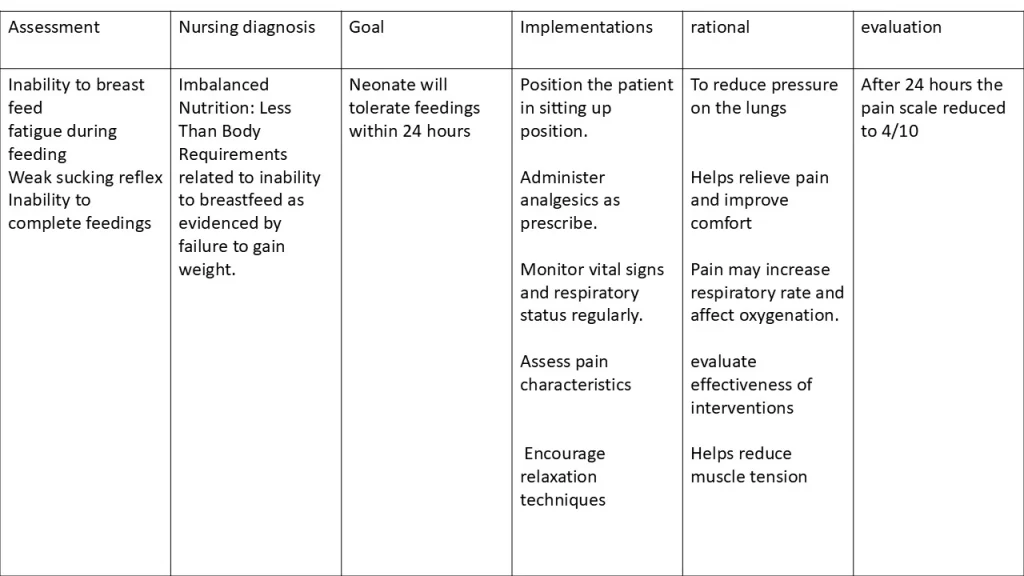
5. Imbalanced Nutrition: Less Than Body Requirements
Related to: increased energy demand and inability to feed effectively due to respiratory distress
Evidenced by: poor sucking, fatigue during feeding, weight loss
6. Risk for Infection
Related to: invasive procedures, aspiration of contaminated meconium, and weakened neonatal defenses
7. Activity Intolerance
Related to: inadequate oxygen supply and respiratory compromise
Evidenced by: fatigue during feeding or handling, desaturation with activity
8. Anxiety (Parental)
Related to: hospitalization and critical condition of the newborn
Evidenced by: fear, crying, repeated questioning, restlessness
9. Deficient Knowledge (Parents/Caregivers)
Related to: unfamiliarity with newborn condition and treatment
Evidenced by: questions about oxygen therapy, feeding, and prognosis
10. Disturbed Sleep Pattern
Related to: respiratory distress and frequent medical interventions
Evidenced by: irritability, inability to maintain restful sleep
Risk Nursing Diagnoses for MAS
1. Risk for Aspiration
Related to: retained secretions and compromised airway protective reflexes
2. Risk for Impaired Skin Integrity
Related to: oxygen devices, IV lines, and reduced tissue oxygenation
3. Risk for Fluid Volume Imbalance
Related to: tachypnea, poor feeding, and increased insensible fluid loss
4. Risk for Delayed Growth and Development
Related to: prolonged illness and decreased oxygen supply
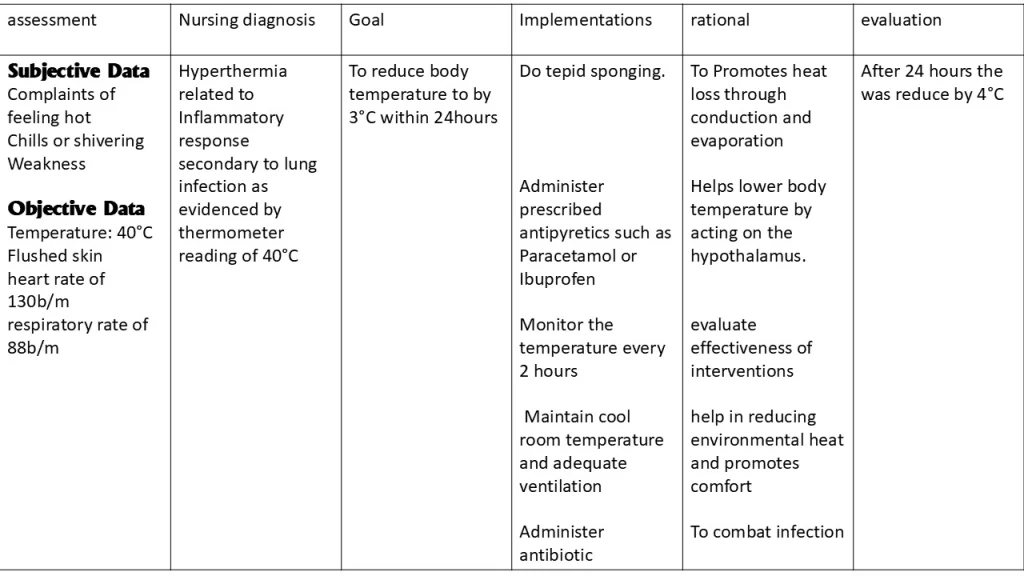
5. Risk for Ineffective Thermoregulation
Related to: neonatal immaturity and critical illness
specific nursing care/interventions for the neaunate with Meconeum aspiration
| Nursing Interventions | Rationales |
|---|---|
| Assess respiratory rate, breath sounds, oxygen saturation, and signs of distress regularly. | Helps detect worsening respiratory compromise early. |
| Position infant with head slightly elevated. | Promotes lung expansion and easier breathing. |
| Suction airway gently when necessary. | Removes secretions and improves airway patency. |
| Administer oxygen as prescribed. | Improves oxygen delivery to tissues. |
| Monitor arterial blood gases if ordered. | Evaluates effectiveness of respiratory therapy. |
| Prepare for CPAP or mechanical ventilation if condition worsens. | Supports breathing in severe respiratory distress. |