
To understand nursing care plan for dehydration, you need to know what it means. Dehydration is a condition that comes as a result of excessive fluid loss in the body, leading to fluid deficit in the body and electrolyte imbalance. This could be due to frequent passing of loose stool, excessive vomiting, or sweating
some one to develop dehydration should have the fluid loss rate higher than the replacement. Nurses should make a nursing care plan for dehydration for effective and evidence-based care
Table of Contents
What is dehydration
Dehydration is a condition where the body lacks sufficient fluids to maintain normal physiological functions.
common causes of dehydration
- vomiting everything
- passing loose stool more than 3 times in a day
- excessive sweating
- fever
- inadequate fluid intake
- excessive burns
- medication, e.g., Lasix
- increased urination like in diabetic inspidus
Assessment for Dehydration (Nursing Assessment)
subjective data
The patient will tell you that
- I feel thirsty
- My mouth is dry
- i fell weak
- I have dizziness
objective data
- dry lip and crack
- slaw kin return or skin tagger poor
- Reduced urine output
- The eye is sunken
- low blood pressure
- concentrated urine
Nursing Diagnosis for Dehydration
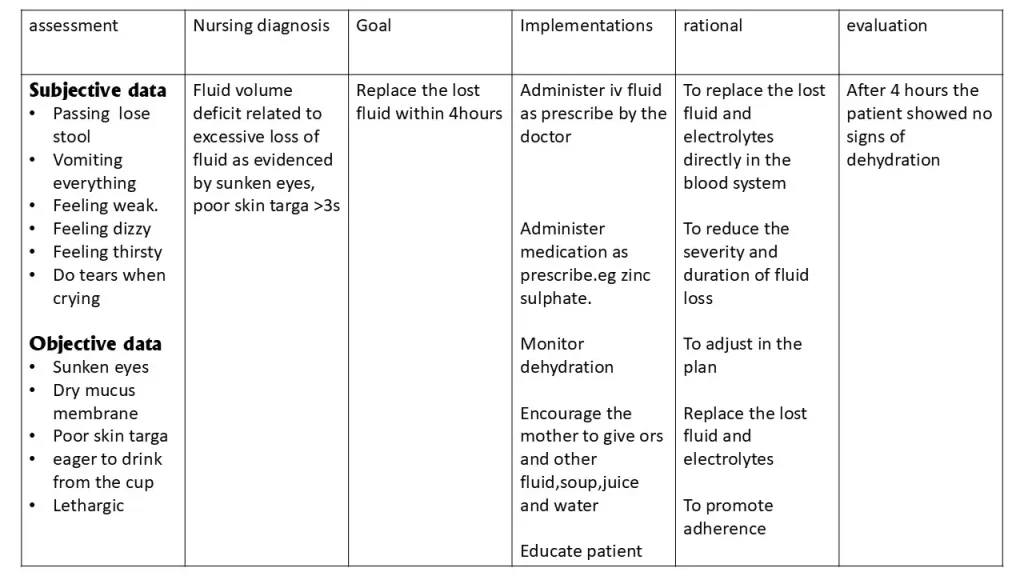
- fluid volume deficit related to excessive loss of fluid as evidenced by sunken eye, dry lips, reduced urine output
- risk for electrolyte imbalance related to excessive fluid loss
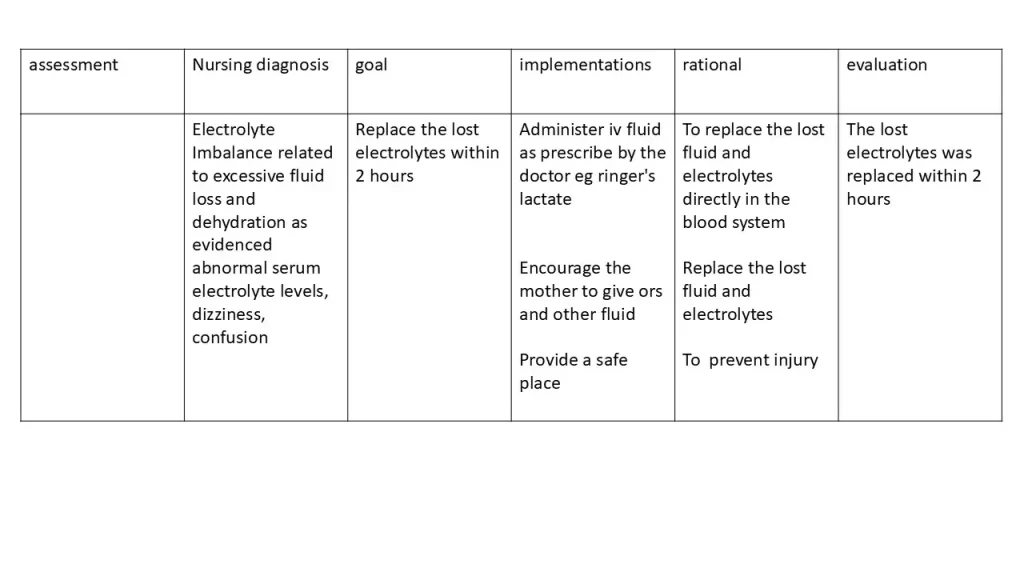
- Electrolyte Imbalance related to excessive fluid loss and dehydration, as evidenced by abnormal serum electrolyte levels, dizziness, and confusion
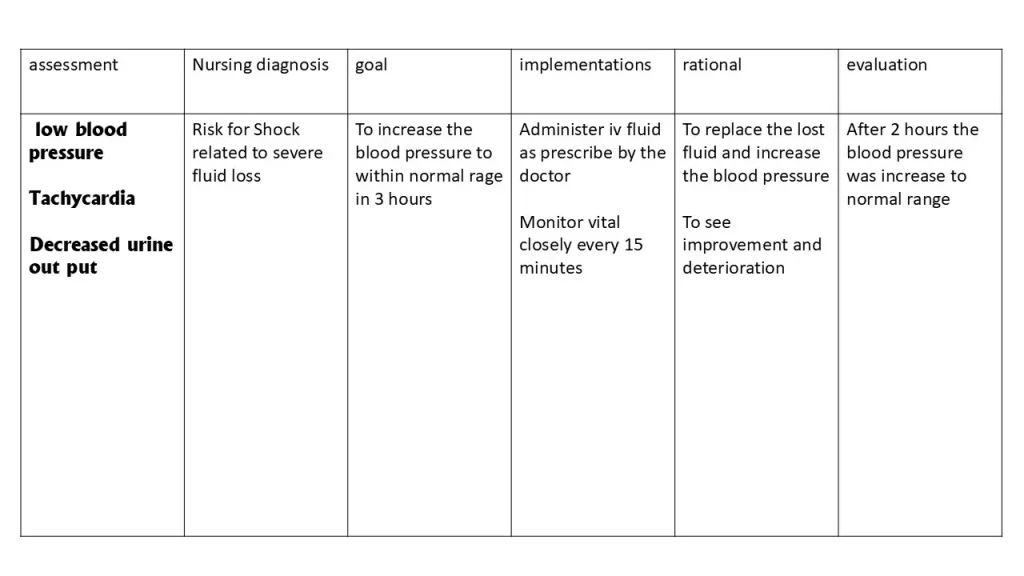
- Risk for Shock related to severe fluid loss
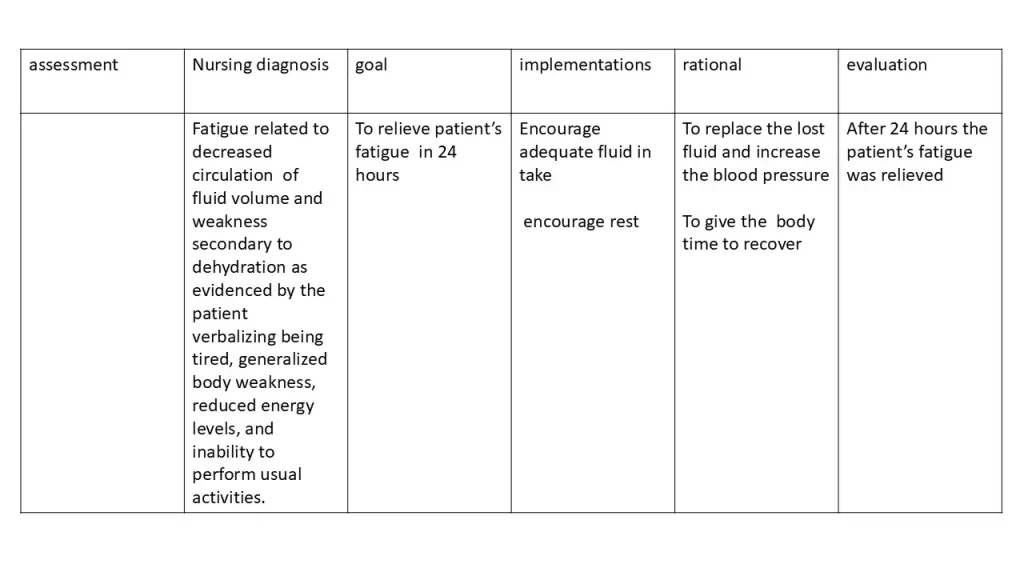
- Fatigue related to decreased circulation of fluid volume and weakness secondary to dehydration, as evidenced by the patient verbalising being tired, generalised body weakness, reduced energy levels, and inability to perform usual activities.
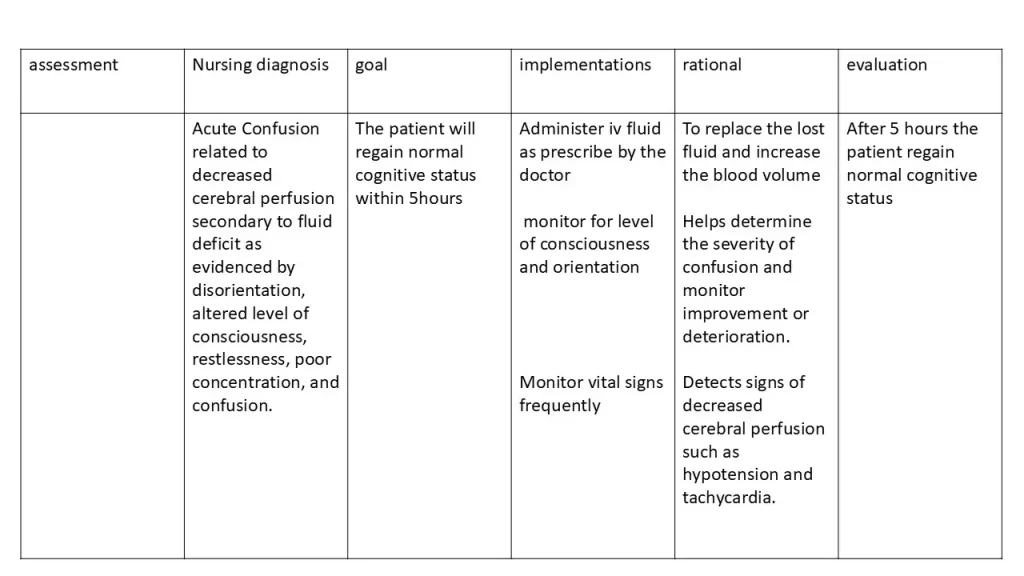
- Acute Confusion related to decreased cerebral perfusion secondary to fluid deficit, as evidenced by disorientation, altered level of consciousness, restlessness, poor concentration, and confusion.
Table showing nursing care plan for dehydration
Nursing care plan for Electrolyte Imbalance due to dehydration
Nursing care plan for Risk for Shock related to severe fluid loss
Nursing care plan for Fatigue related to decreased circulation in dehydration
Nursing care plan for Acute Confusion in Dehydration
Nursing care for a patient with dehydration
Nursing management of dehydration specifically focuses on restoring body fluids, correcting electrolyte imbalance, identifying the cause, and preventing complications.
- Crate report with the mother or the patient, if an adult, to aid cooperation.
- Do a comprehensive assessment of the patient by taking a history and performing a physical examination, looking for specific signs of dehydration, such as sunken eyes and decreased skin turgor.
- Do vital observations; most likely, the pulse and blood pressure will be abnormal.
- Administer IV fluid as prescribed by the doctor, e.g., normal saline, Ringer’s lactate, or other fluid.
- Monitor fluid input and output using a fluid balance chart.
- Monitor the electrolyte in the laboratory results
- Educate the mother or the patient about dehydration, let them know the causes and the prevention.
- Encourage plenty of oral fluid intake, for example, ORS, rice soup, water, and juice.
- Encourage rest to conserve energy and promote recovery,
- Encourage proper nutrition to replace the lost weight
- Document all the activities done for continuity of care
Complications of dehydration
When dehydration is not treated early, it can lead to serious complications like
- Hypovolemic shock
- Electrolytes imbalance
- Kidney Failure