
Table of Contents
What is a cell?
A cell is the basic living structural and functional unit of the body. Every tissue, organ, and system in the human body is made up of cells working together to maintain life.
In these nursing notes, we will learn cell anatomy of a Cell: Structure, Functions, Anatomy of the Human Body Cell
The study of cells is called cytology.
Groups of similar cells combine to form tissues, tissues form organs, organs form body systems, and body systems work together to form the human body.
The study of cells is called cytology
Specific groups of cells are grouped to form a tissue.
A specific group of tissue are group together to form an organ
Specific organs are grouped together to form systems
Systems are grouped together to form a body.
Anatomy of a Cell/The typical structure of the animal cell
Cell membrane(Plasma membrane)
It is the surrounding of the cell and separates it from other cells.
It is composed of phospholipid(fatty substance and protein)
Importance
Cell communication ie interaction with other cells and foreign bodies
Establishment of electro-chemical gradient ie the membrane maintains both electrical and chemical gradient between the inside and outside of the cell.
Selective permeability, i.e., it restricts the passage of certain substances into the cell and allows some substances to enter in to the cell
cytoplasm/cytosol
These are all the cellular contents located in the plasma membrane and the nucleus.
The thick semi-fluid portion of the cytoplasm is called cytosol.
Importance
It is the site or medium for chemical reaction in the cell
organelles(little organs)
These are highly specialised structures suspended in the cytosol that have different characteristics in appearance and functions.
Functions
They play specific roles in cellular growth, maintenance, repair and control of the cell organelles
Nucleus
It is the largest organelle in the cell.It is spherical or oval in shape. It contains hereditary units of the cell called genes, which control the cellular structures and direct many cellular activities. There is only one cell in the body without a nucleus, which is red blood cells(erythrocytes)
Importance
It controls the cellular activities
Contains genetic information ie deoxyribonucleic acid(DNA)
Ribosomes
These are tiny spear consisting of ribosomes ie ribosomal nucleic acid and several ribosomal proteins.They are named because of their high content of ribosomal nucleic acid.
Importance
They are the sites of protein synthesis
Endoplasmic reticulum(ER)
It is a network of membranes enclose channels continuous with the nucleus membranes(enveloped) it is divided in to two i.e. rough endoplasmic reticulum and smooth endoplasmic reticulum.
Functions
rough endoplasmic reticulum
Transportation of substances from one portion of the cell to another
Storage of newly synthesised molecules.
Protein synthesis
Smooth endoplasmic reticulum
Detoxification and deactivation of various chemical like alcohol,pesticide and carcinogens
Releases calcium ions in all muscle contractions
Golgi body
It contains 4-8 flattened sacs called cisterns that stack upon each other like a file of plates with expanded butches at their ends.
Inportances
Processes, sorts, packages, and delivers proteins and lipid in to plasma membrane, lysosome and secretory vesicles.
Lysosomes
Spherical structures that contain hydrolytic enzymes. They are found in large numbers in white blood cells, which carry out phagocytosis
Importance
Intra and extra digestion of worn-out organelles, i.e., autophagy (self-eating) of cellular content during organelle development
Mitocundrion
They are often called the powerhouse of the cell because of their function in collecting ATP, an energy-rich molecule.
They are important in cellular respiration, where chemical energy is made available in the cell. Cellular respiration only occurs if oxygen is present .it result into catabolism of nutrient molecules, such as glucose, to generate ATP.
Importance
Sites of production of most ATP during cellular respiration
Help in heat production
Mitochondria help in metabolism by converting nutrients such as glucose and fatty acids into usable cellular energyA
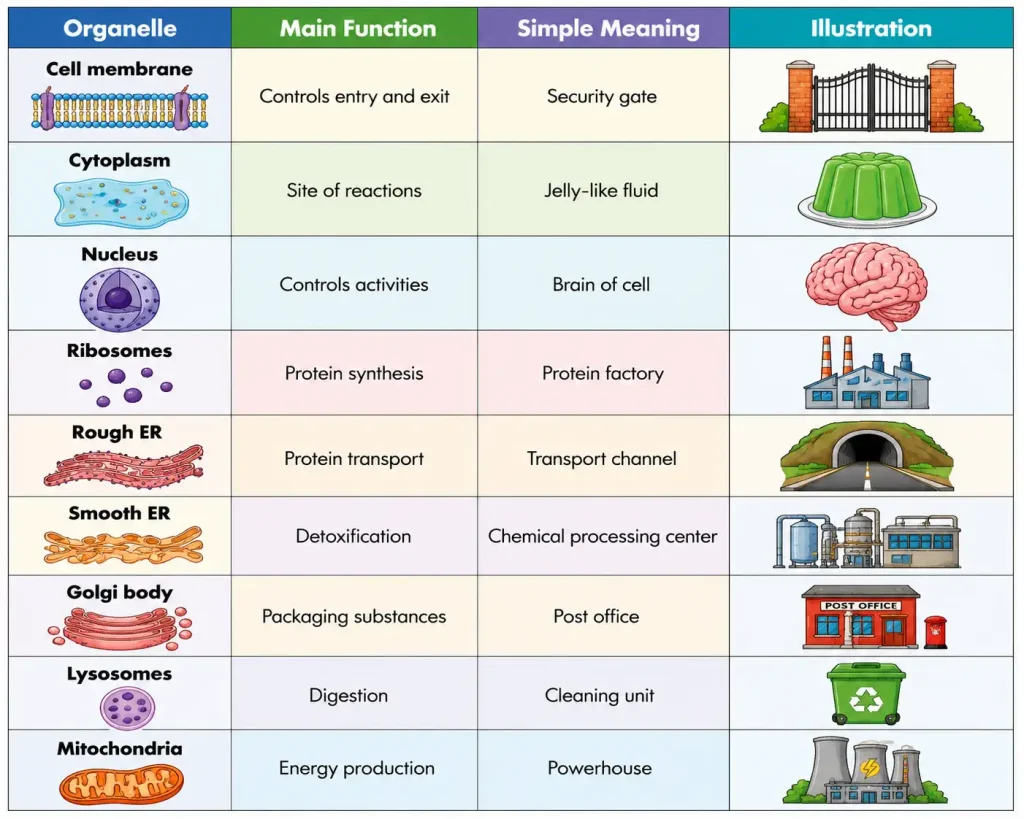
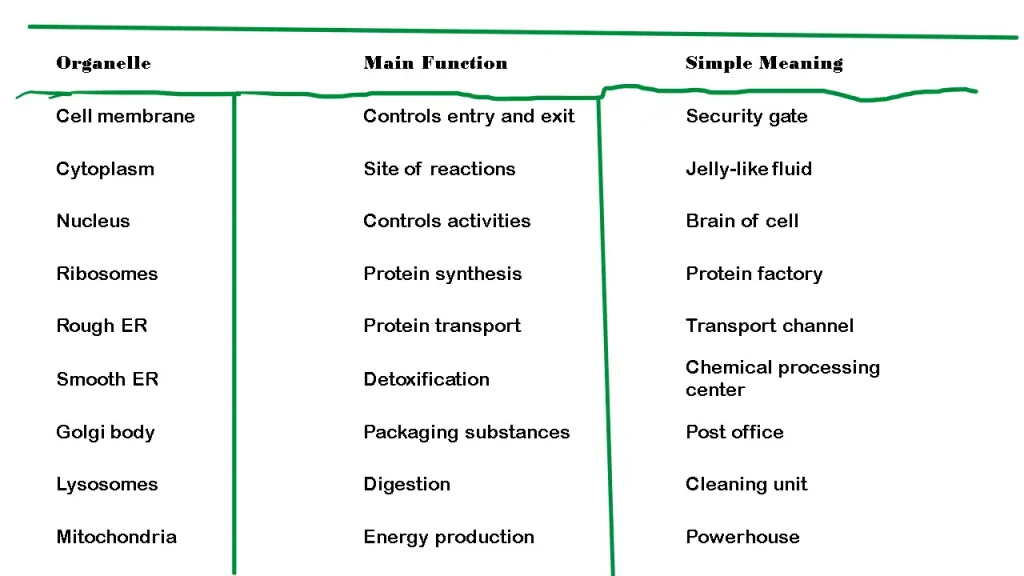
table showing the anatomy of a Cell and its main functions
Frequently Asked Questions (FAQs) About the Anatomy of a Cell
What is the anatomy of a cell?
The anatomy of a cell refers to the structure and organization of the different parts of a cell, including the cell membrane, nucleus, cytoplasm, and organelles.
What is the function of the cell membrane?
The cell membrane protects the cell and controls the movement of substances into and out of the cell.
Why is the nucleus called the brain of the cell?
The nucleus is called the brain of the cell because it controls cellular activities and contains genetic material (DNA).
What is the role of mitochondria in the cell?
Mitochondria produce energy in the form of ATP through cellular respiration, which is why they are known as the powerhouse of the cell.
What are ribosomes?
Ribosomes are small structures responsible for protein synthesis in the cell.
What is the difference between rough ER and smooth ER?
Rough endoplasmic reticulum contains ribosomes and helps in protein synthesis, while smooth endoplasmic reticulum helps in detoxification and fat metabolism.
What is cytology?
Cytology is the study of cells, including their structure, function, and importance in the body.
What are organelles?
Organelles are specialised structures inside the cell that perform specific functions necessary for cell survival.