
Table of Contents
What is Addison’s disease?
Addison’s disease is a rare endocrine disorder in which the adrenal glands do not make enough cortisol and aldosterone.
What Do the Adrenal Glands Do?
The adrenal glands are small glands located on top of each kidney. They produce hormones that help the body maintain normal functions, especially during illness or stress.The two hormones most important when studying Addison’s disease are:
- Cortisol: Helps maintain blood glucose, blood pressure, metabolism, and the body’s response to stress.
- Aldosterone: Helps the kidneys retain sodium and water while removing potassium. This helps maintain fluid balance and blood pressure. The adrenal glands also produce small amounts of androgens, which are sex hormones.
When the adrenal cortex is damaged, cortisol and aldosterone production fall, resulting in fatigue, low blood pressure, dehydration, sodium loss, increased potassium, and difficulty coping with physical stress.
Nursing point: Remember the simple connection: low cortisol affects stress response and blood glucose, while low aldosterone mainly affects sodium, potassium, fluid balance, and blood pressure.
Types of Adrenal Insufficiency
Adrenal Insufficiency It is divided into primary, secondary, and tertiary adrenal insufficiency.
1. Primary Adrenal Insufficiency(Addison’s disease)
This occurs when the adrenal glands cannot produce enough cortisol.
2. Secondary Adrenal Insufficiency
This occurs when the pituitary gland does not produce enough ACTH, the hormone that stimulates the adrenal glands to produce cortisol.aldosterone production is usually preserved because it is regulated mainly by the renin-angiotensin-aldosterone system.
3. Tertiary Adrenal Insufficiency
This occurs when the hypothalamus does not produce enough CRH due to prolonged exposure to glucocorticoids, resulting in reduced ACTH and cortisol production.
table shawing Types of Adrenal Insufficiency
| Type | Main problem | Cortisol | Aldosterone |
| Primary | Adrenal gland damage | Low | Often low |
| Secondary | Pituitary/ACTH deficiency | Low | preserved |
| Tertiary | Hypothalamic/CRH deficiency | Low | preserved |
Nursing point: When assessing a patient, remember that primary adrenal insufficiency affects the adrenal gland directly, while secondary and tertiary forms result from problems higher up in the hypothalamic-pituitary-adrenal axis.
Causes of Addison’s Disease
Addison’s disease occurs when the adrenal cortex is damaged and can no longer produce enough cortisol and aldosterone. The damage may result from autoimmune disease, infection, bleeding, cancer, surgery, genetic disorders, or certain medicines.
Common Causes
- Autoimmune destruction: The immune system mistakenly attacks the adrenal cortex. This is a common cause of primary adrenal insufficiency.
- Tuberculosis (TB): TB can spread to the adrenal glands and gradually destroy adrenal tissue.
- Other infections: Certain fungal and other infections can damage the adrenal glands and interfere with hormone production.
- Adrenal haemorrhage: Severe bleeding into both adrenal glands cause adrenal insufficiency.
- Cancer: Cancer that spreads to both adrenal glands damage the adrenal cortex and reduce hormone production.
- Bilateral adrenalectomy: Surgical removal of both adrenal glands results in primary adrenal insufficiency because the body can no longer produce adrenal hormones.
- Genetic disorders: Some inherited conditions interfere with adrenal development and steroid hormone production.
- Certain medicines: Some medicines can interfere with cortisol production. For example, prolonged corticosteroid therapy followed by surdent withdrawal can cause secondary or tertiary adrenal insufficiency.
In Simple Terms
Think of the adrenal glands as the body’s cortisol and aldosterone factories. If infection, autoimmune disease, bleeding, cancer, surgery, or another condition seriously damages the adrenal cortex, the factories cannot produce enough hormones. The resulting hormone deficiency leads to the signs and symptoms of adrenal insufficiency.
For nursing students: When thinking about the causes of Addison’s disease, remember autoimmune destruction, tuberculosis and other infections, adrenal haemorrhage, cancer, bilateral adrenalectomy, genetic disorders, and certain drugs that interfere with adrenal hormone production.
Risk Factors for Addison’s Disease
A person is at increased risk of developing Addison’s disease if they have:
- Long-term corticosteroid therapy that is stopped suddenly.
- Autoimmune diseases such as type 1 diabetes mellitus or autoimmune thyroid disease.
- A family history of autoimmune endocrine disorders.
- Tuberculosis or chronic fungal infections.
- HIV infection.
- Previous adrenal surgery.
- Adrenal haemorrhage.
- Genetic disorders affecting adrenal function.
Pathophysiology of Addison’s Disease
Pathophysiology of Addison’s Disease
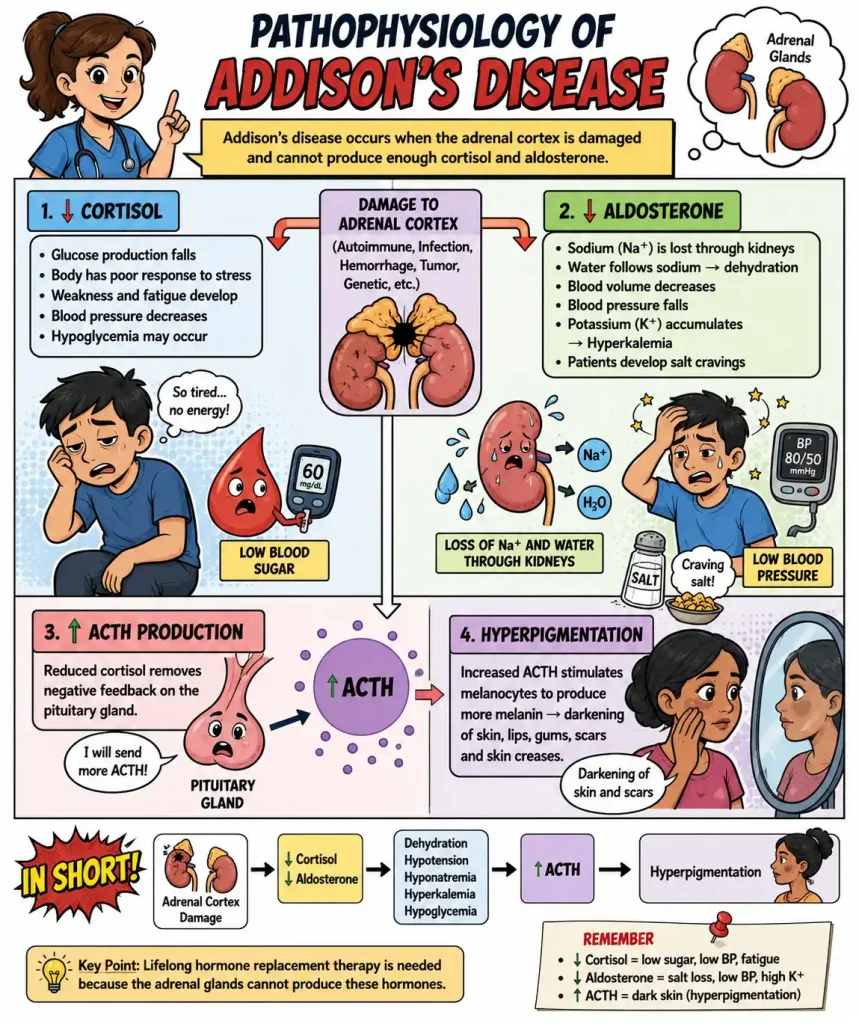
To understand what happens in Addison’s disease, start with the adrenal cortex. When the cortex is damaged, it gradually loses its ability to produce enough cortisol and aldosterone.
The fall in cortisol affects the body’s ability to maintain blood glucose and respond to stress. This is why a patient may feel unusually tired, weak, or unable to cope well with infections, injury, surgery, or other physical stress.
When aldosterone is also reduced, the kidneys lose more sodium and water while retaining more potassium. As fluid is lost, the circulating blood volume falls. The patient may then develop dehydration, low blood pressure, dizziness, and salt craving. Blood tests may show low sodium and high potassium.
There is another important change in primary Addison’s disease. Because cortisol is low, the normal feedback control of the pituitary is reduced. The pituitary therefore produces more ACTH in an attempt to stimulate the adrenal glands. The increased ACTH is associated with increased melanocortin activity, which causes the characteristic darkening of the skin (hyperpigmentation) seen in many patients.
The process can be summarized as:
Adrenal cortex damage → ↓ cortisol ± ↓ aldosterone → impaired stress response + sodium and water loss → hypotension, dehydration and electrolyte imbalance.
At the same time:
↓ cortisol → ↑ ACTH → increased melanocortin activity → hyperpigmentation.
If cortisol deficiency becomes severe, especially during infection, surgery, trauma, or another major stress, the patient may develop an adrenal crisis. This can cause profound hypotension, dehydration, hypoglycemia and circulatory collapse and requires immediate treatment.
Nursing point: The findings in Addison’s disease are connected. When you see low blood pressure, weakness, dehydration, salt craving, hyponatremia, hyperkalemia, and hyperpigmentation together, think about primary adrenal insufficiency.
Signs and Symptoms of Addison’s Disease
Signs and Symptoms of Addison’s Disease
Addison’s disease usually develops gradually, so the early symptoms may not immediately point to an adrenal problem. Many patients first notice that they are becoming unusually tired or weak and are losing weight.
As the condition progresses, other symptoms can appear. Common findings include:
- Persistent tiredness and muscle weakness
- Loss of appetite and unintentional weight loss
- Low blood pressure, which may cause dizziness when standing
- Salt craving
- Nausea, vomiting, abdominal pain, or diarrhoea
- Darkening of the skin (hyperpigmentation), particularly in skin creases, scars, pressure areas, and other areas that may normally be darker
- Low blood glucose, particularly during illness or prolonged fasting
- Dehydration
- Mood changes, such as irritability or low mood
Hyperpigmentation is especially useful when assessing primary adrenal insufficiency because increased ACTH contributes to increased pigmentation. It is generally not a prominent feature of secondary adrenal insufficiency.
When Symptoms Become an Emergency
A patient with adrenal insufficiency can become seriously ill when the body is under major stress, such as during a severe infection, injury, surgery, or significant vomiting and diarrhoea.
Watch for severe weakness, persistent vomiting, abdominal pain, very low blood pressure, confusion, fainting, dehydration, or collapse. These may indicate an adrenal crisis and require urgent treatment.
Nursing point: Do not look at each symptom in isolation. The combination of weakness, weight loss, hypotension, salt craving, gastrointestinal symptoms, hyperpigmentation, and electrolyte abnormalities should raise suspicion of Addison’s disease.
Nursing Assessment
Nursing assessment starts with finding out how the patient is feeling and how stable they are. A patient with Addison’s disease may have vague complaints such as tiredness or poor appetite, so a careful history and physical assessment are important.
Start by checking the vital signs, paying particular attention to blood pressure and pulse. Check for postural changes in blood pressure when appropriate, especially if the patient reports dizziness or fainting. Look for signs of dehydration such as dry mucous membranes, reduced urine output, weakness, or poor skin turgor.
Ask about symptoms such as fatigue, weight loss, poor appetite, nausea, vomiting, diarrhoea, abdominal pain, dizziness, salt craving, and episodes of fainting. It is also important to find out whether the symptoms become worse during illness or other stressful situations.
During physical examination, observe the patient’s skin and oral mucosa for hyperpigmentation. Check for muscle weakness and assess the patient’s ability to carry out normal activities.
Review the patient’s history carefully. Ask about autoimmune diseases, tuberculosis or other infections, previous adrenal surgery, cancer, long-term corticosteroid use, and medicines that may affect adrenal function.
Laboratory results are also important. The nurse should pay attention to abnormalities such as low sodium, high potassium, and low blood glucose, as well as other results ordered by the healthcare team.
Most importantly, assess for signs of adrenal crisis. Severe hypotension, repeated vomiting, confusion, extreme weakness, hypoglycemia, or collapse should be treated as an emergency.
Nursing point: The priority is to identify whether the patient is stable or deteriorating, while looking for evidence of fluid loss, electrolyte disturbance, hypoglycemia, and inadequate cortisol replacement.
Investigations and Diagnosis of Addison’s Disease
Diagnosing Addison’s disease usually starts with the patient’s symptoms and medical history, followed by blood tests to find out whether cortisol production is inadequate. Because the symptoms can look like many other conditions, laboratory testing is important.
Cortisol and ACTH Tests
A morning serum cortisol may be checked first. A low result can suggest adrenal insufficiency, but it usually needs to be interpreted together with other findings rather than being used alone to make the diagnosis.
The ACTH stimulation test is commonly used to confirm adrenal insufficiency. The patient’s cortisol is measured before and after synthetic ACTH is given. In adrenal insufficiency, the cortisol level does not increase adequately.
The blood level of ACTH also helps determine whether the problem is primary or secondary. In primary adrenal insufficiency, ACTH is usually elevated because the pituitary is trying to stimulate the damaged adrenal glands.
Electrolytes and Other Blood Tests
Blood tests may show:
- Low sodium (hyponatremia)
- High potassium (hyperkalemia), particularly when aldosterone is deficient
- Low blood glucose, especially during significant illness or in children
- Changes in other laboratory values depending on the patient’s condition
Renin and aldosterone may also be measured to assess whether the patient has mineralocorticoid deficiency.
Finding the Cause
Once primary adrenal insufficiency has been established, further tests may be needed to determine why the adrenal glands have been affected.
Adrenal autoantibody testing can support an autoimmune cause. If infection, bleeding, cancer, or another structural problem is suspected, an abdominal CT scan may be used to examine the adrenal glands. In suspected secondary or tertiary adrenal insufficiency, imaging of the pituitary or hypothalamic region, such as an MRI, may be considered.
Important Nursing Point
If a patient is severely unwell and adrenal crisis is suspected, treatment should not be delayed while waiting for diagnostic results. The Endocrine Society recommends immediate treatment with intravenous hydrocortisone in severe adrenal insufficiency or suspected adrenal crisis.
For nursing students: Remember the basic sequence:
Symptoms and history → cortisol/ACTH testing → ACTH stimulation test → electrolyte and renin/aldosterone assessment → tests to identify the cause.
Medical Treatment
Treatment for Addison’s disease focuses on replacing the hormones the adrenal glands can no longer produce and preventing adrenal crisis. Because primary adrenal insufficiency is usually a chronic condition, hormone replacement is generally required for life.
Glucocorticoid Replacement
Hydrocortisone is commonly used to replace cortisol. The daily dose is usually divided into more than one dose to better follow the body’s normal daily cortisol pattern. Cortisone acetate or, in selected situations, prednisolone may be used as alternatives. Endocrine Society — Primary Adrenal Insufficiency Guideline
The dose may need to be increased temporarily during significant illness, injury, surgery, or other physical stress. Patients therefore need clear instructions about sick-day medication adjustments.
Mineralocorticoid Replacement
When aldosterone production is inadequate, fludrocortisone is used to replace mineralocorticoid activity. Treatment is monitored using symptoms, blood pressure, electrolyte results, and other clinical findings.
Patients should generally not restrict salt intake when they have confirmed aldosterone deficiency and are receiving fludrocortisone, although individual dietary advice should follow the treating clinician’s recommendations. Endocrine Society — Primary Adrenal Insufficiency Guideline
Treating the Underlying Cause
If a specific cause is identified, it also needs to be addressed. For example, an underlying infection may require appropriate antimicrobial treatment, while other causes may require specialist management.
Preventing Adrenal Crisis
Patients should understand that missing steroid doses or failing to increase replacement during significant illness can be dangerous. They should know when to seek medical help, carry information identifying their adrenal insufficiency, and have access to emergency glucocorticoid treatment when prescribed.
Nursing Point
The nurse should pay close attention to medication adherence, blood pressure, weight, fluid balance, electrolytes, symptoms of under-replacement or over-replacement, and the patient’s understanding of sick-day rules. Medication doses should be changed only according to the patient’s prescribed treatment plan.
Important: Medication doses are individualized. This article is intended for nursing education and should not be used as a substitute for a patient’s prescription or local clinical protocol.
Adrenal Crisis – Emergency Management
An adrenal crisis is a life-threatening complication of adrenal insufficiency. It happens when the body suddenly needs more cortisol than it can produce or replace. It may be triggered by severe infection, prolonged vomiting or diarrhoea, trauma, surgery, childbirth, or inadequate steroid replacement.
A patient may become extremely weak and develop severe vomiting, abdominal pain, dehydration, very low blood pressure, dizziness, confusion, hypoglycemia, or collapse. If treatment is delayed, shock and death can occur.
What Should the Nurse Do?
If adrenal crisis is suspected, do not wait for laboratory results before starting emergency treatment. The patient needs urgent medical care.
The immediate priorities are:
- Assess ABCs and call for urgent medical assistance.
- Establish IV access and monitor the patient’s vital signs closely.
- Take blood samples for investigations when possible, but do not allow testing to delay treatment.
- Administer hydrocortisone immediately as prescribed/emergency protocol. Current adult emergency guidance recommends 100 mg hydrocortisone by IV or IM injection initially, followed by ongoing stress-dose hydrocortisone.
- Give IV 0.9% sodium chloride for fluid replacement as prescribed and monitor the response.
- Check blood glucose and electrolytes and manage abnormalities according to the clinical situation.
- Continue close monitoring of blood pressure, pulse, level of consciousness, urine output, fluid balance, and cardiac status.
- Look for and treat the underlying cause, such as infection, vomiting, diarrhoea, trauma, or another acute illness.
Important Nursing Reminder
The key principle is simple:
Suspected adrenal crisis = treat immediately. Do not wait for confirmation.
Patients with adrenal insufficiency should also be taught how to reduce the risk of crisis. They should understand their sick-day medication plan, carry medical alert identification, and have access to emergency glucocorticoid treatment when prescribed.
Clinical safety note: Emergency steroid doses and fluid management must follow the patient’s age, clinical condition, available medicines, and local hospital protocol. The doses above are included for nursing education and should not replace an emergency department protocol or prescriber’s direction.
Nursing Diagnoses for Addison’s Disease
Nursing diagnoses for Addison’s disease should be based on the patient’s assessment findings. The nurse should not automatically assign every possible diagnosis to every patient.
1. Deficient Fluid Volume
Related to: excessive sodium and water loss associated with inadequate aldosterone.
As evidenced by: hypotension, postural dizziness, dry mucous membranes, reduced urine output, thirst, weakness, weight loss, or other clinical signs of dehydration.
2. Fatigue
Related to: inadequate cortisol production and altered metabolism.
As evidenced by: persistent tiredness, reduced energy, muscle weakness, difficulty performing usual activities, and the need for frequent rest.
3. Imbalanced Nutrition: Less Than Body Requirements
Related to: reduced appetite, nausea, vomiting, and altered metabolism.
As evidenced by: poor food intake, unintentional weight loss, decreased appetite, weakness, or other nutritional assessment findings.
4. Risk for Unstable Blood Glucose Level
Related to: inadequate cortisol production and increased glucose requirements during illness or physiological stress.
This is a risk diagnosis, so there are no defining signs or symptoms to list as evidence. The nurse should instead identify the patient’s risk factors and monitor blood glucose when clinically indicated.
5. Risk for Electrolyte Imbalance
Related to: reduced aldosterone activity and impaired regulation of sodium and potassium.
Again, this is a risk diagnosis. If laboratory results already show an electrolyte abnormality, the nurse should document and manage the actual problem rather than describing it only as a risk.
6. Risk for Falls
Related to: orthostatic hypotension, dizziness, weakness, or episodes of fainting.
If the patient has already experienced a fall or injury, the nursing diagnosis should be based on the actual assessment findings rather than simply documenting a risk.
7. Deficient Knowledge
Related to: inadequate information about Addison’s disease, medication use, sick-day management, and prevention of adrenal crisis.
As evidenced by: incorrect understanding of medication instructions, inability to explain when to seek emergency care, or inability to describe the importance of prescribed hormone replacement.
Important Nursing Point
A nursing diagnosis should follow the patient’s actual assessment. For an actual diagnosis, document the supporting findings; for a risk diagnosis, document the factors that place the patient at risk.
For example:
Deficient Fluid Volume related to sodium and water loss secondary to mineralocorticoid deficiency, as evidenced by blood pressure of 88/56 mmHg, postural dizziness, dry mucous membranes, and reduced urine output.
This approach makes the nursing diagnosis more clinically meaningful and gives students a clear example of how to connect the diagnosis → related factors → assessment evidence.
Nursing Interventions With Rationales
Nursing care depends on the patient’s condition. A patient who is stable and taking replacement therapy needs different attention from one who arrives with vomiting, severe weakness, and very low blood pressure.
1. Check the patient’s blood pressure and other vital signs regularly
Pay particular attention to low blood pressure, tachycardia, and postural dizziness. If the patient becomes dizzy when sitting or standing, assist them and do not allow them to walk alone.
Rationale: Low cortisol and aldosterone can contribute to low blood pressure and reduced circulating fluid volume, increasing the risk of fainting and falls.
2. Look for signs of dehydration
Check the patient’s mucous membranes, urine output, thirst, skin condition, and general appearance. Ask about recent vomiting or diarrhoea and record fluid intake and output.
Rationale: Aldosterone deficiency can cause loss of sodium and water, which may lead to dehydration and worsening hypotension.
3. Monitor laboratory results
Review ordered results such as sodium, potassium, blood glucose, renal function, and cortisol-related investigations. Report significant or rapidly changing abnormalities.
Rationale: Addison’s disease can cause hyponatremia, hyperkalemia and, particularly during illness, hypoglycemia. These abnormalities may become serious if not recognized early.
4. Give hormone replacement at the prescribed time
Administer prescribed glucocorticoids such as hydrocortisone according to the patient’s treatment plan. Avoid unnecessary delays or missed doses.
Rationale: The patient cannot produce enough cortisol naturally, so regular replacement is essential for normal body function and prevention of adrenal crisis.
5. Monitor the response to treatment
Do not simply record that medication was given. Look at whether the patient is becoming less weak, less dizzy, better hydrated, and more stable, while monitoring blood pressure and other relevant findings.
Rationale: The patient’s clinical response helps the healthcare team determine whether treatment is achieving its intended effect.
6. Administer fludrocortisone when prescribed
For patients with mineralocorticoid deficiency, administer fludrocortisone as prescribed and monitor blood pressure, weight, electrolytes, and symptoms.
Rationale: Fludrocortisone replaces mineralocorticoid activity and helps the body maintain sodium, fluid balance, and blood pressure.
7. Help the patient with activities when weakness is severe
A patient who has been extremely fatigued may struggle with bathing, walking to the bathroom, or other normal activities. Provide assistance when needed and allow adequate rest between activities.
Rationale: Weakness and fatigue are common features of adrenal insufficiency. Conserving energy also reduces the risk of falls and exhaustion.
8. Teach the patient about missed doses and illness
Before discharge, ask the patient to explain what they should do if they become sick, vomit after taking medication, or cannot take their usual medication. Reinforce the individualized sick-day plan provided by the healthcare team.
Rationale: Illness increases the body’s need for cortisol. Patients who do not know how to manage steroid replacement during illness are at increased risk of adrenal crisis.
9. Teach the patient how to recognize adrenal crisis
Explain that severe vomiting, extreme weakness, severe dizziness, fainting, confusion, very low blood pressure, or collapse require urgent medical attention.
Rationale: Adrenal crisis can progress rapidly and requires immediate treatment.
10. Encourage medical identification
Advise the patient to carry a medical alert card, bracelet, or other identification stating that they have adrenal insufficiency.
Rationale: If the patient becomes unconscious or unable to communicate, emergency healthcare workers need to know that the patient may require urgent glucocorticoid treatment.
11. Check that the patient actually understands the treatment
Instead of simply asking, “Do you understand?”, ask the patient to explain in their own words:
- What each medication is for
- When they take it
- What they should do during illness
- What symptoms require urgent help
- Why they should not stop prescribed corticosteroid replacement suddenly
Rationale: Asking the patient to explain the information helps identify misunderstandings before they leave the hospital.
12. Be alert for adrenal crisis
If the patient suddenly develops severe weakness, vomiting, abdominal pain, confusion, hypoglycemia, severe hypotension, or collapse, treat the situation as an emergency and follow the facility’s adrenal crisis protocol.
Rationale: Adrenal crisis is potentially fatal. Emergency treatment, including parenteral hydrocortisone and appropriate fluid resuscitation, should not be unnecessarily delayed while waiting for laboratory confirmation.
13. Document what you observe
Record important findings such as blood pressure, fluid intake and output, symptoms, medication administration, laboratory abnormalities, patient education, and the patient’s response to treatment.
Rationale: Accurate documentation helps the next healthcare professional understand the patient’s condition and identify changes early.
A Practical Nursing Example
Imagine a patient with Addison’s disease who arrives on the ward complaining of weakness, vomiting, and dizziness. The nurse should not simply document “patient has Addison’s disease.”
The immediate questions are:
Is the blood pressure low? Is the patient dehydrated? What is the blood glucose? How much has the patient vomited? Are they taking their prescribed steroids? Could this be an adrenal crisis?
This type of clinical thinking is what makes nursing assessment useful. The diagnosis gives you the background, but the patient’s current condition determines your priorities.
Key nursing principle: In Addison’s disease, always think about blood pressure, hydration, glucose, electrolytes, medication replacement, and the possibility of adrenal crisis.
Patient Education
Living with Addison’s disease requires the patient to understand the condition and how to manage hormone replacement every day. Good education can help prevent avoidable complications, particularly adrenal crisis.
Take medication as prescribed
Explain that prescribed hormone replacement is not simply a treatment for symptoms. It replaces hormones that the body is no longer producing adequately. The patient should take the medication exactly as prescribed and should not stop corticosteroid replacement suddenly without medical advice.
Know what to do when sick
The patient should have a clear sick-day plan from their healthcare provider. During significant illness, fever, injury, surgery, or other physical stress, the body’s need for cortisol increases and the usual replacement may need to be adjusted.
If the patient is vomiting and cannot keep oral medication down, they should know when and where to seek urgent medical care and whether they have been prescribed an emergency injectable glucocorticoid.
Recognize adrenal crisis
Teach the patient and family to take symptoms such as severe weakness, repeated vomiting, severe dizziness, fainting, confusion, or collapse seriously. These may indicate adrenal crisis and require emergency treatment.
Carry medical identification
Encourage the patient to carry a medical alert card or wear medical identification stating that they have adrenal insufficiency. This is particularly important when travelling or if the patient becomes unable to communicate during an emergency.
Keep follow-up appointments
Regular follow-up allows the healthcare team to assess symptoms, blood pressure, electrolytes, medication requirements, and overall response to treatment.
Know the medicines
The patient should understand the difference between their glucocorticoid replacement and, when prescribed, fludrocortisone for mineralocorticoid replacement. They should also know what each medication is for and how it should be taken.
Check understanding before discharge
Rather than simply asking whether the patient understands, ask them to explain:
- What their medicines are for
- What they should do if they become seriously ill
- What symptoms require emergency help
- Why they should not stop prescribed corticosteroids suddenly
- What medical identification they should carry
Nursing point: Patient education is successful when the patient can explain and demonstrate what to do, not simply when they say they understand.
Complications of Addison’s Disease
When Addison’s disease is diagnosed and treated properly, many patients can live normal, active lives. Problems are more likely when hormone replacement is inadequate, medication is missed, or the body is exposed to severe stress without enough cortisol.
Adrenal Crisis
This is the most serious complication. It can develop when cortisol levels are too low, particularly during severe infection, injury, surgery, prolonged vomiting or diarrhoea, or interruption of steroid treatment.
The patient may develop severe weakness, vomiting, abdominal pain, dehydration, very low blood pressure, confusion, hypoglycemia, shock, and loss of consciousness. Adrenal crisis requires immediate treatment.
Electrolyte Imbalance
Aldosterone deficiency can cause the kidneys to lose sodium and water while retaining potassium. This may result in hyponatremia, hyperkalemia, dehydration, and hypotension.
Severe electrolyte disturbances can affect the heart, muscles, and nervous system.
Hypoglycemia
Low cortisol can impair the body’s ability to maintain an adequate blood glucose level. This is particularly important during illness, prolonged fasting, or increased physical stress.Severe hypoglycemia can cause confusion, seizures, or loss of consciousness.
Dehydration and Hypotension
Loss of sodium and water can reduce circulating blood volume. The patient may experience thirst, dizziness, postural hypotension, weakness, fainting, and, in severe cases, circulatory shock.
Reduced Quality of Life
Persistent fatigue, weakness, gastrointestinal symptoms, and the need for lifelong medication can affect work, school, social activities, and emotional well-being.
Patients may also worry about becoming seriously ill or experiencing an adrenal crisis.
Complications Related to Treatment
Glucocorticoid replacement must be carefully individualized. Too little replacement can leave the patient with symptoms of adrenal insufficiency, while excessive long-term glucocorticoid exposure can cause complications associated with glucocorticoid excess.
This is why patients should not increase, reduce, or stop their medication on their own unless following a specific plan provided by their healthcare professional.
Nursing Point
The complication that should always remain at the front of a nurse’s mind is adrenal crisis. In a patient with Addison’s disease who suddenly becomes severely weak, hypotensive, confused, or repeatedly vomits, think about adrenal crisis and seek emergency treatment without delay.
Clinical Pearls
These are the points worth remembering when caring for a patient with Addison’s disease:
- Addison’s disease means primary adrenal insufficiency. The problem is in the adrenal glands themselves.
- Think of cortisol when you see problems with stress response, blood pressure, and glucose regulation.
- Think of aldosterone when you see sodium loss, dehydration, low blood pressure, and increased potassium.
- Hyperpigmentation is an important clue to primary adrenal insufficiency because ACTH is usually elevated.
- A patient with Addison’s disease may look relatively well at one time and deteriorate quickly during infection, surgery, trauma, or severe gastrointestinal illness.
- Severe vomiting is particularly important because the patient may be unable to absorb oral steroid replacement.
- Do not assume that every patient with adrenal insufficiency has high potassium. Hyperkalemia is more characteristic of primary disease with mineralocorticoid deficiency.
- Do not confuse Addison’s disease with adrenal insufficiency caused by long-term corticosteroid therapy. The latter is generally secondary or tertiary adrenal insufficiency.
- If adrenal crisis is suspected, do not wait for laboratory confirmation before emergency treatment is started.
- A patient who takes lifelong hormone replacement should understand what to do when sick, not just when to take the usual daily dose.
- Always assess the whole clinical picture. A single symptom such as fatigue is nonspecific, but fatigue combined with weight loss, hypotension, salt craving, hyperpigmentation, and electrolyte abnormalities should raise suspicion of adrenal insufficiency.
A Simple Memory Aid
For nursing exams and clinical practice, remember:
Cortisol → stress, glucose, blood pressure
Aldosterone → sodium, water, potassium, blood pressure
Low cortisol + high ACTH → think primary adrenal insufficiency
Severe deterioration → think adrenal crisis
Exam Tips
Addison’s disease is a common topic in endocrine and medical-surgical nursing questions. Most questions test whether you can connect the hormone deficiency with the clinical findings rather than simply memorize a list.
1. Know the key hormones
Cortisol: Think about stress response, blood glucose, metabolism, and blood pressure.
Aldosterone: Think about sodium, water, potassium, and blood pressure.
2. Remember the classic findings
A patient with primary Addison’s disease may have:
Weight loss + fatigue + hypotension + salt craving + hyperpigmentation + hyponatremia + hyperkalemia.
If several of these appear together in a question, consider primary adrenal insufficiency.
3. Know the ACTH difference
In primary adrenal insufficiency:
Cortisol ↓ → ACTH ↑
In secondary adrenal insufficiency:
Cortisol ↓ → ACTH ↓ or inappropriately normal
This is an important distinction in examination questions.
4. Do not forget adrenal crisis
If a question describes a patient with Addison’s disease who suddenly develops severe hypotension, vomiting, weakness, confusion, dehydration, hypoglycemia, or collapse, think adrenal crisis.
The priority is emergency management, including parenteral hydrocortisone and appropriate fluid resuscitation, according to the clinical protocol.
5. Watch for the corticosteroid trap
A patient who has been taking corticosteroids for a long time and suddenly stops them may develop secondary or tertiary adrenal insufficiency. Do not automatically label this as Addison’s disease.
6. Think about nursing priorities
When asked what the nurse should do first, look for the option that addresses the patient’s immediate safety:
Airway → breathing → circulation → blood glucose → emergency treatment.
For a patient with suspected adrenal crisis, severe hypotension and altered consciousness are more urgent than less immediate concerns such as fatigue education or dietary advice.
Quick Exam Reminder
Addison’s disease = low cortisol ± low aldosterone
Primary disease = high ACTH + possible hyperpigmentation
Aldosterone deficiency = sodium loss + potassium retention + hypotension
Sudden severe deterioration = adrenal crisis
Frequently Asked Questions About Addison’s Disease
What is Addison’s disease?
Addison’s disease is primary adrenal insufficiency, where the adrenal glands are unable to produce enough cortisol and often aldosterone.
What are the main symptoms of Addison’s disease?
Common symptoms include fatigue, muscle weakness, weight loss, poor appetite, low blood pressure, salt craving, nausea, vomiting, abdominal pain, and skin hyperpigmentation.
What causes Addison’s disease?
Autoimmune destruction of the adrenal glands is a common cause. Other causes include tuberculosis, certain infections, adrenal haemorrhage, cancer affecting the adrenal glands, bilateral adrenalectomy, and some genetic disorders.
Is Addison’s disease curable?
There is usually no way to restore normal adrenal hormone production once the adrenal glands have been permanently damaged. However, the condition can generally be managed with lifelong hormone replacement and appropriate follow-up.
What is the main treatment for Addison’s disease?
Treatment involves replacing the hormones the body is lacking. Hydrocortisone or another appropriate glucocorticoid is used to replace cortisol, while fludrocortisone may be required when aldosterone deficiency is present.
What is an adrenal crisis?
An adrenal crisis is a life-threatening worsening of adrenal insufficiency. It may cause severe weakness, vomiting, dehydration, very low blood pressure, hypoglycemia, confusion, shock, or collapse.
What can trigger an adrenal crisis?
Triggers can include serious infection, surgery, trauma, severe vomiting or diarrhoea, and inadequate or interrupted glucocorticoid replacement.
Why does Addison’s disease cause dark skin?
In primary adrenal insufficiency, low cortisol causes the pituitary gland to produce more ACTH. Increased ACTH is associated with increased melanocortin activity, which can cause hyperpigmentation.
Can a person with Addison’s disease live a normal life?
Yes. With appropriate hormone replacement, regular follow-up, and good understanding of sick-day and emergency management, many people with Addison’s disease can lead active lives.
Can a person with Addison’s disease stop taking their medication when they feel better?
No. The medication replaces hormones that the damaged adrenal glands cannot produce adequately. Patients should not stop prescribed glucocorticoid replacement on their own.
What should a nurse teach a patient with Addison’s disease?
Important teaching includes medication adherence, sick-day management, recognizing adrenal crisis, carrying medical identification, keeping an adequate supply of medication, and knowing when to seek emergency care.
Note: These answers are intended for nursing education. Individual diagnosis and treatment should follow assessment by a qualified healthcare professional and applicable clinical guidelines.
Key Takeaways About Addison’s Disease
If you are revising Addison’s disease, focus on the following points:
- Addison’s disease is primary adrenal insufficiency, meaning the adrenal glands themselves are damaged.
- The main hormone deficiencies are cortisol and, in many patients, aldosterone.
- Low cortisol contributes to fatigue, weakness, weight loss, impaired stress response, and problems maintaining blood glucose.
- Low aldosterone causes sodium and water loss, which can lead to dehydration and low blood pressure. Potassium may rise.
- Hyperpigmentation is an important clue in primary adrenal insufficiency because ACTH levels are usually high.
- Common symptoms include fatigue, weight loss, poor appetite, salt craving, nausea, vomiting, abdominal pain, dizziness, and hypotension.
- Diagnosis commonly involves assessment of cortisol, ACTH, and the response to an ACTH stimulation test, together with electrolyte and other investigations.
- Treatment usually requires long-term glucocorticoid replacement. Patients with mineralocorticoid deficiency may also need fludrocortisone.
- Illness, surgery, trauma, and severe vomiting or diarrhoea can increase the risk of adrenal crisis.
- Adrenal crisis is an emergency. Severe hypotension, vomiting, dehydration, hypoglycemia, confusion, or collapse in a patient with adrenal insufficiency requires urgent treatment.
- Nurses play an important role in monitoring vital signs, fluid balance, glucose and electrolytes, administering prescribed replacement therapy, recognizing deterioration, and educating the patient.
- A patient should understand their sick-day plan, carry medical identification, and know when emergency treatment is needed.
- Long-term corticosteroid therapy should not be stopped abruptly without appropriate medical guidance.
The Simple Way to Remember Addison’s Disease
Adrenal gland damaged → ↓ cortisol ± ↓ aldosterone
↓ Cortisol → fatigue + poor stress response + possible hypoglycemia
↓ Aldosterone → sodium/water loss + ↓ blood pressure + possible ↑ potassium
↓ Cortisol → ↑ ACTH → hyperpigmentation
Severe stress + inadequate cortisol → adrenal crisis
For nursing practice, the most important question is:
“Is this patient stable, or are they developing an adrenal crisis?