
Sterilization in nursing is one of the most important practices used to prevent infections and maintain patient safety in healthcare settings. In hospitals, clinics, laboratories, and operating theatres, sterilization helps eliminate harmful microorganisms from medical instruments, equipment, and surfaces.
Healthcare-associated infections remain a major global health challenge. Proper sterilization procedures in mursing reduce the spread of bacteria, viruses, fungi, and spores that can cause serious illnesses. Nurses and other healthcare protessionals must understand sterilization methods, infection prevention principles, and aseptic techniques to provide safe and effective patient care.
This comprehensive guide explains the meaning of sterilization in nursing foundation, sterilization methods in mursing, sterilization procedures in nursing, advantages, principles, and the role of nurses in infection control
Table of Contents
What is Sterilization in Nursing?
Sterilisation is the process of destroying or eliminating all forms of microorganisms and their spores from medical instruments, equipment, and surfaces.
Unlike disinfection, which only reduces harmful microorganisms, sterilisation completely removes all microbial life. Sterilized instruments are considered safe for use during surgical procedures, wound care, such as burns, catheterisation, injections, and other medical interventions like abdominal tapping.
Importance of Sterilization in nursing and Healthcare
Sterilization is essential in every healthcare facility because it helps prevent infections and improves patient safety. Below are the major reasons why sterilization is important:
1. Prevents Healthcare-Associated Infections (HAIs)
Improperly sterilized equipm ent can transmit dangerous infections from one patient to another.Steriliz ation reduces the risk of hospital-acquired infections and improves treatment outcomes.
2. Protects Patients and Healthcare Workers
Sterile instruments reduce exposure to harmful microorganisms, protecting both patients and healthcare professionals from infectious diseases
3. Ensures Safe Surgical Procedures
Surgical instruments must be sterile before use to prevent postoperative infections and complications.
4. Improves Quality of Patient Care
Effective infection prevention and control measures increase patient confidence and improve health care standards
5. Meets Healthcare Standards and Guidelines
Hospitals and healthcare facilities are required to follow strict sterilisation and infection control protocols to maintain accreditation and patient safety.
Difference Between Sterilization and Disinfection
The process commonly uses liquid chemical disinfectants.A
table showing the difference between sterilization and disinfection
| Sterilization | Disinfection |
| Destroys all microorganisms including spores | Destroys all microorganisms, including spores |
| Used for surgical instruments and critical items | Used for surfaces like tables and non-critical items |
| Provides complete microbial destruction | Reduces microbial contamination |
| Examples include autoclaving and dry heat | Examples include alcohol and chlorine |
| Sterilization usually requires specialized equipment | Sterilization usually requires specialised equipment |
| Sterilization takes longer and is more complex | Disinfection is faster and easier to perform |
| The process may require high temperature, pressure, or gases. | The process commonly uses liquid chemical disinfectants. |
Types of Sterilization Methods in Nursing
There are different sterilization methods used in healthcare, depending on the type of equipment and material being sterilized
1. Steam Sterilization (Autoclaving)
Steam sterilization is the most commonly used sterilization method in hospitals. How Autoclaving Works: An autoclave uses high-pressure saturated steam to destroy microorganisms and spores.
Typical autoclave conditions include
- Temperature: 121°C to 134°C
- Pressure 15 psi
- Exposure time: 15-30 minutes
Advantages of Steam Sterilization
- Highly effective
- Fast and reliable
- Non-toxic
- Economica
- Suitable for mental and surgical tools
Disaavantages
- Not suitable for heat-sensitive materials
- May damage some plastics and rubber items
2. Dry Heat Sterilization
Dry heat sterilization uses hot air ovens to destroy microorganisms
Common Uses
- Glassware
- Metal instruments
- Powders and oils
Advantages
- Suitable for moisture-sensitive items
- Non-corrosive
Disadvantages
- Requires longer sterilization time
- Higher temperatures are needed
3. Chemical Steriliz ation
Chemical sterilization involves using liquid chemicals or gases to sterilize heat-sensitive equipment.
Common Chemicals Used
- Ethylene oxide gas
- Hydrogen peroxide
- Glutaraldehyde
- Formaldehyde
Advantages
- Suitable for delicate instruments
- Effective for plastic and electronic devices
Disadvantages
- Expensive
- Some chemicals are toxic
- Requires careful handling
4. Radiation Sterilization
Radiation steriliz ation uses ionizing radiation to destroy microorganisms
Common Applications
- Disposable syringes
- Surgical gloves
- Catheters
- Pharmaceutical products
Advantages
- Effective for mass sterilisation
- Suitable for packaged items like covering of the cannula, fluid like normal saline
Disadvantages
- Requires specialised equipment, mostly very difficult to find
- High installation costs and maintaining
5. Filtration Sterilization
Filtration removes microorganisms from liquids and gases using special filters
Uses of Filtration
- Sterilizing laboratory solutions like buffers
- Purifying air in operating rooms
- Pharmaceutical manufacturing like injectable medicines
Classification of Medical Items for Sterilization in Nursing
Medical items are classified based on the risk of infection.
Critic al ltems
These items enter sterile body tissues or the bloodstream
Examples include:
- Surgical instruments
- Needles
- Catheters
- Implants
- Critical items must_ aways_be sterilized
Semi-Critical Items
These items com e into contact with mucous mem branes
Exam ples include
- Endoscopes
- Respiratory equipment
- Laryngoscopes
They require high-level disinfection or sterilization
Non-Critical Items
These items only touch intact skin.
Examples include
- Blood pressure cuffs
- Stethoscopes
- Bed rails
They usually require cleaning and disinfection
Steps in the Sterilization Process in nursing
Proper sterilization involves several important steps
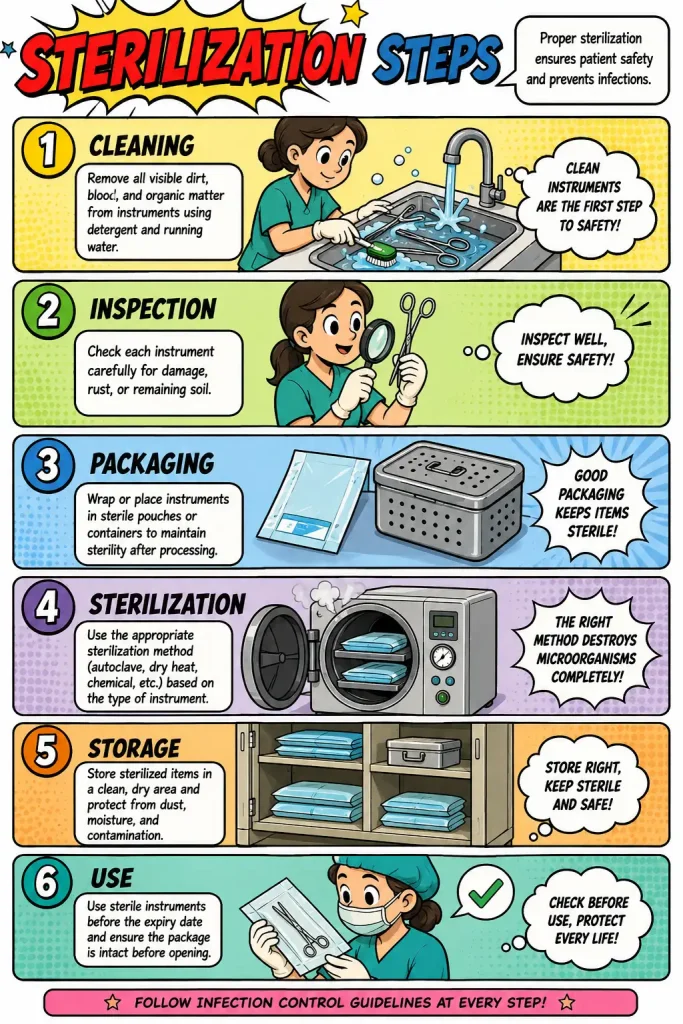
1. Cleaning
All instruments must be cleaned thoroughly before sterilization. Organic matter, such as blood and body fluids, can interfere with the sterilization process
2. Inspection
Instruments should be inspected for damage, rust, or contamination.
3. Packaging
Items are wrapped or packaged to maintain sterility after processing
4 Sterilization
The appropriate sterilisation method is selected depending on the equipment.
Storage
Sterile items should be stored in clean, dry areas to prevent contamination
Principles of Sterilisation in nursing and Infection Control
Healthcare workers should follow important infection prevention principles during sterilization.
Hand hygiene
Proper hand washing before and after handling sterile equipment prevents contamination.Use of Personal Protective Equipment (PPE) like Gloves, masks, gowns, and eye protection reduces exposure to infectious materials
Proper Waste Disposal
Sharps and contaminated materials should be discarded safely according to infection control guidelines.
Monitoring Sterilization Effectiveness
Sterilization indicators and biological tests help confirm successful sterilization.
Sterilization Indicators
Physical Indicators
These include temperature, pressure, and time monitoring
Chemical Indicators
Special tapes or strips change colour when sterilization conditions are met.
Biological Indicators
These are the most reliable indicators because they use bacterial spores to test sterilzation effectiveness.
Common Sterilization Equipment Used in Hospitals
Healthcare facilities use various sterilization equipment, including:
- Autoclaves
- Hot air ovens
- Sterilization drums
- Ethylene oxide sterilizers
- UV sterilizers
- Sterile storage cabinets
Challenges in Sterilization
Despite its importance, healthcare facilities may face challenges such as
- Lack of sterilisation equipment
- Inadequate staff training
- Poor infection control practices
- Equipment malfunction
- Overcrowded healthcare facilities
Continuous training and proper infection control policies help overcome these challenges
Role of Nurses in Sterilization and Infection Prevention
Nurses play a critical role in maintaining sterile environm ents and preventing infections Responsibilities of Nurses Include
- Following aseptic techniques
- Handling sterile instruments correctly
- Monitoring sterilisation procedures
- Educating patients and staff about infection prevention
- Practising proper hand hygiene
- Reporting sterilization failures
Nurses are frontline healthcare providers who contribute signific antly to patient safety and quality healhcare
Best Practices for Effective Sterilization in nursing
To maintain effective sterilization in healthcare settings, facilities should:
- Follow standard infection control guidelines
- Train healthcare workers regularly
- Maintain sterilization equipment properly
- Monitor sterilization cycles consistently
- Store sterile items correctly
- Use appropriate sterilisation methods for each item
Conclusion
Sterilization is a vital component of infection prevention and control in healthcare settings. Proper sterilisation techniques help eliminate harmful microorganisms, reduce healthcare-associated infections, and improve patient safety.
Healthcare workers, especially nurses, must understand different sterilisation methods, principles, and procedures to maintain high standards of patient care. From steam sterilzation and dry heat sterilization to chemical and radiation sterilisation, every method plays an important role in ensuring safe medical practice
By following proper sterilization guidelines and infection control measures, healthcare facilities can create safer environments for patients, healthcare workers, and the community.
Frequently Asked Questions About Sterilization in Nursing
What is the main purpose of sterilisation?
The main purpose of sterilization is to destroy all microorganisms and prevent infections
What is the most common method of sterilization?
Semi-sterilisation using an autoclave is the most commonly used sterilisation method in hospitals.