
Pneumonia is an inflammation of the lungs leading to the accumulation of fluid or pus in the alveoli. A nursing care plan for a patient with pneumonia promotes recovery, prevents complications, and improves patient outcomes.
Nurses must perform continuous assessment, monitor respiratory status, administer medications, and provide supportive care such as oxygen therapy, hydration, and patient education.
in this note we will learn nursing care plan for pneumonia This care plan focuses on priority nursing diagnoses, including ineffective airway clearance, impaired gas exchange, ineffective breathing pattern, hypothermia, activity intolerance, and acute pain.
Table of Contents
Signs and Symptoms for pneumonia
- cough
- chest pain
- fever
- shortness of breath
- rapid breathing
- wheezing sound
- fatigue
- cyanosis
- decrease oxygen circulation
Assessment
subjective data
This information, the patient is the one to tell you, e.g., the biographic data, past medical, surgical etc
- patient reports having a cough
- Difficulty in clearing the chest
- feel short of breath
- feel very hot.
Objective data
- A productive cough is seen in the sputum
- Breathing sound, wheezing, stridor
- dyponea
- crackle sound heard on auscultation
- low SPO2 of 87
- cyanosis
- Use of accessory muscles
- Shallow respirations
- feel hot on touch
Nursing diagnosis
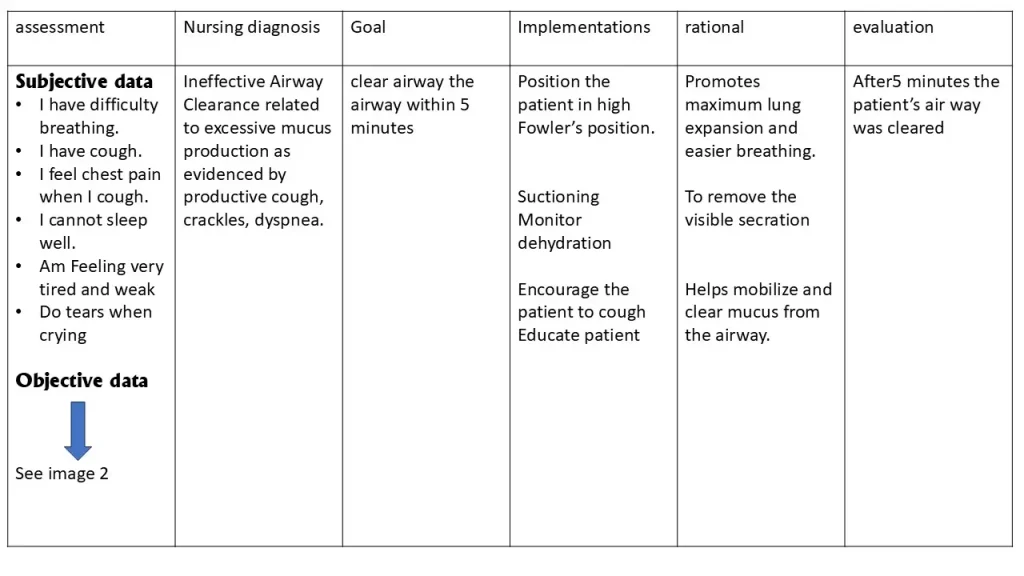
Ineffective Airway Clearance related to inflammation of the lung and increased mucus production, as evidenced by productive cough and abnormal breath sounds
Implimentations
- encourage coughing
- administer medication eg bronchiodilater and nasal drops
- give honey
Rationel
- to release the secretion blocking the airway
- to loosen the mucus
- reduces irritation
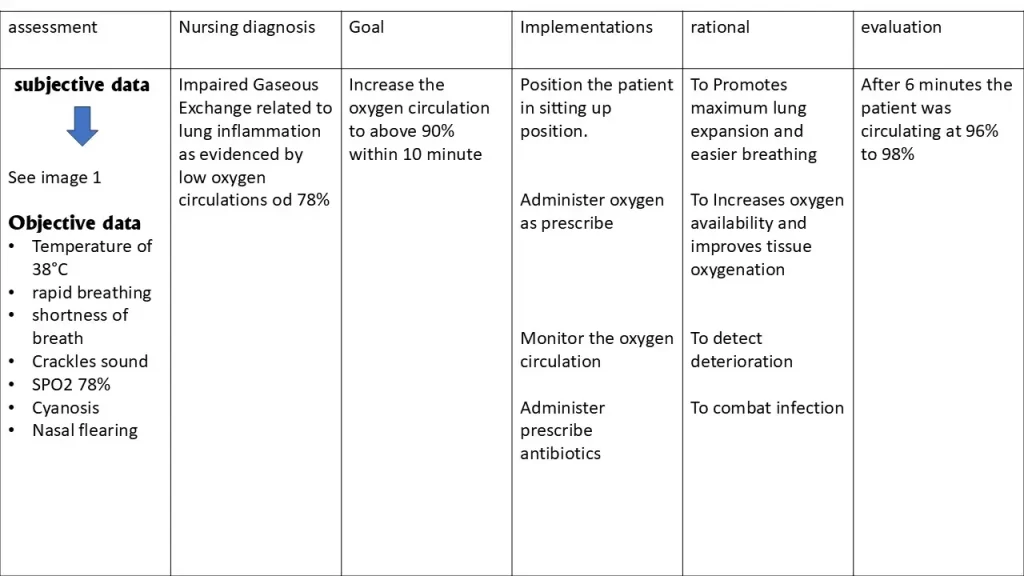
Impaired Gaseous Exchange related to alveolar fluid accumulation, as evidenced by cyanosis and shortness
goal
increased Oxygen saturation to normal within 2 hours
implimentations
- Position in semi Fowler’s position
- Monitor oxygen saturation regularly
- Administer oxygen therapy as prescribed
- administer the prescribed antibiotic
rational
- Positioning in sitting up enhances full lung expansion
- Monitoring helps in the early detection of any abnormality
- increase oxygen supply to the blood
- Destroy the microorganism causing inflammation
Evaluation
- Oxygen saturation returns to normal within 2 hours
- Reduced shortness of breath
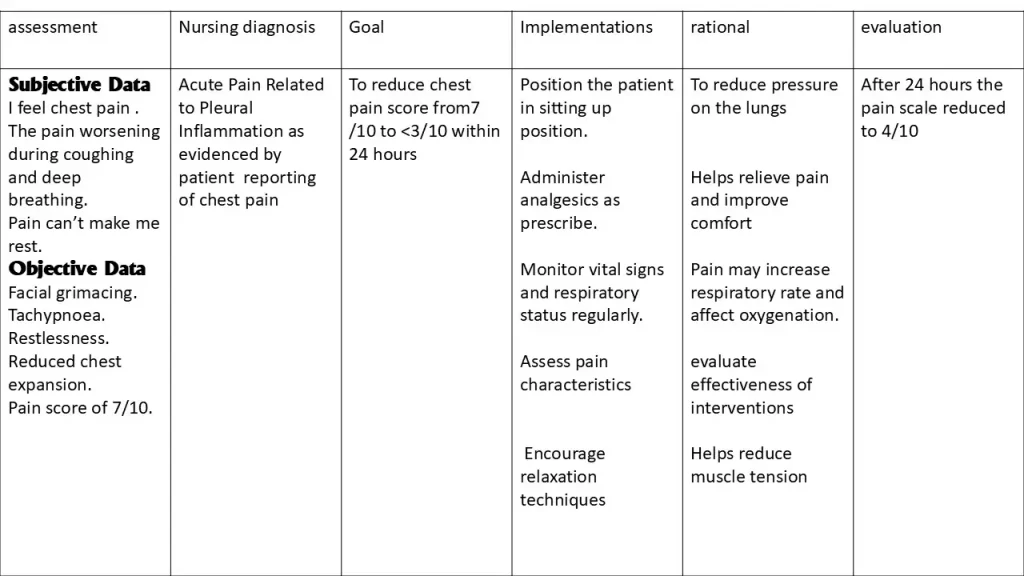
Ineffective Breathing Pattern related to inflammation of the lung, as evidenced by shallow breathing and Use of accessory muscles
goald
Within 4 hours, the patient will establish an effective breathing pattern at a normal rate
implimentations
- position the patient in the hight fowler’s position
- monitors the respiratory rate
- administer prescribed analgesics
- Encourage deep breathing and coughing exercises
- Provide a calm and quiet environment
- Encourage adequate fluid intake
Rationel
- Reduces pressure on the lungs.
- Helps detect early changes in breathing pattern
- Relieves pain and allows the patient to breathe more deeply and effectively
- Helps expand the lungs
- Reduces anxiety and oxygen demand
Evulation
The patient had a normal breathing rate after 12 hours
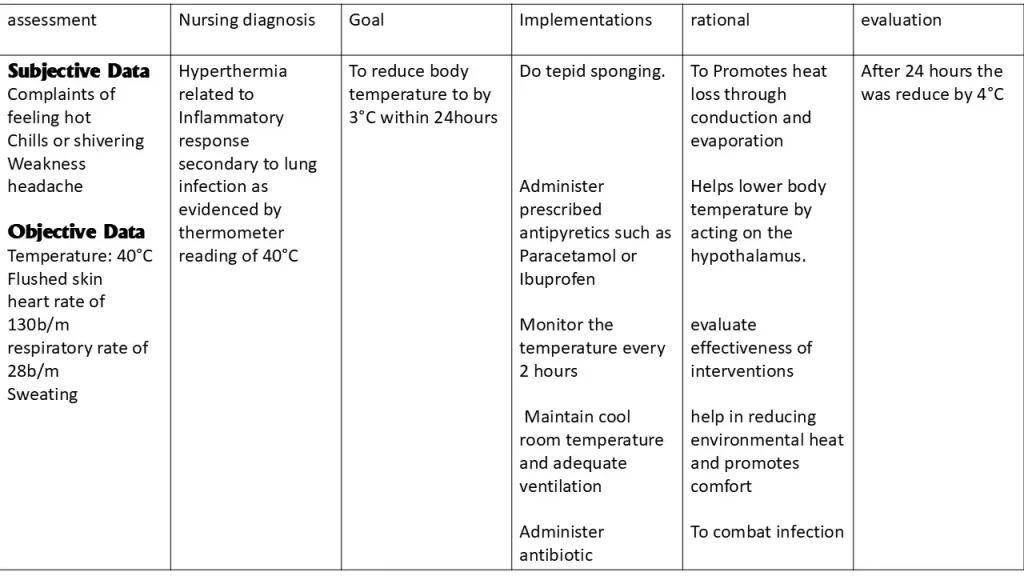
Hyperthermia is related to the body’s response to infection, as evidenced by the patient’s body hot on touch.
goal
to restore the body temperature to normal after 4 hours
implimentations
- do tepid sponging
- Administer Paracetamol or other antipyretic as prescribed
- Monitor temperature every 30 minutes and record
- offer cold oral fluid intake
Rational
- encourage heat lost through evaporation, conduction
- acts on the hypothalamus to reduce fever
Frequently Asked Questions (FAQs) on Nursing Care Plan for Pneumonia
what is pneumonia?
Pneumonia is an inflammation of the lungs that causes fluid or pus to collect in the alveolar.
What are the common signs and symptoms of pneumonia?
Cough ,Chest pain, Fever, Shortness of breath ,Rapid breathing ,Wheezing ,Fatigue ,Cyanosis , Low oxygen saturation (SpO₂) Crackles heard during lung auscultation.
What is the main goal of a nursing care plan for pneumonia?
Improve oxygenation, Maintain a clear airway and Relieve breathing difficulties.
What assessments should nurses perform for patients with pneumonia?
Nurses should assess:Respiratory rate and breathing pattern,Oxygen saturation (SpO₂),Breath sounds.Presence of cough and sputum,Body temperature,Chest pain,Use of accessory muscles,Skin color for cyanosis.
What are subjective assessment findings in pneumonia?
Subjective findings are Complaints of cough,Feeling short of breath,Feeling very hot. Chest discomfort.
What are objective assessment findings in pneumonia?
Objective findings are:Crackles or wheezing on auscultation,Dyspnea,Low SpO₂ (e.g., 87%),Cyanosis,Shallow breathing,Use of accessory muscles,thermometer reading of more than 36.0
What is ineffective airway clearance?
It is a nursing diagnosis where the patient cannot effectively clear secretions or obstructions from the airway.
8. What nursing interventions help improve airway clearance?
Encouraging coughing. Administering prescribed bronchodilators. Giving nasal drops if prescribed.