
For nurses, weather student or qualified staff, understanding the uses, dosage, side effects, contraindications, and nursing considerations of amoxicillin is essential for safe medication administration and patient care. In this note, you will learn about amoxicillin, everything in summary, from what amoxicillin is. brand name to nursing consideration
Table of Contents
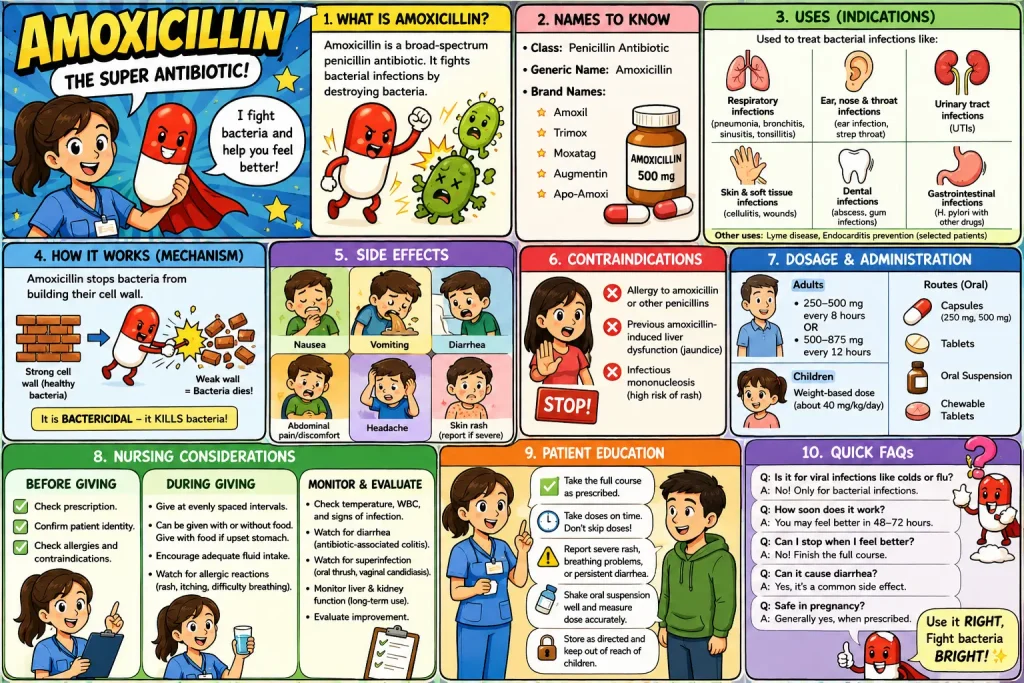
What is Amoxicillin?
Amoxicillin is a broad-spectrum penicillin antibiotic used to treat a wide range of bacterial infections. It works by inhibiting bacterial cell wall synthesis, leading to the destruction of susceptible bacteria
classification, generic name and brand names of amoxicillin
Drug Class: Penicillin Antibiotic
Generic Name: Amoxicillin
Brand name of Amoxicillin
Commonly used and widely recognised brand names include:
- Amoxil
- Trimox
- Moxatag
- Augmentin
- Apo-Amoxi.
Indications (Uses of Amoxicillin)An
Indication simply means what Amoxicillin is for, or the condition for which Amoxicillin is safe to use for treatment. Amoxicillin is used for treating conditions caused by bacteria.
Respiratory Tract Infections
- Pneumonia
- Bronchitis
- Sinusitis
- Tonsillitis
- Pharyngitis
Ear, Nose, and Throat Infections
- Otitis media
- Streptococcal throat infections
Urinary Tract Infections (UTIs)
- Cystitis
- Urethritis
Skin and Soft Tissue Infections
- Cellulitis
- Wound infections
Gastrointestinal Infections
- Helicobacter pylori infection (in combination, that is, triple therapy)
Dental Infections
- Dental abscesses
- Gum infections
Other Uses
- Lyme disease
- Endocarditis prophylaxis in selected patients
Mode of Action (Mechanism of Action) of Amoxicillin
Amoxicillin acts by inhibiting bacterial cell wall synthesis. It binds to penicillin-binding proteins (PBPs) located inside the bacterial cell wall. preventing the formation of peptidoglycan. As a result, the bacterial cell wall weakens and ruptures, causing the bacteria to die.
Amoxicillin is considered a bactericidal antibiotic because it kills bacteria rather than merely inhibiting their growth.
Side Effects of Amoxicillin
the effect, besides the therapeutic effect, this is what a patient should be told to prevent worries
Common Side Effects
- Nausea: a feeling of an urge to vomit that may occur after taking amoxicillin.
- Vomiting. Some patients may vomit, especially if the medication causes stomach irritation.
- Diarrhoea: Amoxicillin can disrupt the normal bacteria in the intestines, leading to loose or frequent stools.
- Abdominal pain or discomfort. Patients may experience stomach cramps, bloating, or mild abdominal discomfort during treatment
- A mild headache may occur while taking amoxicillin.
- Skin rash: A skin rash may develop as a side effect or as a sign of an allergic reaction. Any severe or worsening rash should be reported immediately
Contraindications of amoxicillin
Amoxicillin should not be used in patients with:
- Known hypersensitivity to amoxicillin or other penicillin medications
- Previous amoxicillin-induced liver dysfunction indicated by jaundice
- Infectious mononucleosis (increased risk of rash)
Dosage and Administration
Adults
- Usually 250 mg to 500 mg every 8 hours
- Or 500 mg to 875 mg every 12 hours
Children
- Dosage is based on body weight and severity of infection, usually 40 mg/kg
Routes of Administration
- Oral capsules of 250 and 500mg
- Oral tablets are mostly for children and can also be given in breastmilk
- Oral suspension
- Chewable tablets
Nursing Considerations for Amoxicillin
Before Administration
- Check for prescription.
- confirm the patint informatio to make sure it the right patient.
- check for other contraindications
During Administration
- Administer the medication at evenly spaced intervals to maintain therapeutic drug levels.
- May be given with or without food; administer with food if gastrointestinal upset occurs.
- Encourage adequate fluid intake.
- Observe for signs of allergic reactions such as rash, itching, or difficulty breathing.
Monitoring and Evaluation
- Monitor temperature, white blood cell count, and other signs of infection.
- Observe for diarrhea, which may indicate antibiotic-associated colitis.
- Watch for signs of superinfection, including oral thrush or vaginal candidiasis.
- Monitor liver and kidney function during long-term treatment.
- Evaluate the patient’s response to therapy and improvement of symptoms.
Patient Education on Amoxicillin
- Instruct the patient to complete the entire prescribed course of treatment.
- Emphasize the importance of taking doses at the scheduled times.
- Advise the patient not to skip doses, even if symptoms improve.
- Tell the patient to report severe rash, breathing difficulties, or persistent diarrhea immediately.
- Shake oral suspension well before each use and measure doses accurately.
- Store the medication as directed and keep it out of reach of children.
Frequently Asked Questions (FAQs) About Amoxicillin
What is amoxicillin used for?
Amoxicillin is an antibiotic used to treat bacterial infections such as pneumonia, bronchitis, sinusitis, ear infections, urinary tract infections (UTIs), skin infections, and dental infections.
Is amoxicillin a penicillin?
Yes. Amoxicillin belongs to the penicillin class of antibiotics and works by inhibiting bacterial growth.
How long does amoxicillin take to work?
Many people begin to feel better within 48–72 hours after starting treatment. However, it is important to complete the full prescribed course even if symptoms improve.
Can amoxicillin treat viral infections?
No. Amoxicillin is only effective against bacterial infections and does not treat viral illnesses such as the common cold, flu, or most sore throats.
What are the most common side effects of amoxicillin?
Common side effects include nausea, vomiting, diarrhea, abdominal discomfort, headache, and skin rash.
Can I take amoxicillin with food?
Yes. Amoxicillin can be taken with or without food. Taking it with food may help reduce stomach upset.
What should I do if I miss a dose of amoxicillin?
Take the missed dose as soon as you remember. If it is almost time for the next dose, skip the missed dose and continue your regular schedule. Do not double the dose.
Can I stop taking amoxicillin when I feel better?
No. You should complete the entire prescribed course to ensure the infection is fully treated and to help prevent antibiotic resistance.
Can amoxicillin cause diarrhea?
Yes. Diarrhea is a common side effect because antibiotics can affect the normal bacteria in the intestines.
Who should not take amoxicillin?
People with a known allergy to amoxicillin, penicillin antibiotics, or any component of the medication should not take it unless directed by a healthcare provider.
Is amoxicillin safe during pregnancy?
Amoxicillin is generally considered safe during pregnancy when prescribed by a healthcare professional. Always follow your healthcare provider’s advice.
Can amoxicillin be used in children?
Yes. Amoxicillin is commonly prescribed for children to treat various bacterial infections. The dosage is usually based on the child’s weight.
Can amoxicillin treat a tooth infection?
Yes. Amoxicillin is frequently used to treat dental infections and dental abscesses caused by susceptible bacteria.
Can I drink alcohol while taking amoxicillin?
Alcohol does not directly interfere with amoxicillin, but excessive alcohol consumption may worsen side effects or slow recovery from infection.
What are the signs of an allergic reaction to amoxicillin?
Signs may include rash, itching, swelling of the face or throat, difficulty breathing, and severe dizziness. Seek immediate medical attention if these occur.
How should amoxicillin be stored?
Store amoxicillin according to the manufacturer’s instructions. Oral suspensions often require refrigeration and should be discarded after the recommended period.
What happens if I take too much amoxicillin?
Taking too much amoxicillin may cause nausea, vomiting, diarrhea, or kidney problems. Seek medical advice immediately if an overdose is suspected.
Can amoxicillin cause a skin rash?
Yes. A skin rash may occur as a side effect or as a sign of an allergic reaction. Any severe or worsening rash should be reported to a healthcare provider.
Summary note on amoxicillin for revision
Amoxicillin Summary for Nurses
Amoxicillin is a broad-spectrum penicillin antibiotic used to treat many bacterial infections. It works by preventing bacteria from forming their cell walls, causing them to die.
Classification and Names
- Drug Class: Penicillin antibiotic
- Generic Name: Amoxicillin
- Common Brand Names: Amoxil, Trimox, Moxatag, Augmentin, Apo-Amoxi
Uses (Indications)
Amoxicillin is used to treat:
- Respiratory infections (pneumonia, bronchitis, sinusitis, tonsillitis, pharyngitis)
- Ear, nose, and throat infections (otitis media, strep throat)
- Urinary tract infections (UTIs)
- Skin and soft tissue infections (cellulitis, wound infections)
- Gastrointestinal infections such as Helicobacter pylori (with other drugs)
- Dental infections and abscesses
- Lyme disease
- Prevention of endocarditis in selected patients
Mechanism of Action
Amoxicillin inhibits bacterial cell wall synthesis by binding to penicillin-binding proteins (PBPs), leading to bacterial cell death. It is a bactericidal antibiotic.
Common Side Effects
- Nausea
- Vomiting
- Diarrhea
- Abdominal discomfort
- Headache
- Skin rash
Contraindications
Do not use in patients with:
- Allergy to amoxicillin or penicillin antibiotics
- Previous amoxicillin-related liver dysfunction or jaundice
- Infectious mononucleosis (high risk of rash)
Dosage and Administration
Adults:
- 250–500 mg every 8 hours, or
- 500–875 mg every 12 hours
Children:
- Usually weight-based dosing (about 40 mg/kg/day)
Routes:
- Oral capsules
- Tablets
- Oral suspension
- Chewable tablets
Nursing Considerations
Before administration:
- Verify prescription and patient identity
- Check for allergies and contraindications
During administration:
- Give doses at regular intervals
- Can be taken with or without food
- Encourage fluid intake
- Monitor for allergic reactions
Monitoring:
- Assess signs of infection improvement
- Watch for diarrhea and superinfection (oral thrush, candidiasis)
- Monitor liver and kidney function during prolonged therapy
Patient Education
- Complete the full course of treatment
- Take doses as prescribed without skipping
- Report severe rash, breathing difficulties, or persistent diarrhea
- Shake oral suspension before use
- Store medication correctly and keep away from children
Key Points to Remember
- Amoxicillin treats bacterial infections only, not viral illnesses such as colds or flu.
- Patients often improve within 48–72 hours, but treatment should be completed.
- Common side effects include gastrointestinal upset and rash.
- Allergy assessment is one of the most important nursing responsibilities before administration.
- Proper patient education helps prevent treatment failure and antibiotic resistance.
References
- drugs.com
- clevelandclinic.org
- NCBI
- UCG 2023 dosing of amoxicillin for children page 363
- mayoclinic