
Table of Contents
What Is Meconium Aspiration Syndrome (MAS)?
Meconium Aspiration Syndrome is a condition that occurs when a newborn aspirates or swallow the meconium stained amniotic fluid before, during, or immediately after birth.it when the meconium stained has enter the lung and preventing the baby to breath normaly
Causes of MAS
- Fetal distress :Reduced oxygen supply causes the fetus to pass meconium .
- Fetal hypoxia :Low oxygen levels before or during labor increase aspiration risk.
- Post term pregnancy (>42 weeks) they have meconium stained amniotic fluid beacuse their GIT is fully mature and has pass the stool.
- Prolonged labor :Can stress the fetus and lead to meconium passage.
- Umbilical cord compression Reduces blood and oxygen delivery to the fetus.
- Placental insufficiency :Poor placental function can cause fetal stress.
- Maternal hypertension or preeclampsia May decrease blood flow and oxygen to the fetus.
- Maternal diabetes this Can contribute to fetal distress and complications.
- Intrauterine infection:Infection may stress the fetus and trigger meconium passage.
- Intrauterine growth restriction (IUGR) :Growth-restricted babies are at higher risk of chronic fetal stress.
Signs and symptoms of Meconium Aspiration Syndrome
Clinical Manifestations of Meconium Aspiration Syndrome (MAS) in newborns are
- Rapid breathing (tachypnea) :Respiratory rate greater than 60 breaths per minute.
- Difficulty breathing (respiratory distress)
- Grunting :An expiratory sound made to help keep the airways open.
- Nasal flaring :Widening of the nostrils during breathing.
- Chest retractions – Inward pulling of the chest wall, intercostal spaces, or sternum during inspiration.
- Cyanosis :Bluish discoloration of the skin, lips, tongue, or nail beds due to low oxygen levels.
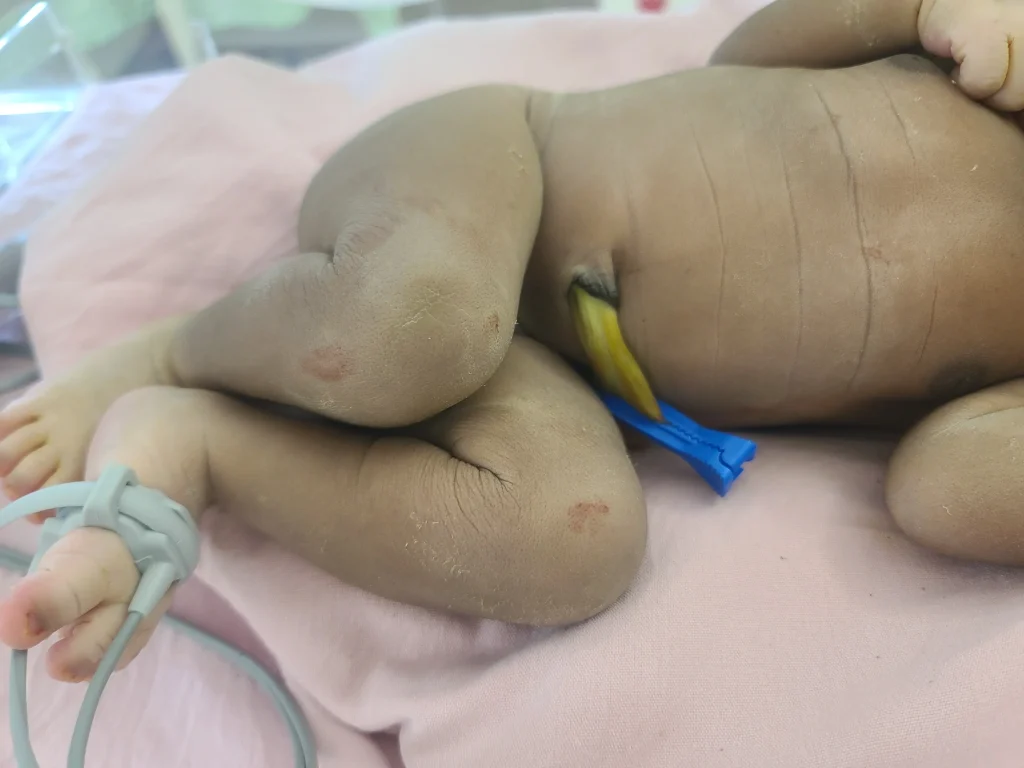
- Meconium staining :Greenish or yellow staining of the skin, nails, umbilical cord, and amniotic fluid.
- Abnormal breath sounds :Crackles (rales), rhonchi, or decreased air entry on auscultation.
- Barrel-shaped or overexpanded chest ;Due to air trapping in the lungs.
- Low oxygen saturation (hypoxemia) :Evidenced by low pulse oximetry readings.
- Apnea :Episodes of cessation of breathing, especially in severe cases.
- Tachycardia :Increased heart rate resulting from respiratory distress and hypoxia.
- Poor feeding or weak sucking reflex: Due to respiratory compromise.
- Lethargy or decreased activity: The infant may appear weak or less responsive.
- Persistent pulmonary hypertension of the newborn (PPHN) :Severe cases may show profound cyanosis and oxygenation failure despite oxygen therapy.
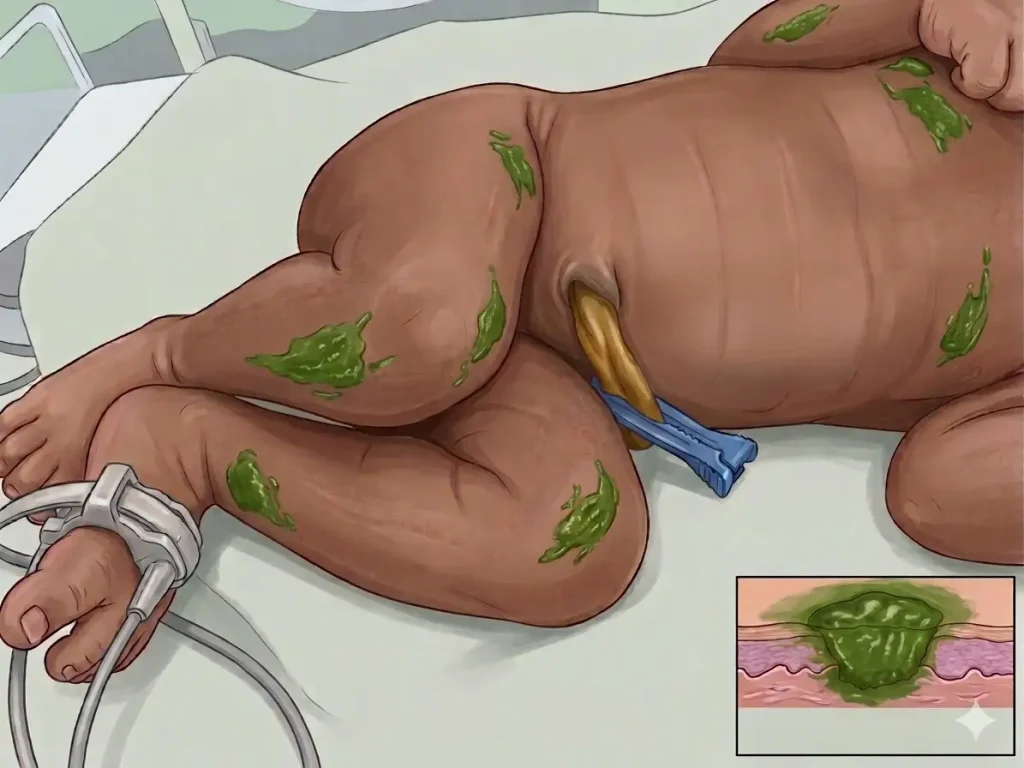
how aspiration of miconium occoure
Meconium can enter a baby’s lungs through aspiration, which means inhaling meconium-contaminated amniotic fluid into the airways
Before birth (in utero)
If a fetus becomes stressed—for example, due to reduced oxygen supply,reduced space in the uterus this make the fetus Pass meconium into the amniotic fluid.redued oxygen make the fetus to gasp for air,in the process it will inhale the meconium-stained amniotic fluid into the trachea and lungs.
During labor and delivery
As the baby passes through the birth canal: Meconium stained amniotic fluid may be present around the baby’s face and airway.due to fetal distress and oxygen deprivation the fetus will gasp for air this draw the meconium in the air way into the lungs during
Immediately after birth
After delivery ,The newborn takes its first breaths.If meconium stained fluid remains in the mouth, nose, Crying and vigorous breathing can pull the miconium deeper in to the lung.
pathophysiology of meconium aspiration syndrome
Pathophysiology of Meconium Aspiration Syndrome (MAS)
The pathophysiology of MAS involves a series of events that occur after meconium enters the lungs:
- Fetal stress and meconium passage.Fetal hypoxia or distress causes passage of meconium into the amniotic fluid.
- Aspiration of meconium-stained fluid.The fetus or newborn inhales meconium-contaminated amniotic
- Airway obstruction.Meconium partially or completely blocks the airways.
- Chemical inflammation (pneumonitis).Meconium irritates lung tissue, causing inflammation and swelling.This damages the airway lining leading to impairs gas exchange.
- Surfactant inactivation.Meconium interferes with and destroys surfactant.Reduced surfactant leads to alveolar collapse and decreased lung compliance.
- Impaired gas exchange.Airway obstruction, inflammation, and alveolar collapse reduce oxygen uptake and carbon dioxide removal,This results in hypoxemia and respiratory distress.
- Pulmonary vasoconstriction,Low oxygen levels cause constriction of pulmonary blood vessels increasing vascular resistance leading to pulmonary hypertension.
- Persistent Pulmonary Hypertension of the Newborn (PPHN),Elevated pulmonary vascular resistance leads to right-to-left shunting of blood and worsening hypoxemia.
What Is Meconium?
Meconium is a newborn baby’s first stool. It is Thick, sticky, and tar-like Dark green or black in color.
what is the composition of Meconium
the main components of meconium include:
- Water (a significant portion of its weight)
- Intestinal epithelial cells (cells shed from the lining of the digestive tract)
- Bile pigments and bile salts, which contribute to its dark green-black color
- Amniotic fluid swallowed by the fetus
- Lanugo (fine fetal hair)
- Vernix caseosa (the waxy coating that protects the baby’s skin in the womb)
- Digestive secretions eg Mucus from the stomach, pancreas, and intestines
- Small amounts of lipids (fats), proteins, and other organic materials
Diagnosis of Meconium Aspiration Syndrome (MAS)
Physical Examination
- Assessment of respiratory rate and breathing pattern.
- Evaluation for signs of respiratory distress (grunting, nasal flaring, chest retractions).
- Assessment of skin color for cyanosis.
- Measurement of oxygen saturation levels.
- Auscultation of the lungs for abnormal breath sounds (crackles, rhonchi, decreased air entry).
- Observation for meconium staining of the skin, nails, or umbilical cord.
Diagnostic Tests
Chest X-ray
- Evaluates lung expansion and airway obstruction.
- May show patchy infiltrates, areas of atelectasis, and lung hyperinflation.
- Helps differentiate MAS from other causes of neonatal respiratory distress.
Blood Gas Analysis (Arterial Blood Gas – ABG)
- Measures oxygen and carbon dioxide levels in the blood.
- Assesses the severity of hypoxemia and respiratory acidosis.
- Helps guide oxygen and ventilatory support.
Pulse Oximetry Monitoring
- Continuously monitors blood oxygen saturation (SpO₂).
- Detects hypoxemia and monitors response to treatment.
- Useful for ongoing assessment in the neonatal unit.
Additional Diagnostic Tests (if needed)
Complete Blood Count (CBC)
- Assesses for infection and overall health status.
Blood Cultures
- Performed when neonatal infection or sepsis is suspected.
Echocardiography
- Evaluates for Persistent Pulmonary Hypertension of the Newborn (PPHN).
- Assesses heart structure and blood flow patterns.
Continuous Cardiorespiratory Monitoring
- Monitors heart rate, respiratory rate, and oxygen levels in critically ill infants.
Nursing Interventions for Meconium Aspiration Syndrome (MAS)
- Maintain airway patency:Position the infant and clear secretions as needed.
- Monitor respiratory status:Observe breathing rate, effort, and signs of distress.
- Continuous pulse oximetry:Track oxygen saturation levels closely.
- Administer oxygen therapy:Provide supplemental oxygen as prescribed.
- Positioning:Keep the infant in a position that promotes lung expansion (usually supine with head slightly elevated).
- Suctioning when necessary:Remove visible secretions if airway obstruction is suspected.
- Assist with endotracheal intubation:Prepare and support if severe respiratory distress occurs.
- Monitor blood gases (ABGs):Assess oxygenation and ventilation status.
- Maintain thermoregulation:Keep the newborn warm to reduce oxygen consumption.
- Administer medications as prescribed:Such as surfactant therapy or antibiotics if infection is suspected.
- Observe for signs of PPHN:Monitor for persistent hypoxemia and cyanosis.
- Cardiorespiratory monitoring:Continuous monitoring of heart rate and breathing patterns.
- Minimize oxygen demand:Reduce handling and clustering of care activities.
- Fluid and nutrition management :Support IV fluids if feeding is not possible.
- Parental support and education:Explain the condition, treatment plan, and progress to the family.
Treatment
- Oxygen therapy
- Continuous Positive Airway Pressure (CPAP)
- Mechanical ventilation (if severe)
- Endotracheal suctioning/intubation if needed
- Surfactant therapy
- Antibiotics (if infection suspected)
- Management of Persistent Pulmonary Hypertension of the Newborn (PPHN)
- Intravenous fluids and nutritional support
- NICU admission and close monitoring
- Supportive care (temperature, fluids, glucose balance)
Prevention of MAS
- Careful monitoring of high-risk pregnancies
- Early detection of fetal distress (fetal heart rate monitoring)
- Timely management of labor complications
- Avoiding post-term pregnancy (induction when indicated)
- Proper management of maternal conditions (HTN, diabetes)
- Regular antenatal care visits
- Continuous intrapartum fetal monitoring
- Skilled birth attendance during delivery
- Immediate suctioning only when indicated (not routine deep suctioning)
- Prompt neonatal resuscitation when needed