
In many clinical settings, daily ward cleaning is a collaborative effort between the nursing team and dedicated environmental services (EVS) staff. While EVS handles terminal cleaning and routine floor care, nurses maintain direct responsibility for the immediate patient-care zone—including bed rails, multi-parameter monitors, infusion pumps, and immediate bedside lockers. Understanding where nursing responsibility ends and EVS cleaning begins is a frequent exam pitfall and a vital component of ward safety
For more practical nursing skills, explore our guide to the foundation of nursing procedures, which covers essential procedures and preparation for nursing practical examinations. Foundation of nursing procedures
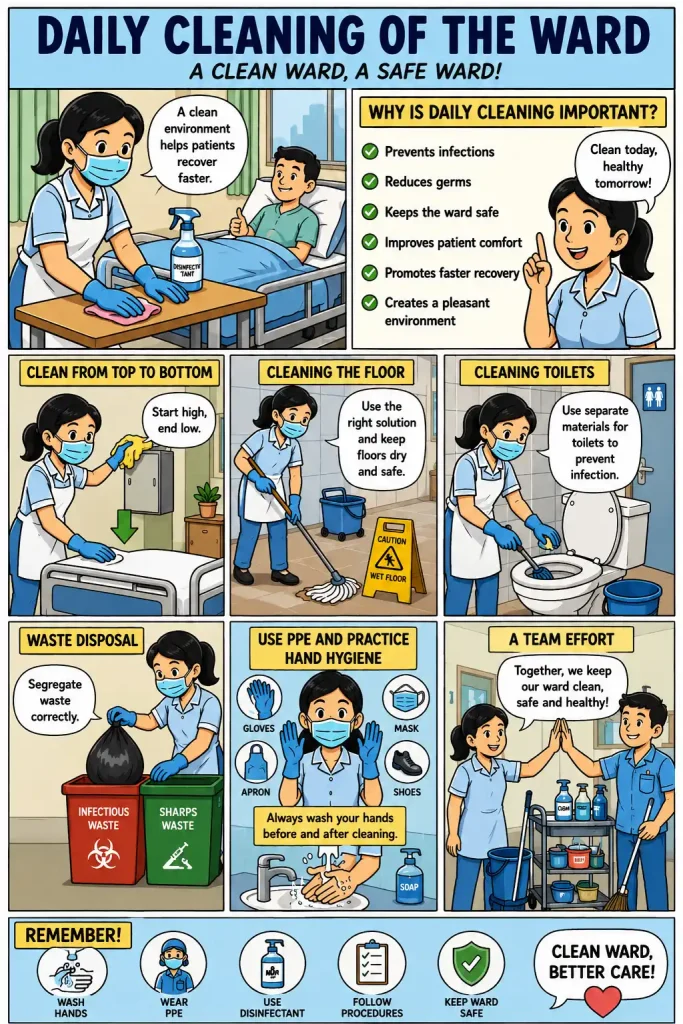
Table of Contents
What is daily ward cleaning?
Daily ward cleaning is the routine cleaning of the patient-care environment to remove dirt, dust, spills and other visible contamination while maintaining a clean, orderly and safe environment for patients and healthcare workers.
It includes cleaning bedside furniture, frequently touched surfaces, floors, sinks etc
Why is daily ward cleaning important?
Daily ward cleaning supports a safe and comfortable healthcare environment. Patient care surfaces can become contaminated through contact with patients, visitors, and healthcare workers, so routine environmental cleaning is an important part of infection prevention and control.
The main purposes of daily ward cleaning are to:
- Reduce dirt and visible contamination in the patient-care environment.
- Support infection prevention and control.
- Maintain patient comfort, dignity and a pleasant ward environment.
- Reduce hazards such as spills, clutter and slippery floors.
- Keep patient-care areas orderly and accessible.
- Help identify damaged equipment and environmental hazards that require attention.
Ward cleaning should be combined with hand hygiene, appropriate PPE, safe waste management and correct handling of patient-care equipment.
Areas and surfaces cleaned during routine ward cleaning
Areas and Surfaces Cleaned During Routine Ward Cleaning
The areas cleaned depend on the ward’s cleaning schedule, the risk of contamination and the facility’s infection prevention and control policy.
1. Patient-care areas
- Bed frames and bed rails
- Bedside tables and lockers
- Chairs and other frequently used furniture
- Other appropriate surfaces within the patient’s immediate environment
2. Frequently touched surfaces
- Door handles
- Call bells
- Light switches
- Bed controls and other frequently touched equipment surfaces
3. General ward areas
- Floors
- Handwashing sinks and surrounding surfaces
- work surfaces
- Waste receptacle areas
4. Sanitary and treatment areas
- Toilets and bathroom surfaces
- Treatment-room work surfaces
- Other designated areas according to the cleaning schedule
Frequently touched surfaces and visibly contaminated areas require particular attention. The facility’s cleaning schedule should determine the frequency and method used for each area.
Equipment and supplies required for daily ward cleaning
Equipment and Supplies Required for Daily Ward Cleaning
Before starting, collect the equipment required for the ward and the specific cleaning task. Preparing supplies beforehand reduces unnecessary movement and helps maintain an organised cleaning sequence.
| Equipment | Purpose |
|---|---|
| Cleaning trolley | Organises and transports cleaning supplies. |
| Approved cleaning cloths | Remove dirt from appropriate surfaces. |
| Mop and handle | Clean floor surfaces using the approved method. |
| Buckets or labelled containers | Hold designated cleaning solutions or materials as required by the facility. |
| Broom or approved dust-removal equipment | Removes debris where the facility’s procedure permits its use. |
| Dustpan and brush | Collect loose debris where appropriate. |
| Scrubbing brush | Helps remove stubborn dirt from suitable surfaces. |
| Waste bags or designated containers | Collect waste for correct disposal. |
| Approved cleaning solutions | Remove dirt and, where indicated, disinfect suitable surfaces. |
| Appropriate PPE | Protects the worker from the exposure risks associated with the task. |
The exact equipment arrangement depends on the healthcare facility’s cleaning system. Use designated or colour-coded equipment where required, and do not transfer contaminated materials between clean and contaminated areas without appropriate reprocessing.
Cleaning agents and solutions
The cleaning products required depend on the surface, the type of contamination and the healthcare facility’s cleaning policy.
- Cleaning solution eg Liquid Soap: Used to remove dirt and organic material from suitable surfaces.
- Disinfectant such as Sodium Hypochlorite: Used when disinfecting spills like blood
- Special-purpose cleaning products: Used for particular surfaces or areas, such as toilets eg toilet cleaner, Vim, etc
Prepare solutions at the concentration specified by the manufacturer and facility policy. Observe the required contact time when using a disinfectant, and ensure the surface remains wet for the specified period.
Never mix cleaning chemicals or transfer products into unlabelled containers. Use only products approved for the intended surface and task.
Personal protective equipment
Select PPE according to the cleaning task, the cleaning products used and the risk of contact with blood, body fluids or other hazardous material.
Depending on the task, PPE may include:
- Gloves
- A protective apron or gown
- Protective footwear where required
- Eye or face protection when splashing is possible
- Respiratory protection when indicated by the task or infection prevention and control policy
Perform hand hygiene at the appropriate times, put on and remove PPE correctly, and dispose of or reprocess reusable items according to facility policy. PPE does not replace hand hygiene or safe cleaning practices.
Principles of daily ward cleaning
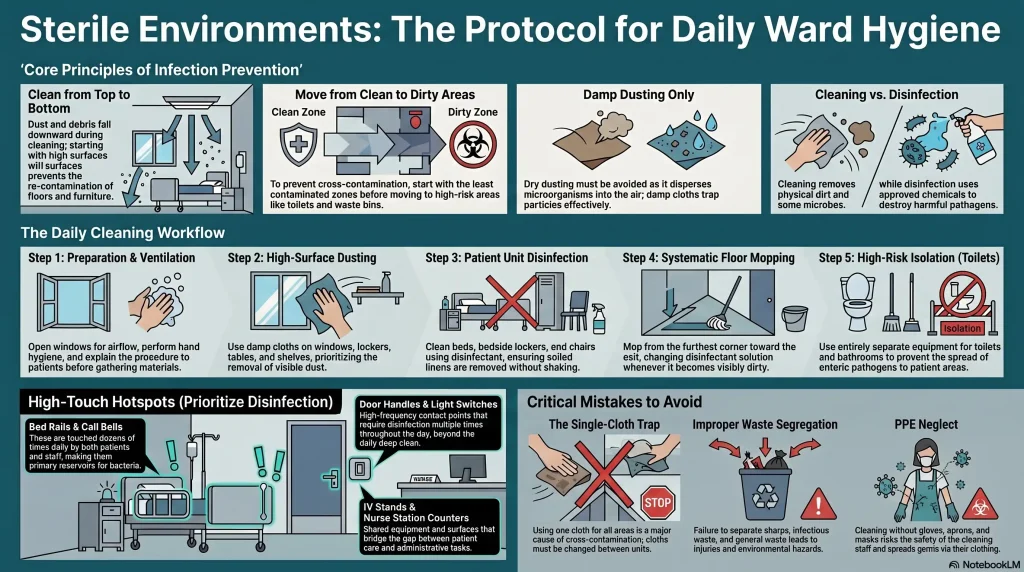
1. Work systematically. Follow an organised cleaning pattern so that designated surfaces are not missed and cleaned areas are not unnecessarily contaminated again.
2. Clean from higher surfaces towards lower surfaces. Dust and debris can fall from higher surfaces onto lower ones, so clean the higher surfaces first and the lower later.
3. Progress from cleaner areas towards more contaminated areas. This helps reduce the transfer of contamination into cleaner patient-care areas. Follow the facility’s procedure for toilets, isolation areas and heavily contaminated surfaces.
4. Pay particular attention to frequently touched surfaces eg Bed rails, door handles, call bells and light switches
5. Prevent cross-contamination. Change mops and other cleaning materials according to the facility’s system. Do not use contaminated equipment on another clean surface.
6. Use cleaning products correctly. Follow the manufacturer’s instructions and facility policy for product selection, dilution, surface compatibility and contact time.
7. Protect patients and staff. Maintain patient privacy, check for hazards and attached medical devices, and take appropriate measures to prevent slips, chemical exposure and accidental injury.
Preparation before starting the procedure
- Assess the ward. Identify spills, visible contamination, clutter, wet floors and other hazards that require attention.
- Review the cleaning requirements. Confirm the designated cleaning sequence, products and precautions for the area.
- Gather the equipment. Collect the required cleaning materials, waste containers and PPE.
- Prepare cleaning solutions safely. Follow the manufacturer’s instructions and facility policy.
- Perform hand hygiene and put on appropriate PPE. Select PPE according to the task and exposure risk.
- Explain the procedure where appropriate. Inform patients about the cleaning activity, respect their privacy and avoid unnecessary disturbance.
- Check patient safety. Before moving furniture or equipment, assess the patient’s condition and check for intravenous lines, oxygen tubing, drains and electrical connections.
- Arrange the working area. Keep walkways accessible and use the required warning measures for wet floors.
If a spill or other immediate hazard is identified, manage it according to the facility’s approved procedure rather than leaving it unattended until routine cleaning reaches that area.
Procedure for daily cleaning of the ward
Step 1: Prepare the ward and assess the environment
Assess the ward for spills, visible contamination, clutter and other hazards. Inform patients about the cleaning activity where appropriate and ensure that the area can be cleaned safely. This helps identify immediate risks before work begins
Step 2: Remove waste and collect articles requiring reprocessing
Collect waste in the designated containers and remove reusable articles that require cleaning or reprocessing eg linen, instruments. Handle contaminated items safely and avoid carrying them through clean areas. This reduces the risk of contamination spreading to other parts of the ward.
Step 3: Move furniture and equipment safely
Check the patient’s condition and any attached intravenous lines, oxygen tubing, drains or electrical connections before moving equipment. This allows access to the required surfaces while reducing the risk of injury or accidental displacement of medical devices.
Step 4: Clean higher surfaces first
Clean from higher surfaces to lower surfaces. Work systematically and avoid unnecessary dust dispersal. This prevents dust and debris from falling onto surfaces that have already been cleaned.
Step 5: Clean the patient’s immediate environment
Clean the bed frame, bed rails, bedside table, locker, chair and other designated surfaces. Give particular attention to frequently touched surfaces. Change or reprocess cleaning materials according to the facility’s system to avoid transferring contamination from one surface to another.
Step 6: Clean sinks and designated work surfaces
Clean the sink, surrounding surfaces, taps and handles according to the facility’s procedure. Use the appropriate product for the surface and apply disinfection when indicated. This removes accumulated dirt and helps maintain clean handwashing and work areas.
Step 7: Clean the floor
Clean the floor using the approved method for the ward. Work in an organised pattern, usually progressing from the farthest area towards the exit, while avoiding unnecessary movement across cleaned areas. Use required warning signs or other precautions to protect patients and staff from wet-floor hazards.
Step 8: Return furniture and equipment to their proper positions
When cleaning is complete and the area is safe, return movable furniture and equipment to their designated positions. Check that patient belongings, call bells and essential items are accessible and that medical devices and connections have not been disturbed.
Step 9: Reprocess used cleaning equipment
Take used cloths, mops and other reusable equipment to the designated area for cleaning, disinfection or other required reprocessing. Dispose of single-use materials correctly. This helps prevent contaminated equipment from transferring microorganisms during the next cleaning task.
Step 10: Inspect the ward and complete the procedure
Inspect the cleaned area for missed surfaces, remaining waste, wet-floor hazards and incorrectly positioned equipment. Report hazards or damaged equipment according to facility policy. Remove PPE appropriately and perform hand hygiene. This final check helps confirm that the area is clean, orderly and safe for continued patient care.
Cleaning of the treatment or dressing room
The treatment or dressing room requires systematic cleaning because it is used for clinical procedures and the handling of patient-care equipment.
- Prepare the room. Check for visible contamination, spills, waste and equipment that requires safe removal. Gather the approved cleaning materials and wear the PPE required for the task.
- Remove waste and used materials. Segregate waste according to facility policy and send reusable equipment for the appropriate reprocessing.
- Clean designated environmental surfaces. Clean worktops, trolley surfaces, cupboard handles, doors and other designated surfaces using the approved method.
- Clean the sink and surrounding area. Use the appropriate product and method specified by the facility.
- Disinfect surfaces when indicated. Follow the product instructions, including the required contact time, and observe any room-specific precautions.
- Check the room and equipment. Ensure that surfaces are clean, waste has been handled correctly, and equipment is safe for use. Report damaged or malfunctioning equipment.
- Complete the procedure. Reprocess cleaning materials, remove PPE appropriately and perform hand hygiene.
Environmental cleaning does not replace the required reprocessing of reusable clinical instruments. The method used for each instrument depends on its intended use, the manufacturer’s instructions and the facility’s approved reprocessing policy.
Cleaning, disinfection and sterilisation: do not confuse them
These terms describe different processes and should not be used interchangeably.
Key Differences
| Process | Meaning | Main purpose |
|---|---|---|
| Cleaning | Physical removal of dirt, organic material and contamination, usually using water, detergent and mechanical action. | Prepares the surface or item for safe use or further processing. |
| Disinfection | A process that inactivates or reduces microorganisms to the level required for the intended application. | Reduces microbial contamination on appropriate surfaces or equipment. |
| Sterilisation | A validated process intended to eliminate all forms of microbial life, including bacterial spores. | Provides the required sterility assurance for items that must be sterile. |
The correct process depends on the item, its intended use and the applicable infection prevention and control procedure. Environmental surfaces should not be treated as though they require the same processing as reusable instruments intended to enter sterile tissue.
Management of Blood and Body-Fluid Spills
Blood and body-fluid spills should be managed promptly to reduce exposure risks and prevent contamination from spreading.
- Secure the affected area. Prevent patients, visitors and unauthorised staff from walking through the spill.
- Select appropriate PPE. Wear the protection required by the risk of contact or splashing.
- Follow the approved spill procedure. Use the designated spill-management supplies and the method specified by the facility.
- Remove the spill safely. Contain and remove the blood or body fluid using the approved technique, avoiding actions that could spread contamination or produce splashes.
- Clean and disinfect the affected surface. Use the approved product, concentration and contact time specified by the facility and manufacturer.
- Dispose of contaminated materials correctly. Place waste in the designated waste stream according to facility policy.
- Reprocess reusable equipment. Clean or disinfect reusable equipment as required before storing it.
- Finish safely. Remove PPE correctly, perform hand hygiene and report any exposure incident according to facility procedures.
Do not guess disinfectant concentrations or mix cleaning chemicals. Follow the facility’s spill-management protocol and the product’s instructions, particularly when dealing with large spills or situations requiring additional precautions.
Safety precautions during ward cleaning
- Protect patient privacy and explain the cleaning activity where appropriate.
- Check intravenous lines, oxygen tubing, drains and other medical devices before moving furniture or equipment.
- Use appropriate PPE according to the task and exposure risk.
- Prepare and use cleaning products according to the manufacturer’s instructions and facility policy.
- Never mix incompatible cleaning chemicals.
- Use appropriate warning measures to prevent slips and falls on wet floors.
- Avoid transferring contaminated cloths, mops or solutions between clean and contaminated areas.
- Handle waste and reusable cleaning equipment according to facility procedures.
- Report spills, damaged equipment and other environmental hazards promptly.
Patient safety and infection prevention should guide every stage of the cleaning procedure.
Common mistakes nursing students make during ward cleaning
Cleaning the floor before cleaning the furniture
This can mean that dust and debris from higher surfaces fall onto a floor that has already been cleaned.
Remember: work from higher surfaces downwards.
Moving randomly around the ward
Random movement makes it easier to miss areas and increases the chance of walking through a cleaned area.
Remember: use a consistent pattern.
Using one dirty cloth on every surface
A cloth that has picked up contamination can transfer it to the next surface.
Remember: follow the facility’s system for changing, separating and reprocessing cleaning materials.
Treating every piece of equipment in the same way
A bedpan, a reusable patient-care device and a surgical instrument do not automatically have the same reprocessing requirements.
Remember: follow the equipment’s intended use, manufacturer’s instructions and facility reprocessing policy.
Guessing disinfectant dilution
Using too little disinfectant can make the process ineffective, while using an inappropriate concentration can damage surfaces or create unnecessary chemical exposure.
Remember: use the product and dilution specified by the facility and manufacturer.
Forgetting high-touch surfaces
A ward can have a visibly clean floor while frequently touched surfaces remain contaminated.
Remember: look beyond the floor.
Moving a patient’s bed without checking attached equipment
This can pull an intravenous line, oxygen tubing or drain.
Remember: patient safety comes before convenience.
Forgetting to clean the cleaning equipment
A mop or cloth that remains contaminated can spread microorganisms during the next cleaning session.
Remember: cleaning equipment also needs appropriate reprocessing.
Daily ward cleaning OSCE checklist.
Use this checklist to revise the procedure. Your nursing school or healthcare facility’s official marking scheme takes precedence.
A. Preparation
- Assesses the ward and identifies hazards.
- Collects the required equipment and cleaning products.
- Prepares cleaning solutions according to facility policy.
- Performs hand hygiene and selects appropriate PPE.
- Explains the procedure where appropriate and protects patient privacy.
- Checks medical devices before moving furniture.
B. Cleaning procedure
- Removes waste and handles used articles safely.
- Works systematically through the designated area.
- Cleans higher surfaces before lower surfaces.
- Cleans the patient’s immediate environment.
- Pays attention to designated high-touch surfaces.
- Uses approved products and observes the required contact time.
- Prevents cross-contamination.
- Cleans the floor using the approved method.
- Uses appropriate precautions for wet floors.
C. Completion
- Returns furniture and equipment safely.
- Manages waste correctly.
- Sends reusable cleaning materials for appropriate reprocessing.
- Checks the environment for missed surfaces and hazards.
- Removes PPE appropriately.
- Performs hand hygiene.
D. Examiner’s feedback
Overall comments: _______________________________
Strengths demonstrated: __________________________
Areas requiring improvement: _____________________
Frequently Asked Questions About Daily Ward Cleaning
1. What is daily ward cleaning in nursing?
Daily ward cleaning is the routine cleaning of the patient-care environment to remove dirt and contamination and maintain a clean, orderly and safe healthcare setting.
2. What equipment is required for daily ward cleaning?
Equipment commonly includes a cleaning trolley, approved cloths, a mop, designated buckets or containers, waste bags, cleaning solutions and appropriate PPE. The exact requirements depend on the task and facility policy.
3. What are the main principles of ward cleaning?
The main principles include working systematically, cleaning higher surfaces before lower surfaces, progressing from cleaner towards more contaminated areas where appropriate, paying attention to frequently touched surfaces and preventing cross-contamination.
4. Why are high-touch surfaces important during ward cleaning?
Frequently touched surfaces, such as bed rails, call bells and door handles, can become contaminated through repeated contact. Cleaning them according to the facility’s schedule supports infection prevention.
5. What is the difference between cleaning and disinfection?
Cleaning removes dirt and organic material through physical action. Disinfection is a separate process used to inactivate or reduce microorganisms to the level required for the intended application.
6. Should chlorhexidine be used to clean every hospital surface?
No. Chlorhexidine preparations should only be used for their approved purposes. Select environmental cleaning products according to the surface, product instructions and healthcare facility policy.
7. How often should a hospital ward be cleaned?
The frequency depends on the area, contamination risk, patient needs and facility cleaning schedule. Routine cleaning, high-touch surface cleaning and cleaning after spills may follow different schedules.
8. What should a nurse do when a blood spill occurs?
Secure the affected area, use appropriate PPE and follow the facility’s approved spill-management procedure. Use the specified cleaning and disinfection products and dispose of contaminated materials correctly.
9. Who is responsible for ward cleaning?
Responsibilities vary between healthcare facilities. Designated cleaning staff may perform routine environmental cleaning, while nurses remain responsible for their assigned infection prevention duties and the safe management of patient-care equipment.
10. What should a student remember during a ward-cleaning OSCE?
Prepare the equipment, protect the patient, follow the approved cleaning sequence, prevent cross-contamination, handle equipment and waste safely, inspect the area and finish with appropriate PPE removal and hand hygiene.
Practical Revision Activity: Ward Cleaning Scenario
Scenario: A nursing student is assigned to clean a general patient ward. The student notices a spill near a patient’s bed, a wet floor, used cleaning cloths and equipment connected to an occupied bed.
Questions
- Which hazard should be assessed and managed first?
- What should the student check before moving furniture or equipment?
- How should the student select PPE and cleaning products?
- How can the student avoid transferring contamination between surfaces?
- What should happen to the used cleaning cloths and mop after cleaning?
- What final checks should be completed before leaving the area?
Learning objective: Apply ward-cleaning principles to a practical situation, prioritise safety and explain the reasoning behind each action.
References
References
- World Health Organization. (2023). Environmental cleaning and infection prevention and control in health care facilities in low- and middle-income countries: Modules and resources. Available from: https://www.who.int/publications/i/item/9789240051065
- Centers for Disease Control and Prevention. Environmental Cleaning Procedures: Best Practices for Environmental Cleaning in Global Healthcare Facilities with Limited Resources. Available from: https://www.cdc.gov/healthcare-associated-infections/hcp/cleaning-global/procedures.html
- Centers for Disease Control and Prevention. Environmental Cleaning in Global Healthcare Settings. Available from: https://www.cdc.gov/healthcare-associated-infections/hcp/cleaning-global/index.html