
in the hospital waste management is one of the most considers part for safety for patient,environment and health care worker
Table of Contents
what is Waste Management
Waste Management is the process of producing,shorting and categorizing waste from the hospital for proper disposal.this process start from the time of waste generation up to the time of eliminating.
Importance of Proper Waste Management
- Prevent infections. Proper disposal of medical waste protects health workers, patients, and the community from infections.Like HIV through needle pricks, and if waste is not managed well, kids can access and play with them, like catheters or gloves for balloons.
- Reduces Injuries: Safe sharps waste segregation, like needles and broken glass, prevents accidents and injuries like needle pricks.
- Protects the Environment: Correct disposal prevents pollution from harmful chemicals, pharmaceuticals, and contaminated materials especially from laboratory.
- Improves Hospital Hygiene: Segregation and disposing waste in a correct bin maintain a clean and safe hospital environment.
- Ensures Regulatory Compliance: Following proper waste management protocols helps hospitals meet national and international health standards waste management as per ministry (NEMA)
- Prevent bad odours:proper waste management prevent bad smell from a decomposing waste.
- Controls Pests and Rodents:Safe waste disposal helps prevent flies, rats, and insects that spread diseases.
- Ensures Safe Recycling :Segregation of non-infectious waste like plastic bottles allows safe recycling of reusable materials.
Requirements for Waste Management
The hospital uses colour-coded bins for waste segregation
- Black bin with liner
- Red bucket with liner
- Brown bin with liner
- Safety box for sharps
Colour-Coded Waste Segregation in Hospitals
Non-Infectious Waste
Non-infectious waste is waste that does not spread infection.
Wet Non-Infectious Waste
Recommended Bin: Black bin with liner
Examples:
- Leftover food
- Food peelings
- Plastic drink bottles with drinks
- Wet paper and packing materials
Dry Non-Infectious Waste
Examples:
- Plastic bottles
- Plastic cups and plates
- Clean infusion bottles for recycling
Sharps Waste Management
Sharps waste includes items that can cut or prick the skin.
Recommended Bin: Safety box (sharps container)
Examples:
- Used needles and syringes
- Broken glass
- Ampoules
- Cannulas
- Suture needles
- Scalpel blades
- Used needles.
- lumbar puncher needle
Importance of Proper Sharps Disposal
Correct disposal of sharps prevents needle-stick injuries and infections that can come from it like HIV,hepatitis b.
Infectious Waste and Highly Infectious Waste
Infectious waste contains germs that can spread diseases.Highly infectious waste is heavily contaminated and needs careful handling.
Recommended Bin: red bin with liner
Examples:
- Used gloves
- used Cotton wool
- Catheters
- N.G tubes
- I.V sets
- Blood-stained gauze
- Used sanitary pads
- Contaminated infusion bottles
- Sputum containers
- Used test tubes
- Anatomical waste
Importance of Infectious and Highly Infectious Waste Disposal
Proper disposal prevents cross infection among health workers, patients, and attendants,it also prevent bad odour.
Pharmaceutical Waste
Pharmaceutical waste includes expired medicines and harmful chemicals.
Recommended Bin: Brown bin with liner
Examples:
- Expired drugs
- Laboratory reagents
- Mercury and lead
- Empty medicine vials
Importance of Pharmaceutical Waste Management
Safe disposal prevents environmental pollution and chemical contamination.
Proper Handling of Medical Waste
Proper medical waste handling involves:
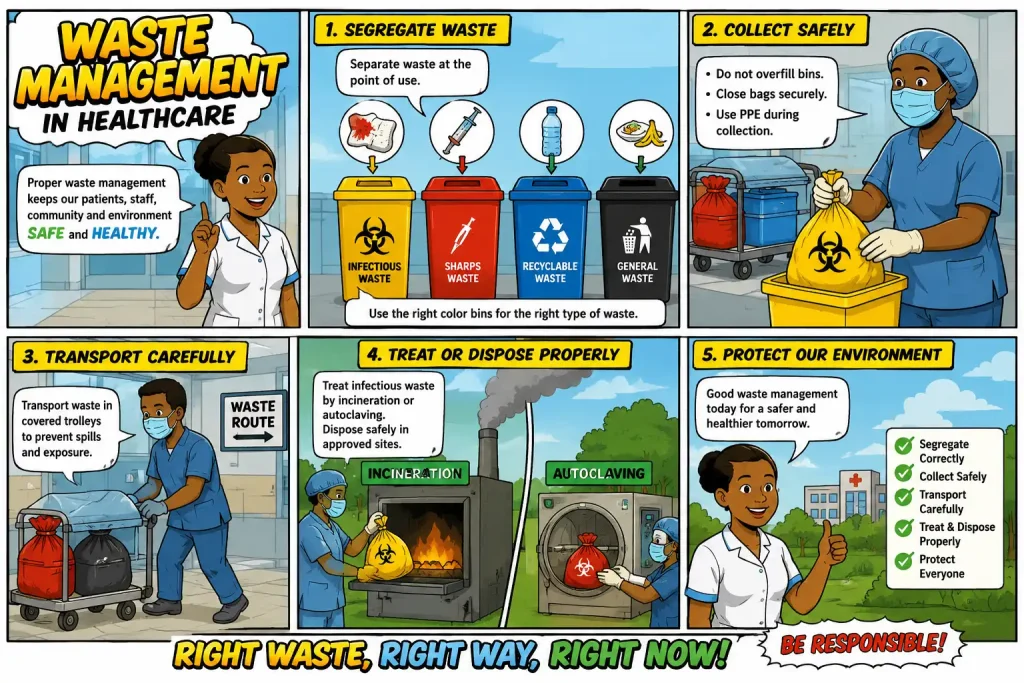
- collections
- Correct waste segregation
- Safe transportation in covered containers
- Incineration of infectious waste
- Safe burning or burial of contaminated waste
- Disposal of liquid waste in designated areas
How to Handle Sharps Safely
- Use a tray or safe holder when carrying sharps.
- Never leave sharp objects in open areas.
- Use needles and syringes only once.
- Do not recap, bend, or break needles after use.
- Dispose of sharps immediately in puncture-proof containers.
Decontaminate sharps before final disposal when required.
- Key Points About Hospital Waste Management
- Always follow recommended hospital waste management guidelines.
- Use the correct color-coded bins for each type of waste.
- Proper waste disposal reduces infections and protects the environment.
- Safe handling of medical waste improves patient and worker safety.
Frequently Asked Questions (FAQs) – Hospital Waste Management
1. What is hospital waste management?
Hospital waste management is the process of segregating, collecting, transporting, treating, and safely disposing of healthcare waste from generation to final disposal to protect people and the environment.
2. Why is proper waste management important in hospitals?
Proper waste management helps to:
- Prevent infections.
- Protect patients, healthcare workers, and the community.
- Reduce needle-stick injuries.
- Prevent environmental pollution.
- Maintain hospital cleanliness.
- Control bad odors and pests.
- Ensure compliance with health regulations.
3. What are the types of hospital waste?
Main categories include:
- Non-infectious waste – Waste without disease-causing organisms.
- Infectious waste – Waste contaminated with microorganisms.
- Sharps waste – Items that can cut or puncture the skin.
- Pharmaceutical waste – Expired medicines and chemicals.
- Highly infectious waste – Heavily contaminated materials.
4. What are the color-coded waste bins used in hospitals?
- Black bin: Non-infectious waste.
- Red bin: Infectious and highly infectious waste.
- Brown bin: Pharmaceutical and chemical waste.
- Safety box: Sharps such as needles and blades.
5. What is infectious waste?
Infectious waste contains microorganisms that can cause disease.
Examples:
- Used gloves.
- Blood-stained gauze.
- Cotton wool.
- Catheters.
- IV sets.
- Used test tubes.
6. What is sharps waste?
Sharps waste includes items that can cause cuts or needle-stick injuries.
Examples:
- Needles.
- Syringes.
- Scalpel blades.
- Cannulas.
- Broken glass.
7. How should sharps be handled safely?
Healthcare workers should:
- Dispose of sharps immediately after use.
- Use safety boxes.
- Avoid recapping needles.
- Never bend or break needles.
- Wear appropriate PPE.
8. What is pharmaceutical waste?
Pharmaceutical waste includes expired medicines, chemicals, and contaminated drug materials.
Examples:
- Expired drugs.
- Laboratory reagents.
- Empty medicine vials.
9. What are the steps in medical waste management?
The process involves:
- Waste generation.
- Waste segregation.
- Collection.
- Safe transportation.
- Treatment or decontamination.
- Final disposal.
10. What PPE is used during waste handling?
Healthcare workers may use:
- Gloves.
- Aprons/gowns.
- Masks.
- Protective footwear.
- Eye protection when needed.