
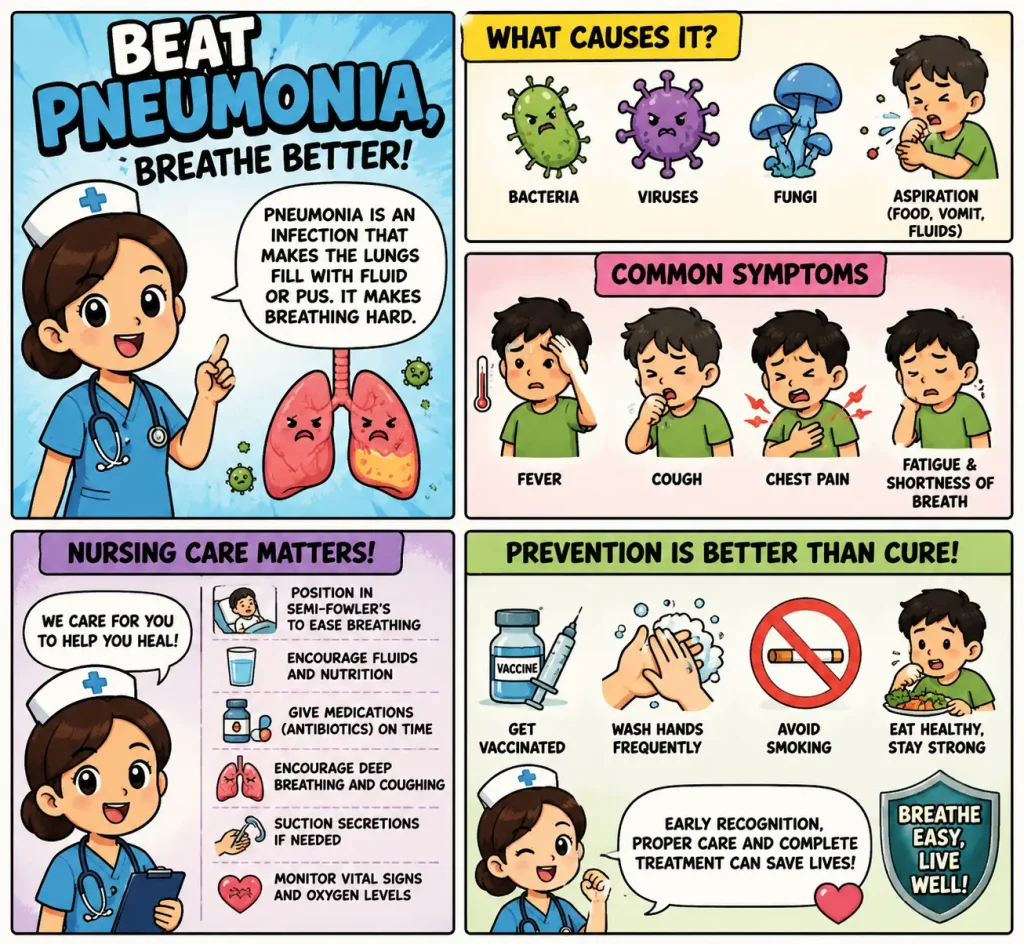
Pneumonia is more than just a “bad cough.” It is ainfection and inflammation of the lung parenchyma, mostly the alveoli, this where the gaseous exchange occurs. Globally, it remains a leading infectious cause of death, particularly in children under five and the elderly.
in this nursing note we are going to look at Pneumonia the definition,classification,causes,pathophysiology,signs and symptoms,investigation,management and nursing management.
Table of Contents
what is Pneumonia
Pneumonia is the inflamation of the lung tissue due to infection,forgn body.the inflamation can affect one lung or both.
Classifying Pneumonia by Acquisition
clafication of pneumonia is base on casative organsim,where the patient got the infection and how,because where the patient develops pneumonia significantly impacts the likely pathogen and the treatment approach.
- Community-Acquired Pneumonia (CAP): Contracted in daily life or within the first 48 hours of hospital admission.
- Hospital-Acquired Pneumonia (HAP): Occurs 48 to 72 hours after admission. These infections are often more dangerous because the bacteria (like MRSA or Pseudomonas) are frequently antibiotic resistant.
- Ventilator-Associated Pneumonia (VAP): A subset of HAP that develops in patients on mechanical ventilation, often involving biofilms on the endotracheal tube.
- Aspiration Pneumonia: Occurs when foreign substances like food, vomit, or gastric acid enter the lungs. This is common in patients with impaired gag reflexes due to stroke, sedation, or alcohol use.
Causes of Pneumonia
Pneumonia can be caused by:
- Bacteria – common cause in adults,Example: Streptococcus pneumonia
- Viruses – common in children and elderly,Example: influenza virus
- Fungi – seen more in immunocompromised pts
- Aspiration of food, vomits, or fluids into lungs
- Long bed rest or poor cough reflex
Risk factors for Pneumonia
- Smoking
- Old age
- HIV/AIDS
- DM
- Malnutrition
- Chronic lung diseases like asthma or COPD
- Poor immunity
Pathophysiology of pneumonia: What Happens During Infection?
When the pathogen enters the body it could be bacteria, virus, or fungi they triggers an intense inflammatory response.Once microbes enter the lungs they multiply in the lung tissue, the immune system sense and releases cytokines leading to:
- Vasodilation and Permeability: Capillaries surrounding the alveoli leak fluid, proteins, and white blood cells into the air sacs.
- Consolidation: The alveoli, which should be filled with air, become packed with “pus, fluid, and cellular debris”. This process is known as consolidation.
- Ventilation-Perfusion (VQ) Mismatch: Because the alveoli are full of fluid, oxygen cannot reach the bloodstream even though blood is still flowing to the area. This leads to hypoxemia and potential respiratory acidosis as carbon dioxide builds up in the blood.
Stages of Lobar Pneumonia
Bacterial pneumonia, particularly from Streptococcus pneumoniae, often follows four pathological stages:
- Congestion (Days 1–2): The lungs become heavy and red due to fluid accumulation.
- Red Hepatization (Days 3–4): The lung tissue becomes firm and liver-like as red blood cells and fibrin fill the alveoli.
- Gray Hepatization (Days 5–7): Red blood cells break down, leaving a firm, gray surface.
- Resolution (Day 8+): Enzymes digest the exudate, which is then coughed up or cleared by macrophage
Signs and Symptoms of pneumonia
Common clinical features include:
- Cough
- Fever
- Chills
- Nasal Flaring and Grunting
- Chest pain, especially during breathing or coughing
- Dyspnea/DIB
- Tachypnea
- Fatigue
- Productive cough with sputum
- Low oxygen saturation
- Crackles on auscultation
- Retractions: Visible pulling in of the chest muscles (intercostal, subcostal)
- Poor Feeding: Often the first sign in neonates and infants
investigations for pneumonia,Diagnostic Evaluation: How Doctors Confirm Pneumonia.
Diagnosis begins with a thorough history and physical exam, followed by targeted testing and imaging.
Physical Exam Findings
- Percussion: The doctor taps on the chest; areas of consolidation sound dull rather than hollow.
- Auscultation: Using a stethoscope, clinicians listen for crackles (rales), rhonchi, or bronchial breath sounds in areas where they shouldn’t be heard.
- Vocal Resonance: Tests like Egophony (where the patient says “E” but it sounds like “A” through the stethoscope) or increased tactile fremitus indicate consolidation, as sound travels better through fluid than air.
Imaging and Labs
- Chest X-Ray: shows lung consolidation,The primary tool for identifying the location and extent of the infection.
- Sputum Culture and sensitivity: Essential for identifying the specific germ and determining which antibiotic will work.
- CBC
- ABGs in severe cases
- Blood culture
Management for pneumonia
Treatment depends on severity and cause.
Medical management
- Antibiotics for bacterial pneumonia
- Antivirals if viral cause suspected
- Antipyretics for fever
- Oxygen therapy if hypoxic
- IV fluids if dehydrated
- Bronchodilators if wheezing present eg sulbutamol
Nursing Interventions for Pneumonia
- Position the patient in a semi-Fowler’s position to promote lung expansion and ease breathing.
- Administer humidified oxygen as prescribed to improve oxygenation and reduce dryness of the respiratory tract.
- Suction if secretions are visible to remove secretions and clear the airway effectively
- monitor vital every 30 minutes ie temperature,SPO2,breathe,pulse to see if the baby is improving or worsening .this guide management as in adjusting the plan
- Administer prescribed antibiotics to combat infection.
- Monitor the patient for side effects or allergic reactions related to medications to prevent anaphylactic shock.
- teach the mother and attendant about the pneumonia
- counsel the mother to allay anxiety and build cooperation
- Encourage a balanced diet to provide the body with energy and required nutrient.
- Maintain strict hand hygiene before and after patient care to reduce the spread of infection.
- Use appropriate personal protective equipment (PPE) when indicated.
- Ensure proper disposal of sputum tissues and contaminated materials to prevent cross-infection.
complication of pneumonia
If poorly managed, pneumonia may lead to:
- Pleural effusion
- Respiratory failure
- Lung abscess
- Sepsis
- Atelectasis
prevention of pneumonia
- Vaccination (pneumococcal and influenza vaccines)
- Good hand hygiene
- Proper nutrition
- Smoking cessation
- Early treatment of URTI
- Regular turning of bedridden patient
- Deep breathing exercises after surgery
Frequently Asked Questions (Pneumonia)
What are the five main causes of pneumonia?
it is mainly caused by bacteria, viruses, or sometimes fungi that infect the lungs.
What are the 4 danger signs of pneumonia?
Severe difficulty in breathing
Noticeable breathlessness, use of accessory muscles, or inability to speak in full sentences.
Low oxygen levels (cyanosis or SpO₂ drop)
Bluish lips/fingertips or oxygen saturation falling below normal levels.
Chest indrawing (retractions)
The chest wall pulls in between ribs during breathing, showing increased work of breathing.
Altered mental state
Confusion, drowsiness, or reduced consciousness due to poor oxygen supply.
What is pneumonia?
Pneumonia is an infection of the lungs that causes the air sacs (alveoli) to fill with fluid or pus, making breathing difficult.
What is aspiration pneumonia?
This occurs when food, vomit, or liquid enters the lungs instead of the stomach, causing infection
Who is at higher risk of pneumonia?
Elderly people, infants, smokers, and individuals with weak immunity or chronic illnesses are more at risk.
What are the common signs and symptoms?
Common symptoms include cough, fever, chest pain, fast breathing, fatigue, and difficulty breathing.