
Wound dressing is a fundamental nursing procedure that plays a critical role in preventing infection, promoting healing, and improving patient comfort. Every nursing student and healthcare professional must understand proper wound care techniques to deliver safe and effective care.
Table of Contents
What is a Wound?
A wound is any injury that causes a break in the continuity of the skin, mucous membrane, or underlying tissues such as muscle
What is Wound Dressing in Nursing?
Wound dressing is the process of cleaning, covering, and protecting a wound using sterile techniques to:
- Promote faster healing
- Prevent infection
- Absorb exudate (fluid from the wound)
- Reduce pain and discomfort
Causes of Wounds
Physical Causes
- Cuts – from sharp objects like knives, pangas, axes, or hoes
- Scratches (Abrasions) -caused by friction
- Burns – from hot water, fire, or hot objects
- Scalds – caused by hot liquids or steam
- Cold injuries – caused by extreme cold.
- Bites – from animals, humans, or insects
- Accidents may lead to loss of limbs or tissues if very severe
- Fractures -especially compound fractures
Surgical Causes
Surgical procedures such as
- Laparotomy
- Appendectomy
- I&D (Incision and Drainage)
- Cholecystectomy
- mastectomy etc
Medical Causes
- Infections
- Pressure sores (pressure ulcers)
- Cancer
- Autoimmune reactions
Other Causes
- Chemicals (e.g, sulphuric acid)
- Radiation
Signs and Symptoms of a Wound.
- Bleeding
- Pain
- Redness
- Swelling
- Pus discharge
- Bad smell
- Numbness
- Restlessness
Signs of Wound Infections
- Fever (above 37.5°Q)
- Increased pain
- Pus formation
- Tachycardia (fast heart rate)
- Tachypnea (rapid breathing)
- Chills
- Loss of appetite
- Nausea and headache
Factors That Promote Wound Healing
- Young age
- Good nutrition (protein-rich diet)
- Proper hygiene
- Absence of infection
- Good blood supply
- Adequate hydration
- Regular exercise and repositioning
- Proper use of antibiotics (e.g., cloxacillin)
- Correct dressing technique
Factors That Delay Wound Healing
- Old age
- Malnutrition
- Obesity
- Poor blood circulation
- Diabetes mellitus
- Infection
- Presence of foreign bodies
- Radiation exposure
- Low immunity
- Certain medications
Indications for Wound Dressing
In nursing, indications are the reasons for the procedure
- Prevent infection
- Protect from further injury
- Absorb exudate (pus, blood, fluid)
- Stop bleeding
- Promote healing
- Reduce pain
- eliminate bad odour
- Provide psychological comfort
Guidelines for Wound Dressing
- Perform hand hygiene before and after the procedure
- Use strict aseptic technique
- Use sterile instruments and materials
- Wear sterile gloves
- Clean from clean to dirty (centre to outward)
- Use one swab once and discard it
- Dress infected wounds more frequently
- Use separate equipment for each patient
- Record drainage accurately
- Follow the doctor’s prescription
- Avoid wastage of materials
General Rules for Wound Dressing
- Complete ward cleaning before dressing
- Dress clean wounds first, then dirty wounds
- Clean and disinfect the trolley before use
- Remove jewellery and wash your hands
- Wear masks when necessary
- Arrange sterile items on the top shelf
- Lìmit movement during dressing
- Maintain patient privacy
- Follow infection prevention protocols
Types of Wound Dressings in Nursing
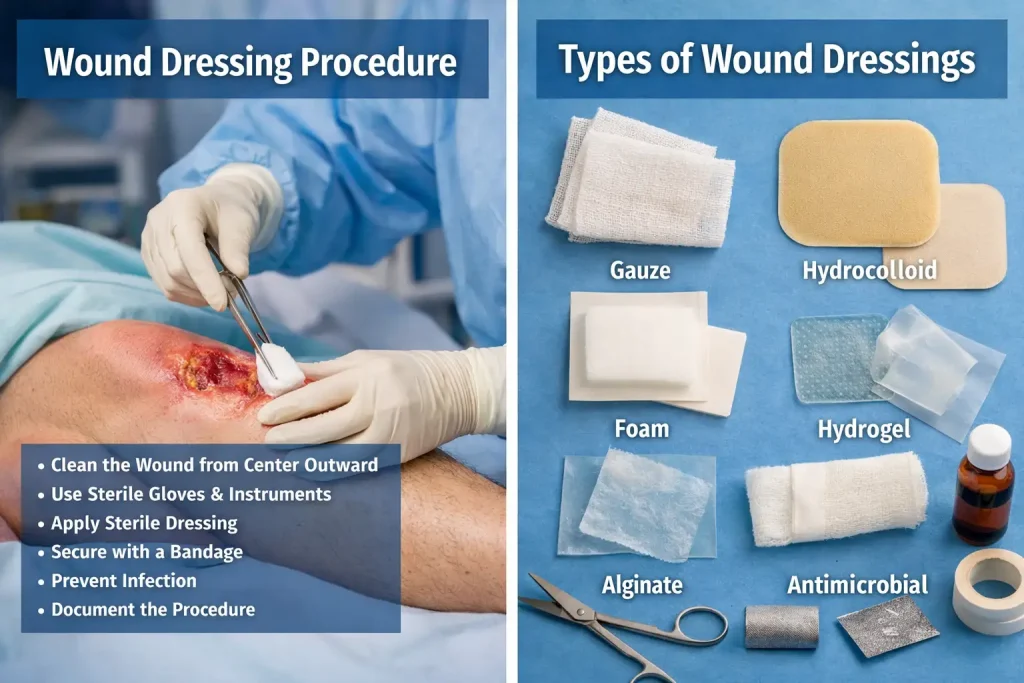
- Gauze dressings – for cleaning and covering wounds
- Film dressings – transparent and waterproof
- Foam dressings – absorbent and protective
- Hydrocolloid dressings – promote moist healing
- Hydrogel dressings – hydrate dry wounds
- Alginate dressings – for heavily exuding wounds
- Antimicrobial dressings – contain silver, iodine, or honey
Factors to Consider When Choosing a Dressing
- Type and Size of Wound: Small wounds-simple dressings, Large or deep wounds – advanced dressings
- Amount of Exudate Dry wounds – hydrogels Moderate-foams/hydrocolloids Heavy > alginates
- Infection Status: Use antimicrobial dressings if infected
- Location of Wound Joints – flexible dressings, Moist areas – waterproof dressings
- Patient Condition Age, Nutrition.Chronic illness (e.g, diabetes)
- Cost and Availability: Choose affordable and available materials
Procedure for Dressing a Clean Wound
- Explain the procedure to the patient
- Provide privacy
- Wash your hands and wear gloves
- Position the patient comfortably
- Protect the bed with a Mackintosh
- Remove the old dressing using forceps
- Perform surgical hand washing
- Create a sterile field
- Clean the wound from the centre outward
- Use each swab once
- Apply a sterile dressing
- Secure with a bandage
- Make the patient comfortable
- Document procedure
Procedure for Dressing a Dirty Wound
- Follow the same steps as a clean wound dressing
- Collect specimen if needed
- Clean thoroughly
- Measure wound depth
- Pack wound if necessary
- Apply an appropriate dressing
Procedure for Irrigating a Wound
- Use normal saline (0.9%)
- Irrigate using a syringe and a catheter
- Remove debris and pus
- Clean and dress the wound as required
Conclusion
Wound dressing is a vital nursing skill that ensures proper healing and prevents complications. By following correct procedures, maintaining sterility, and choosing appropriate dressings, nurses can significantly improve patient outcomes
Frequently Asked Questions (FAQ)
What is the main purpose of wound dressing?
To prevent infection and promote healing
How often should a wound be dressed?
Depends on the wound condition; infected wounds may require frequent dressing.
Why is aseptic technique important?
To prevent cross-infection and contamination.
What is the best solution for cleaning wounds?
Normal saline (0.9%) is commonly used.
What are the types of wound dressings?
Common types include:Gauze dressings,Foam dressings,Film dressings,Hydrocolloid dressings,Hydrogel dressings,Alginate dressings,Antimicrobial dressings
Can wound dressing be done at home?
Yes, minor wounds can be dressed at home if proper hygiene and sterile techniques are followed. However, serious wounds should be handled by healthcare professionals.